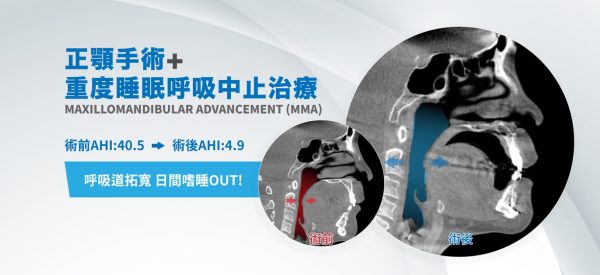



This article tells you 5 common reasons for snoring.
"Is it just because I'm too tired?"—This is how we often comfort ourselves when we hear ourselves or our partner snoring loudly. But in reality,Snoring is not just a result of fatigue, it may also be a sign of health problemsAccording to clinical studies,Snoring is associated with airway obstruction, weight, nasal structure, medication use, and evenSleep apnea (OSA)These are all closely related. If neglected for a long time, in addition to affecting sleep quality, it may also threaten cardiopulmonary function.
Recommended clinic for sleep apnea in Taipei - Feng Hua United Clinic
Today we will take you to learn more aboutCauses of snoringandHow to solve snoringOnly by finding the problem at the source in the right way can we truly improve the "noise" at night.
What are the causes of snoring? It's not just about being tired

Many patients say during their consultation, "I've been quite tired lately, that's probably why I snore." In reality...The main cause of snoring is mostly due to narrowing or obstruction of the respiratory tract., these problems cannot be solved simply by "resting more".
The following are common causes of snoring:
Narrowing or obstruction of the airways
・The root of the tongue during sleepsoft palate musclesWhen the degree of relaxation is too high, the airway will become narrower.The airflow produces a vibration sound, which is the snoring sound.. ・This situationAs I get olderOrPeople with insufficient muscle toneIt is particularly common on the body.
Obesity increases airway pressure
・Excess fat accumulates around the neck.Compression of the upper airway causing it to narrow, is one of the high-risk factors causing snoring. ・It has also been observed clinically thatWeight gain is positively correlated with snoring severity.
Deviated nasal septum or chronic nasal congestion
When nasal ventilation is restricted, the body will switch to mouth breathing, further increasing the impact of airflow on the throat.Causes vibration of the tongue base or soft palate. ・Especially if the nasal septum is bent,Nasal polypsOr patients with allergic rhinitis are prone to snoring due to nasal obstruction.
Effects of drinking and sleeping pills
・Alcohol and sleeping pills can cause excessive muscle relaxation, making the airway more likely to collapse during sleep.This can lead to increased snoring and even a risk of temporary suffocation..
Sleep apnea (OSA)
If your snoring is intermittent, or even stops for a few seconds before taking a deep breath, this may be due toObstructive sleep apnea (OSA). ・OSA is a serious sleep disorder.Recurrent respiratory arrest can cause the body to be in a state of hypoxia for a long time., which is extremely harmful to health and should not be taken lightly.
How to solve snoring? Treat it according to the cause
After understanding the possible reasons for snoring, the next most important thing is to...Address the underlying causes of snoring rather than simply relying on anti-snoring products or sleeping pills to mask the problem.
Clinically, we develop individualized treatment plans based on the patient's physical condition, lifestyle habits, and examination results. If patients can improve their habits in daily life,Most snoring cases can be significantly improved or even cured..
The following are common improvement methods and corresponding suggestions:
Lose weight and exercise to improve physical condition
・If your BMI is too high, excess fat in your neck may compress your airways. ・Moderate weight loss can not only improve snoring, but also improve overall cardiopulmonary function, prevent chronic diseases such as hypertension and metabolic syndrome.
Adjust your sleeping position and avoid sleeping on your back
・When sleeping on your back, the tongue tends to fall back, compressing the airway and causing snoring. ・It is recommended to sleep on your side, which can significantly reduce the chance of airway compression.You can also use a sleeping pillow designed for side sleepers to help maintain a good posture.
Abstain from alcohol and maintain a regular work and rest schedule
・Alcohol and staying up late can cause excessive muscle relaxation, which makes the snoring worse. ・It is recommended to avoid drinking alcohol before bed and develop a regular sleep schedule to help stabilize the body's autonomic nervous system and improve sleep quality.
Seek an ENT specialist's diagnosis
・If you suspectDeviated nasal septum, nasal polyps, rhinitis, or enlarged tonsilsIn such cases, it is recommended to consult an ENT department as soon as possible, find out the cause through endoscopy or nasal evaluation, and use medication or surgery to treat if necessary.
Further examination and treatment at the Sleep Center
・If snoring is combined withRespiratory arrest, extreme daytime sleepiness, and difficulty concentratingIf you have any of these symptoms, please go to a sleep medicine center for treatment.Polysomnography (PSG)" ・Further confirm whether it is obstructive sleep apnea. The doctor can recommend appropriate treatment based on the results, such asWearingCPAP (Constituent Positive Airway Pressure), oral appliances, and can also assess whether it is caused by structural problems, such as a small jaw or narrow airway, which requiresOrthognathic surgeryTreatment to completely improve.
Three hidden risks behind snoring
Many patients tend to regard snoring as a "minor problem", but snoring may actually beWarning signs of high-risk health conditionsYou should be especially vigilant when snoring is accompanied by wheezing, sleep interruptions, daytime fatigue, or difficulty concentrating.
These symptoms are often associated withObstructive sleep apnea (OSA)Related to this, OSA not only affects sleep quality, but also involves...Cardiovascular, metabolic and cerebrovascular, mood, cognitive function, and even increase the risk of dementia.
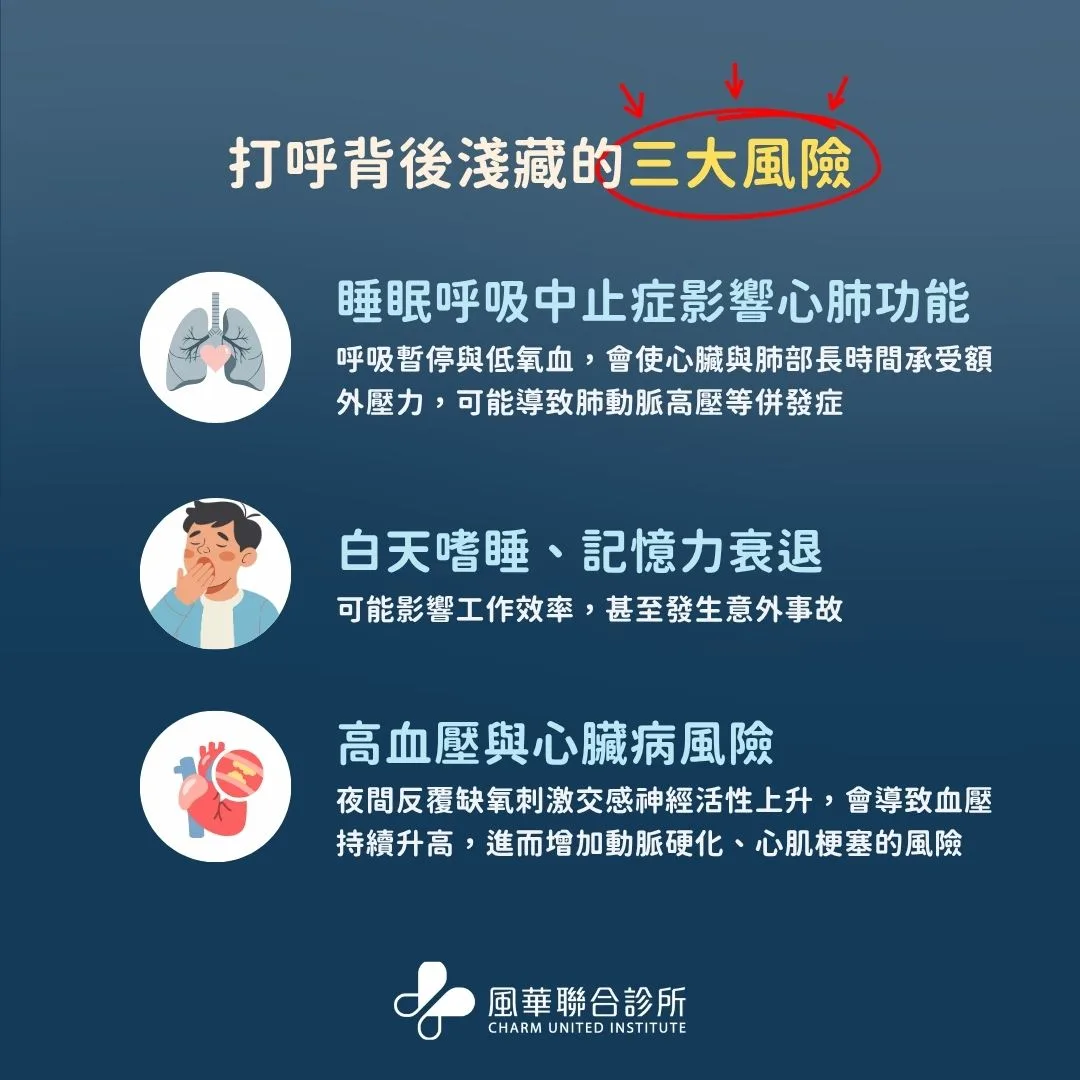
Here are three potential health risks associated with snoring:
Sleep apnea affects cardiopulmonary function
・OSA causes recurringApnea and hypoxemia, putting extra stress on the heart and lungs for a long time. ・In the long run, it may lead toArrhythmia, pulmonary hypertension, and even heart failureAnd other complications. ・According to a study in the New England Journal of Medicine, patients with moderate to severe OSAThe risk of heart disease and stroke is 2 to 3 times higher than that of the general population.
Chronic fatigue, daytime sleepiness andMemory loss
・Sleep fragmentation caused by long-term snoring will prevent the brain from getting a complete rest, thus affectingAttention, memory, and emotional stability. Many patients mistakenly believe that they "sleep a long time at night but still feel tired", but in fact their sleep quality is seriously impaired. ・Such situations not only affect work efficiency, but may even increase the risk of accidents while driving or operating machinery.
High blood pressure and increased risk of heart disease
・OSA is closely related to hypertension, especiallyHypertension in which blood pressure cannot drop normally at night, which is very common in OSA patients. ・Due to repeated hypoxia at night, sympathetic nerve activity is increased, which leads to a continuous increase in blood pressure, thereby increasingArteriosclerosis, coronary heart disease, myocardial infarctionrisk.
Fenghua Joint Clinic reminds you: If you or your family members experience long-term snoring, sleep interruption, daytime sleepiness, etc., be sure to seek medical attention as soon as possible and do not wait until serious symptoms appear before taking action.
Improve your snoring habits today
Snoring does not necessarily require surgery or medication. In many cases,Change your lifestyleThis can lead to significant improvement. Many patients, after diagnosis and treatment, often experience a reduction in snoring if they combine this with daily health maintenance and adjustments to their sleep environment.Significantly reduced or even completely disappeared.
Here are a few ways you can make small changes in your life today to help you sleep better and breathe easier:
Reduce dinner portions and salty foods
・Eating too much or too heavy a meal at dinner can easily cause nighttime edema.Snoring may also be exacerbated by swelling of the neck tissue compressing the airway.. ·suggestionHave dinner 3 hours before bedtime and avoid salty and greasy foods, drink less water before going to bed.
Maintaining indoor humidity and air quality
・An environment that is too dry or has poor air quality can irritate the respiratory tract, causing nasal congestion or throat swelling, and exacerbating snoring. ・It is recommended to keep the bedroomRelative humidity is between 40-60 %, replace the air filter regularly, Avoid scented candles or strong smells, reduce allergens and irritants.
Snoring is not just a problem for you, it is also a health issue for your whole family.
If you have tried multiple methods but still have no improvement, or if you experience snoring with choking, daytime fatigue, etc., it is recommended to seek professional medical assistance as soon as possible. At Fenghua Joint Clinic, we provideComplete respiratory examination, sleep disorder diagnosis and multidisciplinary treatment recommendations, helping you truly find the root cause of snoring and protect your sleep and health.