

What is obstructive sleep apnea?
Obstructive Sleep Apnea (OSA) is a common but easily overlooked sleep disorder. Its core feature is repeated breathing pauses during sleep due to partial or complete obstruction of the upper airway.
These breathing pauses usually last more than 10 seconds, or even tens of seconds, and may occur dozens to hundreds of times per night. Patients are often barely conscious, but their bodies are damaged by prolonged lack of oxygen.
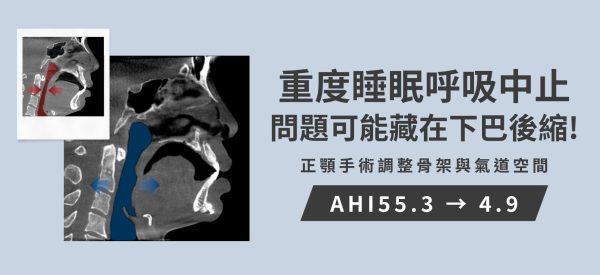
There are many causes of airway obstruction, the most common of which include obesity (especially fat accumulation in the neck), enlarged tonsils or adenoids, retracted tongue, retracted jaw, nasal congestion or abnormal airway structure. When these factors cause the throat muscles to relax excessively during sleep, the airway may collapse and cause respiratory arrest.
Differences between obstructive sleep apnea and other types
Sleep apnea can be divided into three main types: obstructive (OSA), central sleep apnea (CSA) and mixed sleep apnea.
The obstructive type is characterized by "airflow obstruction", that is, the body is still trying to breathe, but air cannot pass through the upper airway; while the central type is characterized by "respiratory signal interruption", that is, the brain temporarily does not send a breathing command, resulting in the failure to activate the diaphragm and chest muscles. The mixed type is a combination of both.
OSA is the most common and is closely related to body weight and facial structure, while CSA is common in patients with heart failure, neurological diseases, etc. Because treatments vary, an accurate diagnosis is critical to successful treatment.
What are the dangers of obstructive sleep apnea?

Long-term neglect of OSA may cause many health risks, the following are its main effects:
- Increased risk of cardiovascular disease: Repeated hypoxia can trigger sympathetic nerve activation, leading to high blood pressure, arrhythmia, cardiac hypertrophy, and even heart failure and stroke.
- Metabolic disorders and the vicious cycle of obesity: OSA can disrupt insulin balance, increase the risk of type 2 diabetes, and lead to increased appetite and decreased activity due to poor sleep quality, further leading to obesity.
- Cognitive and emotional impact: Daytime sleepiness, inattention, memory loss and mood swings are common symptoms. In severe cases, emotional disorders such as anxiety or depression may occur.
- The quality of life has declined significantly:Some patients are unable to stay awake due to excessive daytime sleepiness, which causes them to doze off frequently during the day (at the workplace, while driving), affecting their concentration and work efficiency, and causing great distress and pressure in all aspects of life.
Case insertion (the latest or most relevant cases will be selected for insertion, and you can also ask the clinic to provide links to recommended cases)
How do I know if I have obstructive sleep apnea?
Common symptoms and self-examination

The following signs can be used for preliminary judgment:
- Loud and irregular snoring during sleep
- Nocturnal respiratory arrest (observed by the person next to you)
- Dry mouth or headache upon waking
- Daytime sleepiness and difficulty concentrating
- Mood swings and memory loss
- Frequent waking up at night to use the bathroom
If OSA is suspected,Epworth Sleepiness Scale (ESS)For an initial assessment, you are also welcome to make an appointment for a professional diagnosis.
Professional diagnosis
The most standard way to diagnose OSA isPolysomnography (PSG)This is an examination conducted in a sleep center that records brain waves, electromyography, eye movements, respiratory rate, blood oxygen and electrocardiogram data to confirm the severity of OSA.
In addition, some clinics provide a simplified version of the home sleep monitoring device (HST). Although it cannot fully monitor brain wave changes, it is still of reference value for evaluating respiratory events.
What are the treatments for obstructive sleep apnea?
Lifestyle adjustment and non-surgical treatment
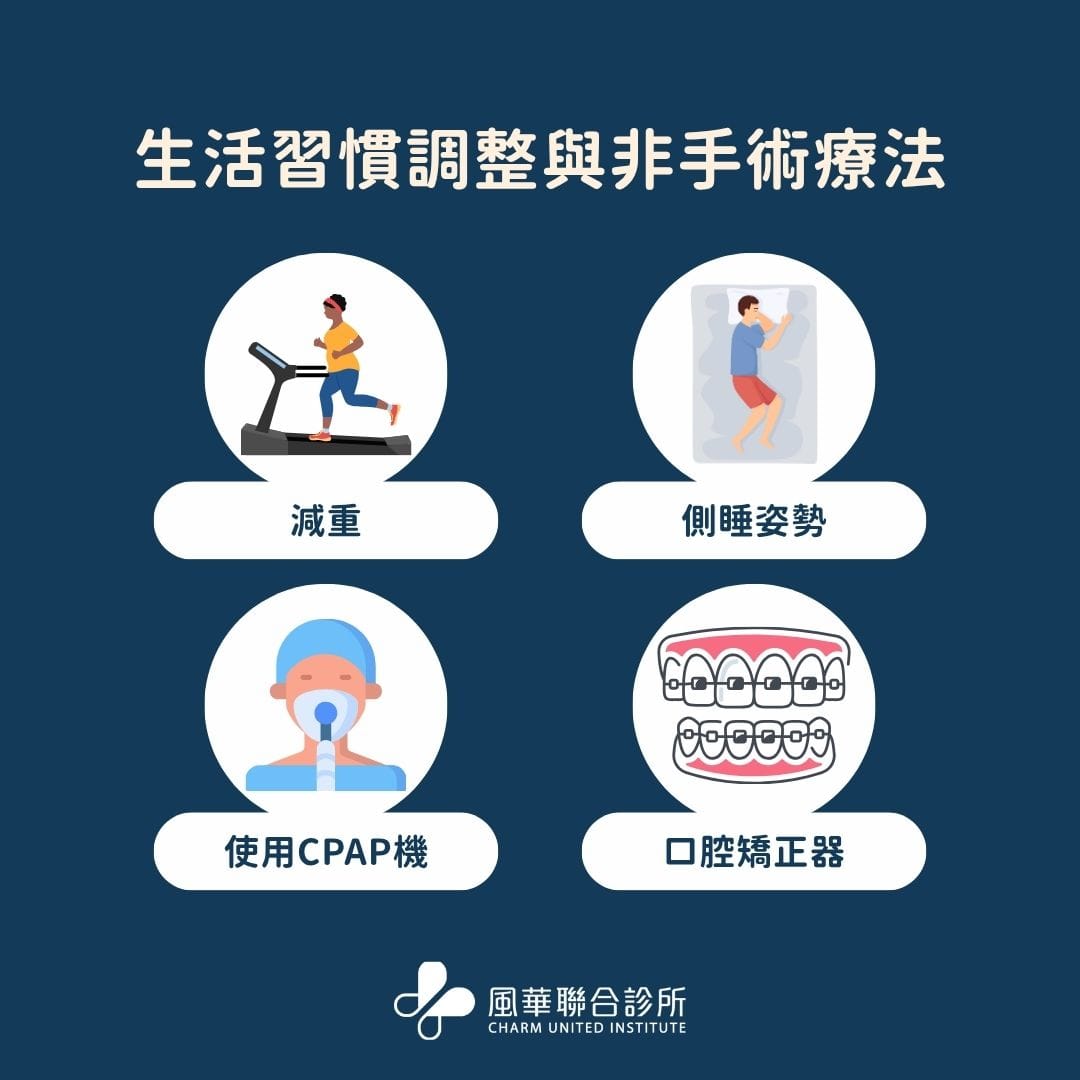
- lose weight: Reducing body fat can effectively reduce airway pressure and is one of the most basic treatments.
- Side sleeping position: When sleeping on your back, the tongue tends to fall back and cause obstruction. Changing to sleeping on your side can improve the symptoms.
- Using a CPAP machine (continuous positive airway pressure): It is the gold standard for treating OSA. It opens the airway through air pressure and effectively improves snoring and apnea.
- Oral braces: For patients with mild to moderate OSA, the corrector can be used to move the lower jaw forward to increase airway space.
How Orthognathic Surgery Improves Obstructive Sleep Apnea Syndrome
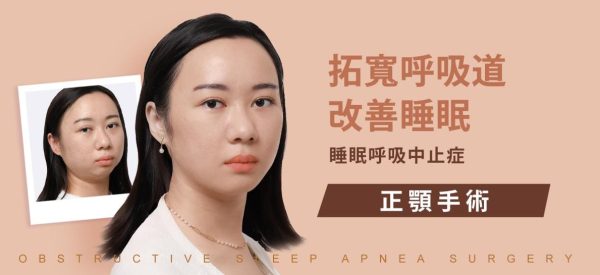
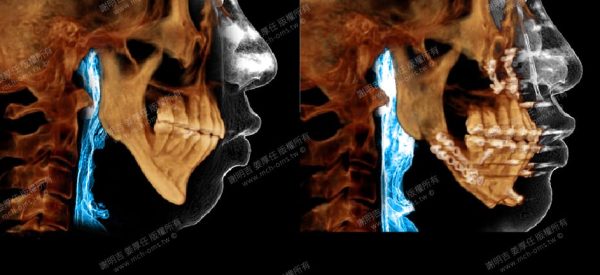
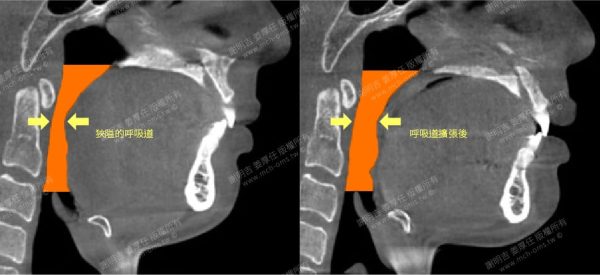
For patients with severe or structural OSA, especially those with significant mandibular retraction and asymmetrical face,Maxillomandibular Advancement (MMA). This surgery moves the upper and lower jaw bones forward, widening the airway and permanently resolving the obstruction.
Before the operation, CT scan image analysis and airway simulation are required, and close cooperation with orthognathic surgery, dentistry, and otolaryngology is required to ensure the accuracy of the surgical plan.
Things to note before starting treatment for obstructive sleep apnea
Before choosing a treatment, patients should consider:
- Personal physical condition and chronic disease history (such as hypertension, diabetes)
- Work and lifestyle (e.g. night shift work)
- Whether CPAP or correction devices can be worn long-term
- Acceptance of surgical risks
Treatment selection decision guide
|
condition |
Recommended treatment |
|
Mild, normal BMI |
Lifestyle adjustment + oral braces |
|
Moderate, slightly high BMI |
CPAP + Weight Loss Program |
|
Severe OSA or structural abnormalities |
Orthognathic surgery |
Conclusion
Obstructive sleep apnea is a treatable condition that should not be ignored. Whether it’s snoring at night, fatigue during the day, or abnormal breathing noted by family members, these are warning signs from the body. Only with early diagnosis and active treatment can you restore healthy sleep, avoid long-term health risks, and enjoy a more vibrant life.