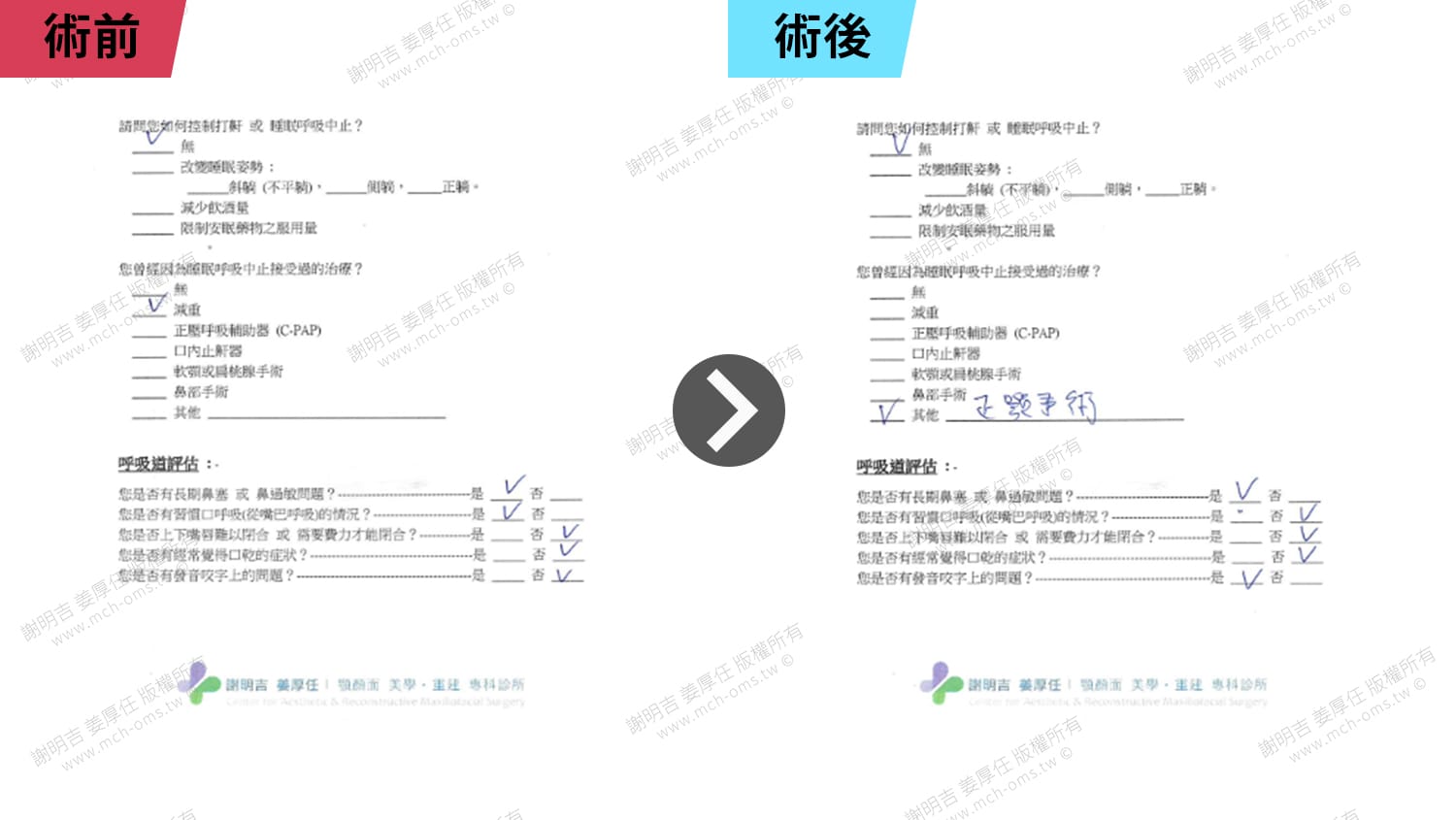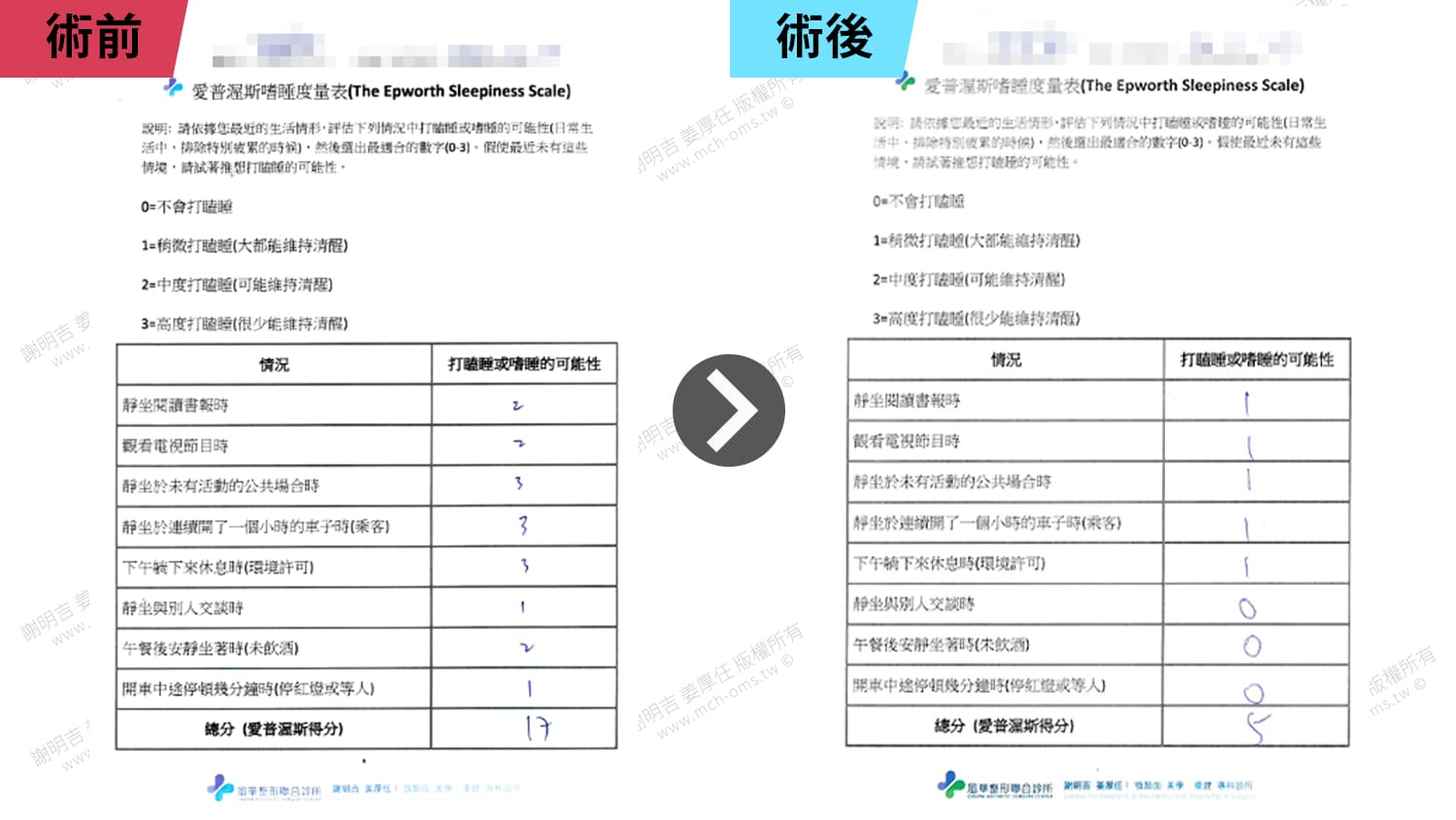



This is a patient with extreme sleepiness. His Epworth Sleepiness Scale score is 17. If the score is more than 10, it is considered to have reached the level of sleepiness that requires medical intervention.
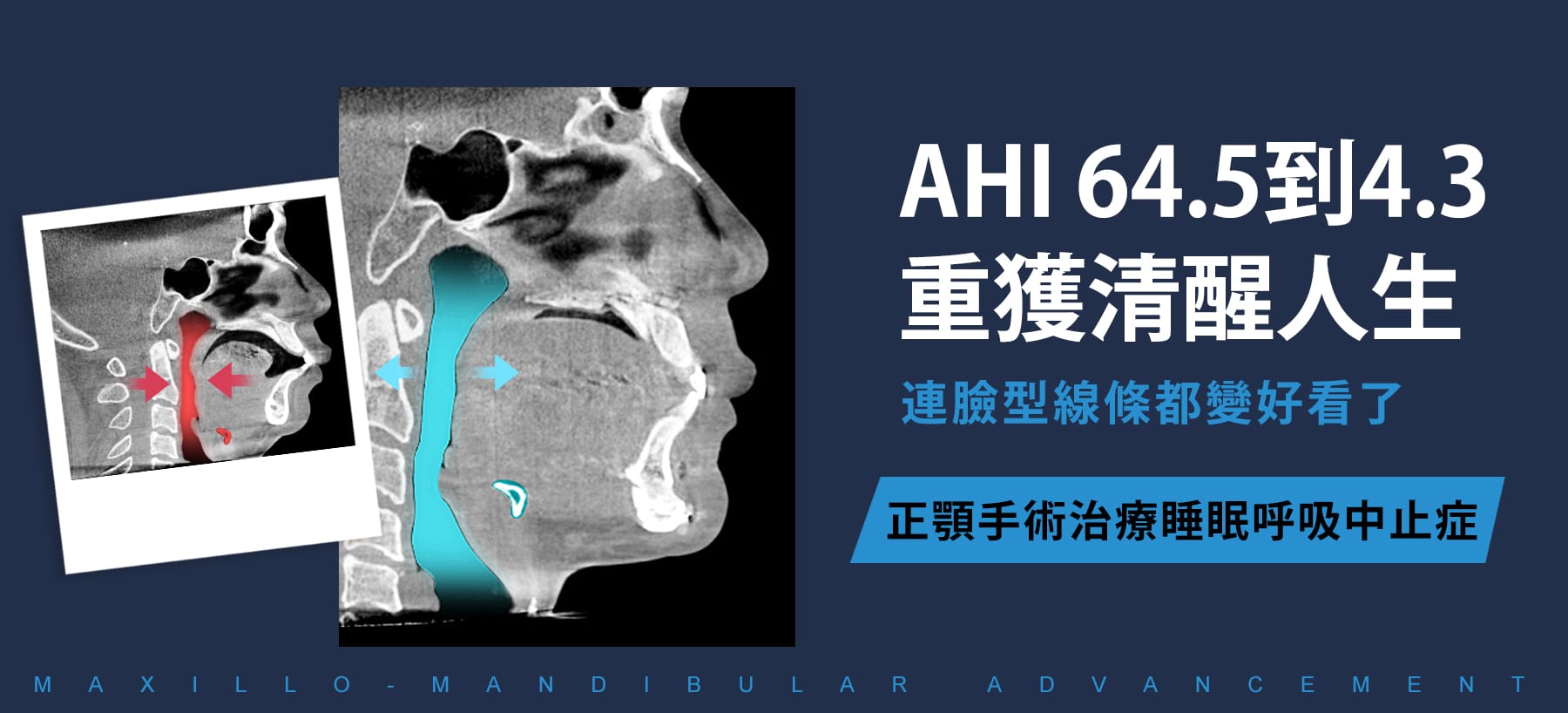
The sleep report he brought from the hospital showed that his AHI was as high as 64.5 (AHI>30 is severe sleep apnea) and his lowest blood oxygen level reached 60%.
For patients with retruded mandible and severe sleep apnea, orthognathic surgery (Maxillo-Mandibular Advancement, MMA) should be one of the priority treatment options, especially since this patient is completely unable to accept having to wear a positive pressure ventilator for a long time.
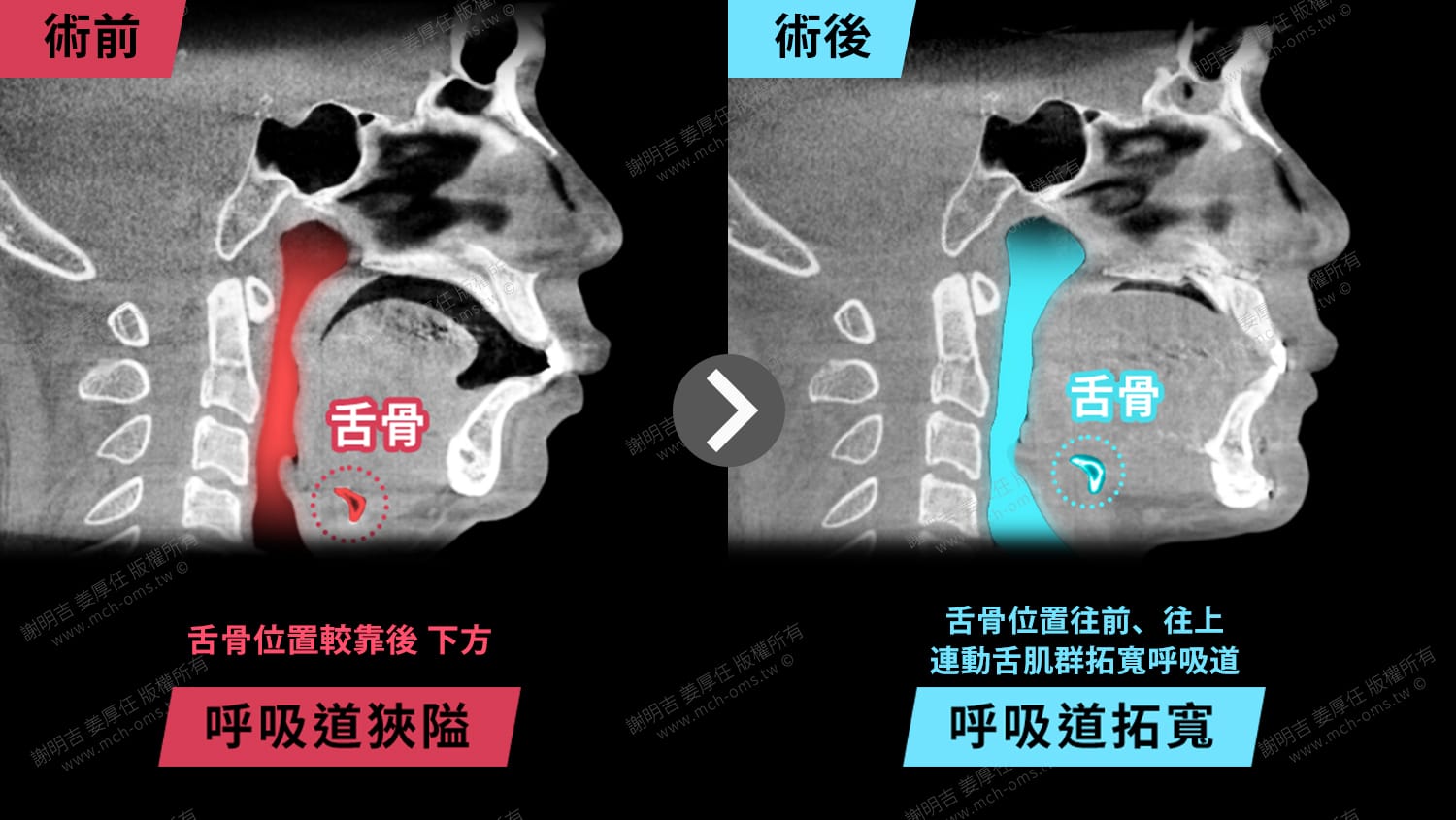
The CT scan after the operation showed that the narrow and blocked airway had been widened and supported through the reorganization of the upper and lower jaws. At the same time, the face shape, jaw line, tooth angle and bite state also benefited from the orthognathic surgery.
Most importantly, the postoperative sleep report showed that the AHI had dropped to 4.3, which is the same as the normal standard, and the minimum blood oxygen level had increased to 83%. Subjectively, in addition to greatly reducing snoring, he felt much more energetic during the day and was not sleepy.
This is a patient suffering from severe hypersomnia(excessive sleepiness), with an Epworth Sleepiness Scale score of 17.
A score exceeding 10 indicates a level of hypersomnia requiring medical intervention.
The sleep report brought by the patient shows an AHI (Apnea-Hypopnea Index) of 64.5 (AHI > 30 is considered severe obstructive sleep apnea), and the lowest blood oxygen level reached 60%.
For patients with mandibular retrusion and severe obstructive sleep apnea, Maxillo-Mandibular Advancement (MMA) surgery should be prioritized as a treatment option, especially since this patient is completely unable to accept long-term use of CPAP (Continuous Positive Airway Pressure).
Post-operative CT scans reveal that through the reconstruction of the maxilla and mandible, the narrowed and obstructed airway has been effectively widened and supported.
Additionally, the patient's facial contour, jawline, tooth angle, and occlusion have also benefited from MMA surgery.
Most importantly, the post-operative sleep report indicates that the AHI has decreased to 4.3, meeting the standard of normal individuals, and the lowest blood oxygen level has increased to 83%.
Subjectively, the patient feels significant improvement, with reduced snoring and greater energy during the day.
More sleep apnea information:https://www.mch-osa.com/
–
Appearance changes

Changes of index before and after surgery
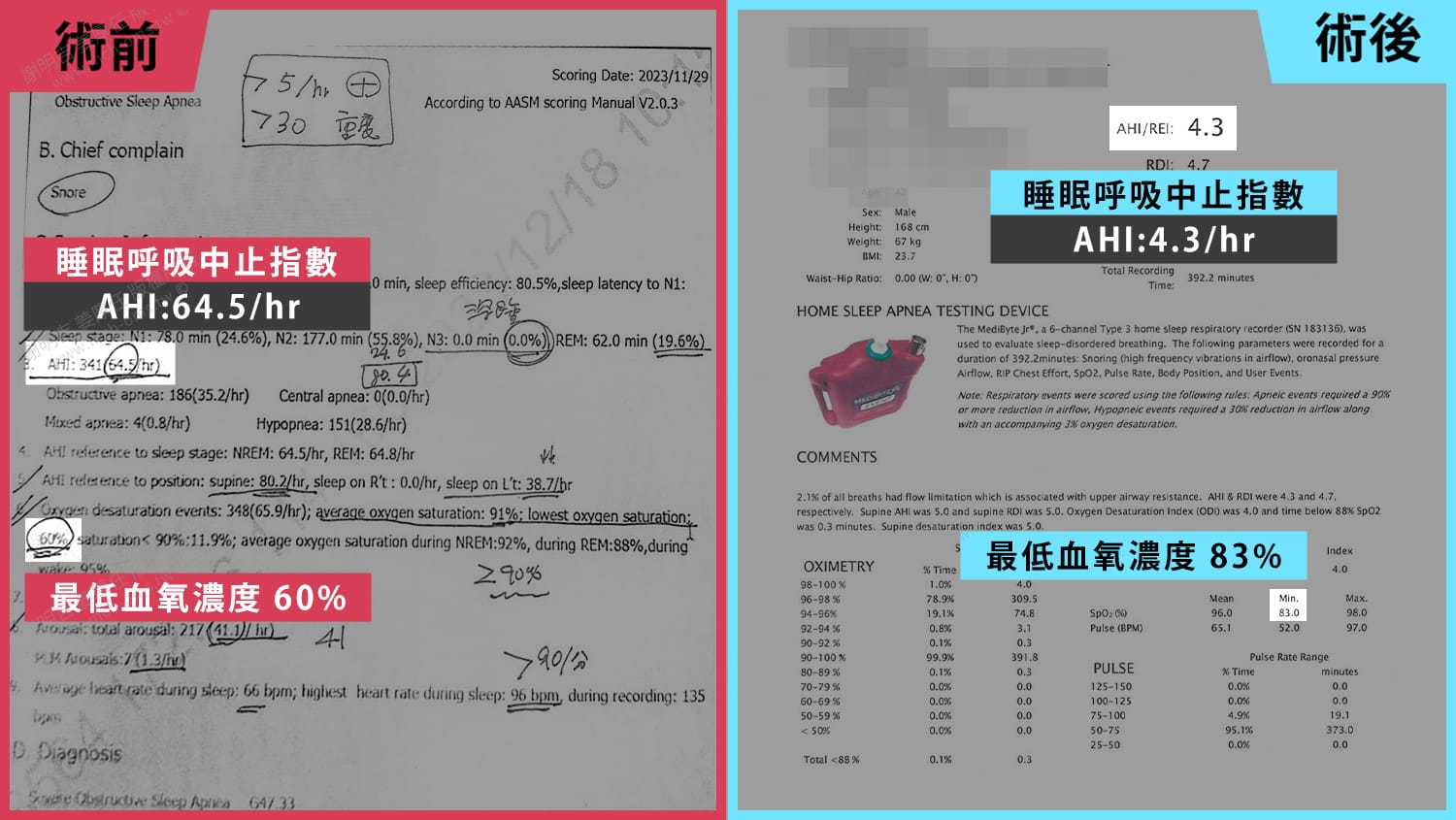
Preoperative and postoperative assessment scale