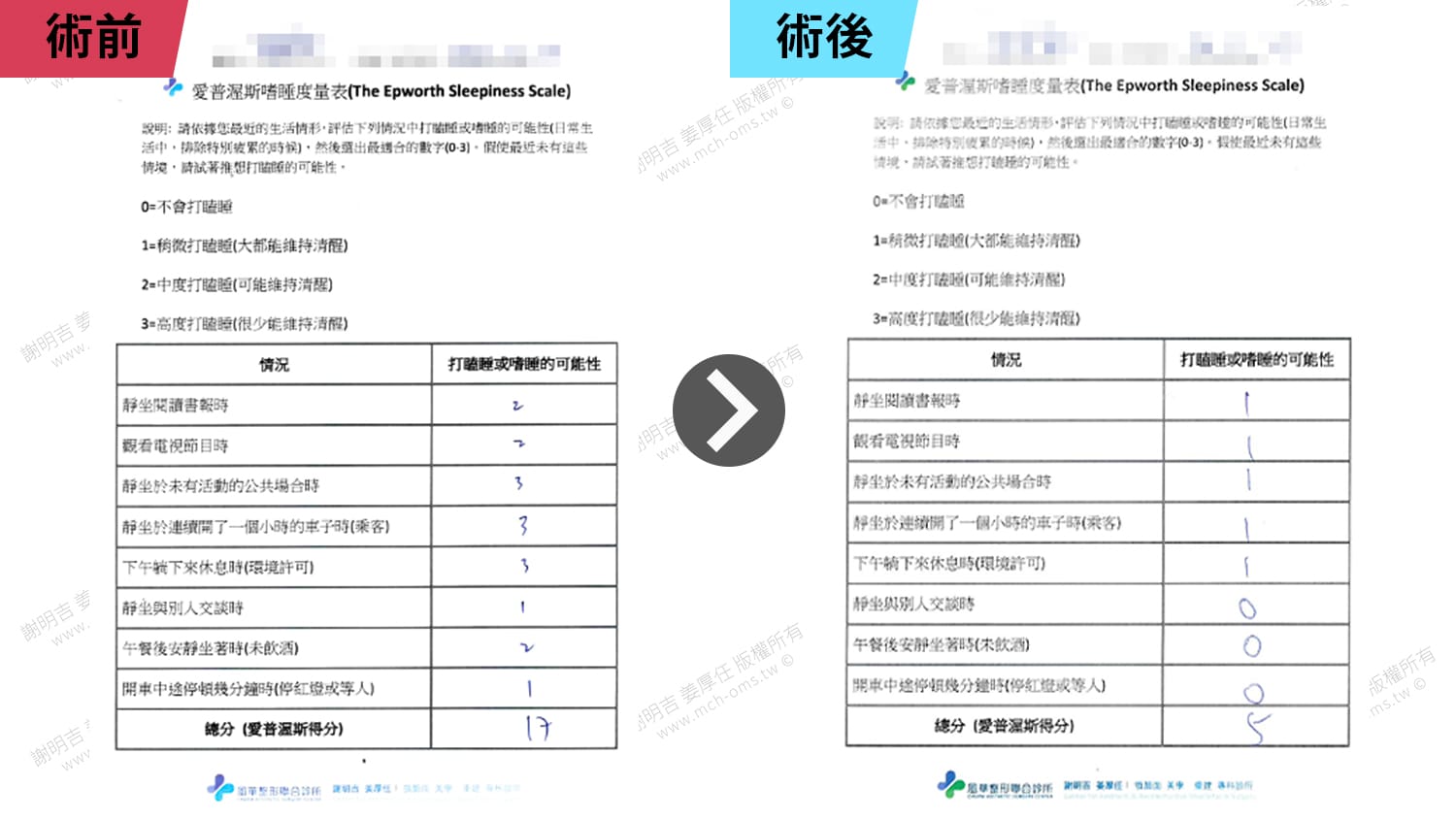



這是一位極度嗜睡的患者,他的Epworth Sleepiness Scale(愛普沃斯嗜睡量表)得分17,如果此項得分超過10以上,就已算達到需醫療介入的嗜睡程度。
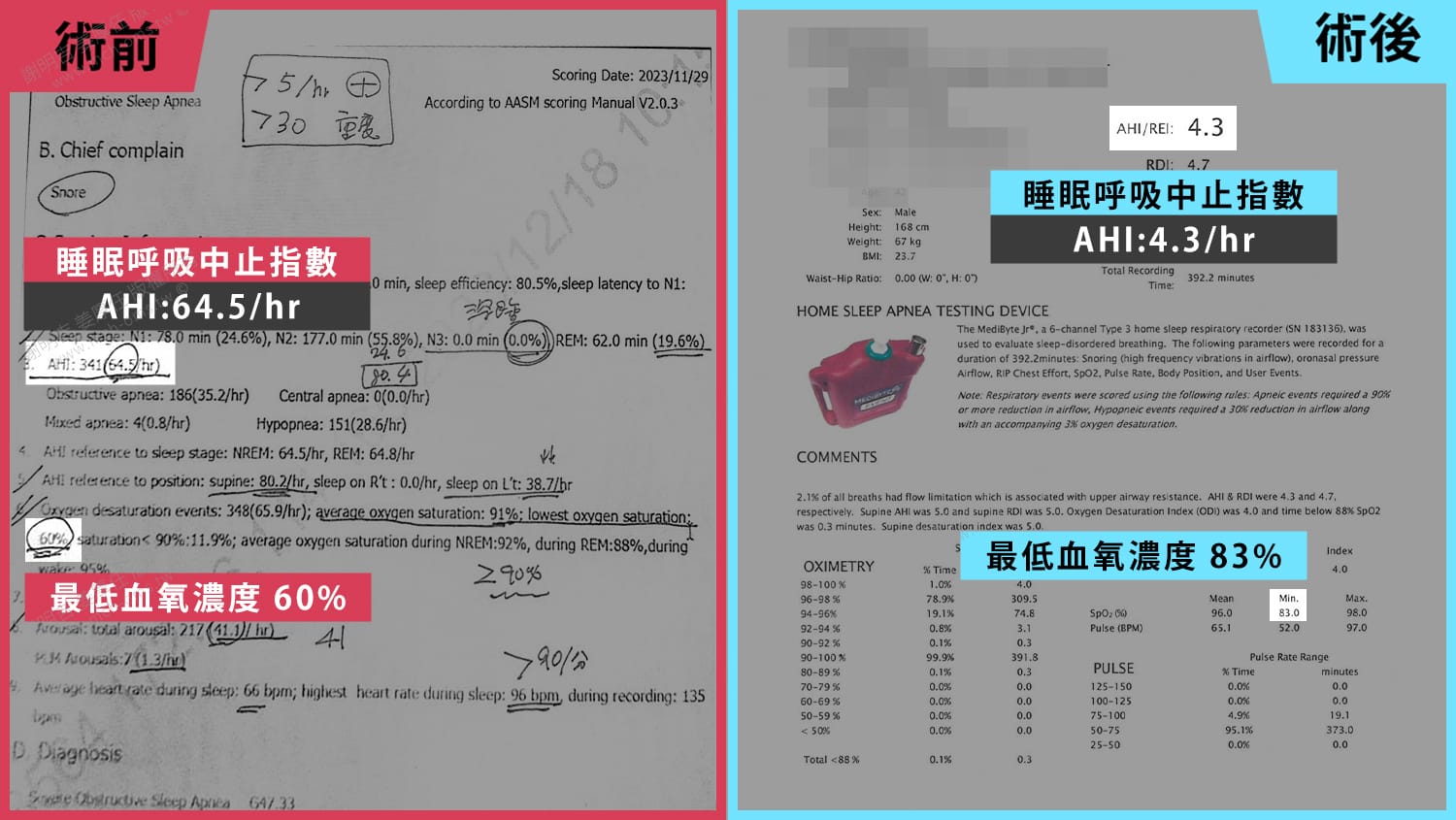
他自己從醫院帶來的睡眠報告顯示,AHI高達64.5(AHI>30屬重度睡眠呼吸中止),最低血氧來到60%。
針對下顎後縮且重度呼吸睡眠中止的患者,正顎手術(Maxillo-Mandibular Advancement, MMA)應該列為優先的治療選項之一,更何況這位患者完全無法接受長期須配戴陽壓呼吸器。
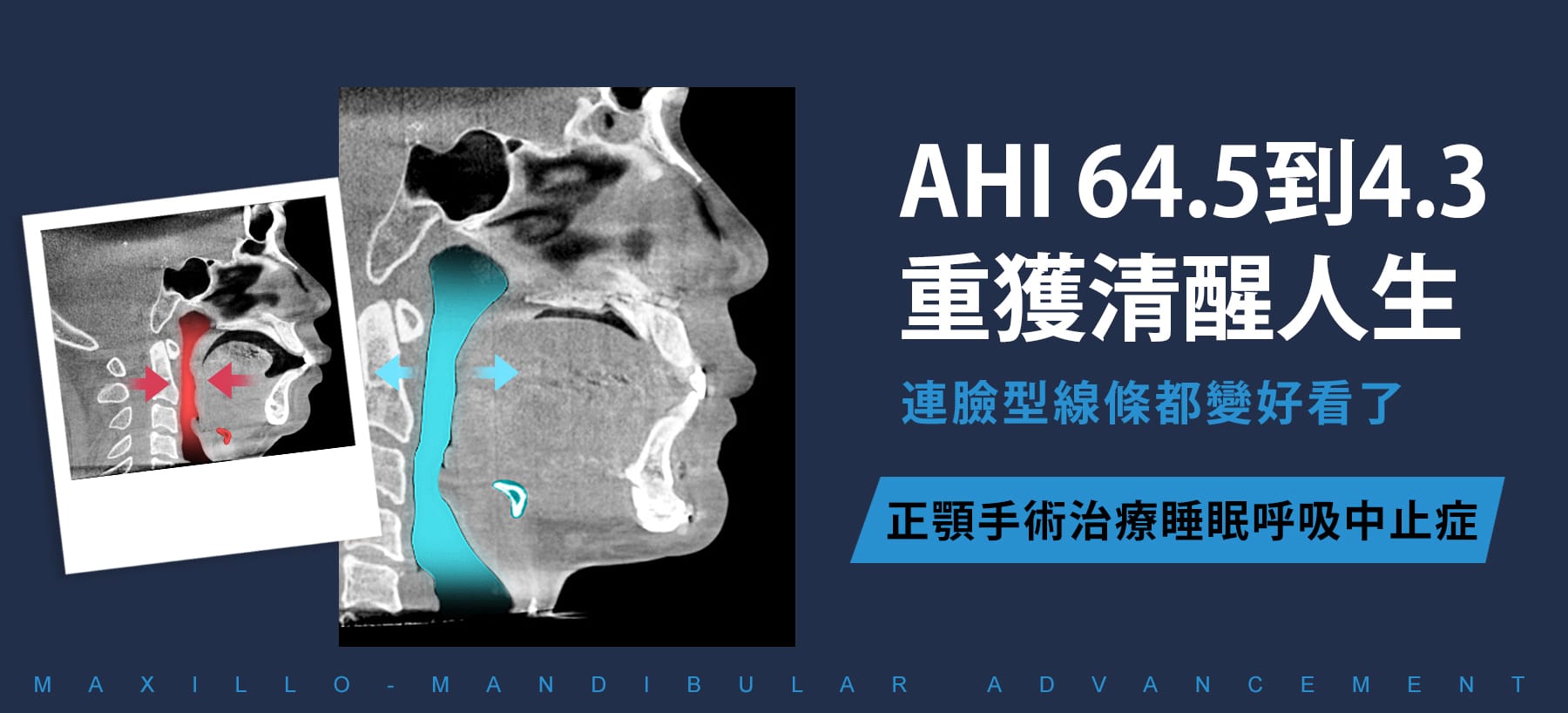
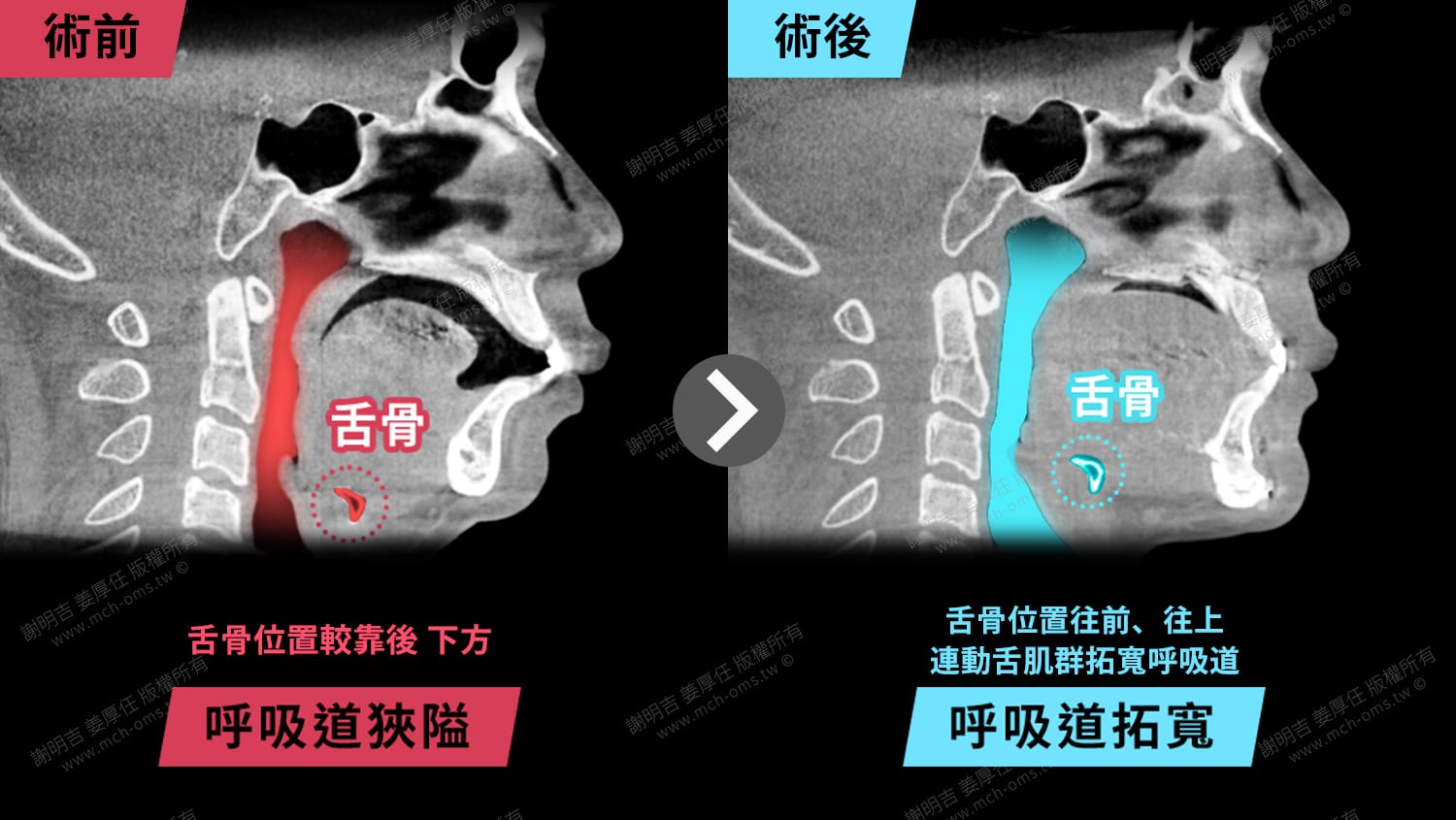
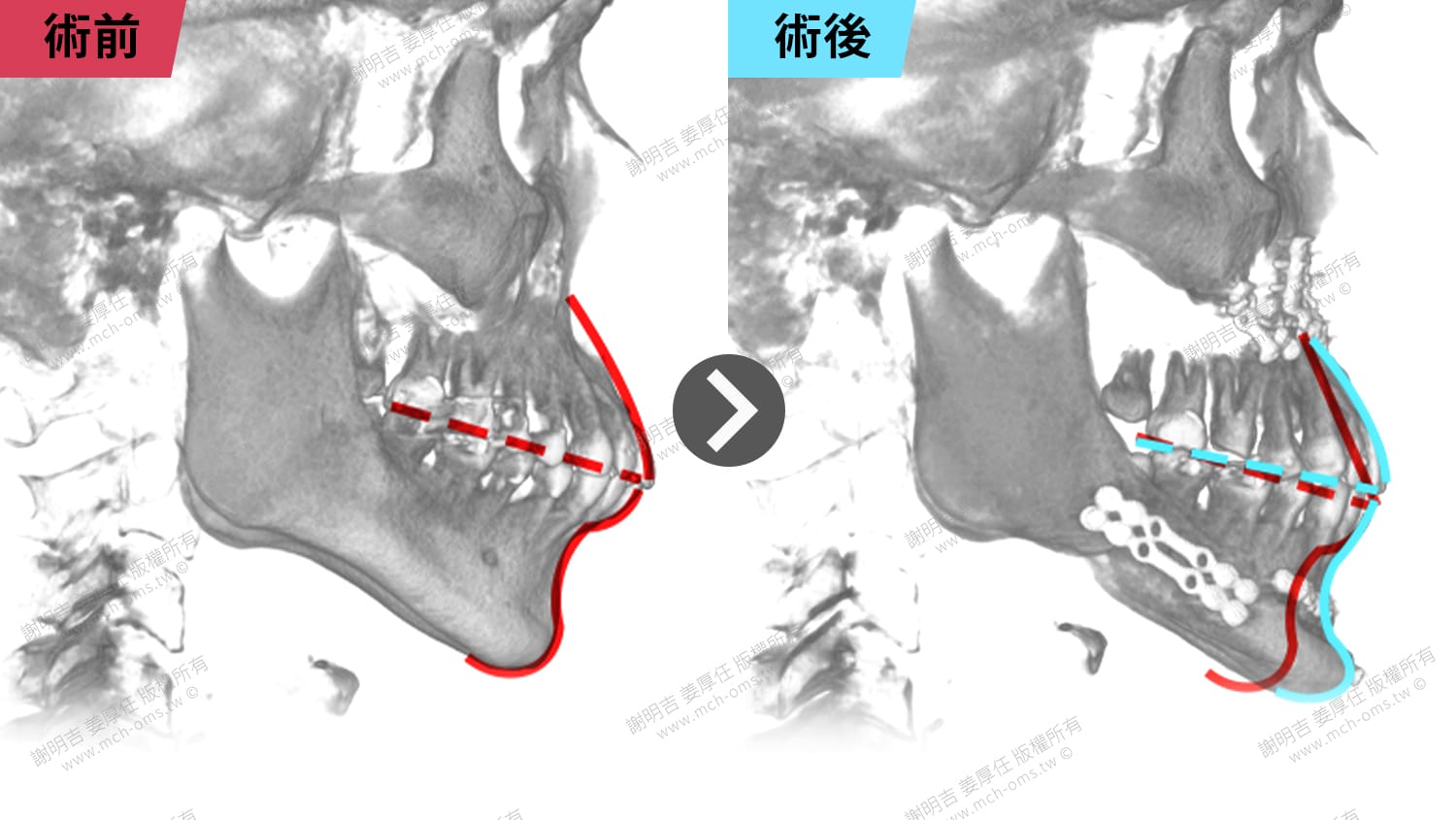
由手術後的電腦斷層可以看出,透過上下顎骨的重組,狹窄且阻塞的呼吸道已得到良好的拓寬與支撐,同時,臉型、下巴線條、牙齒角度與咬合狀態也受惠於正顎手術。
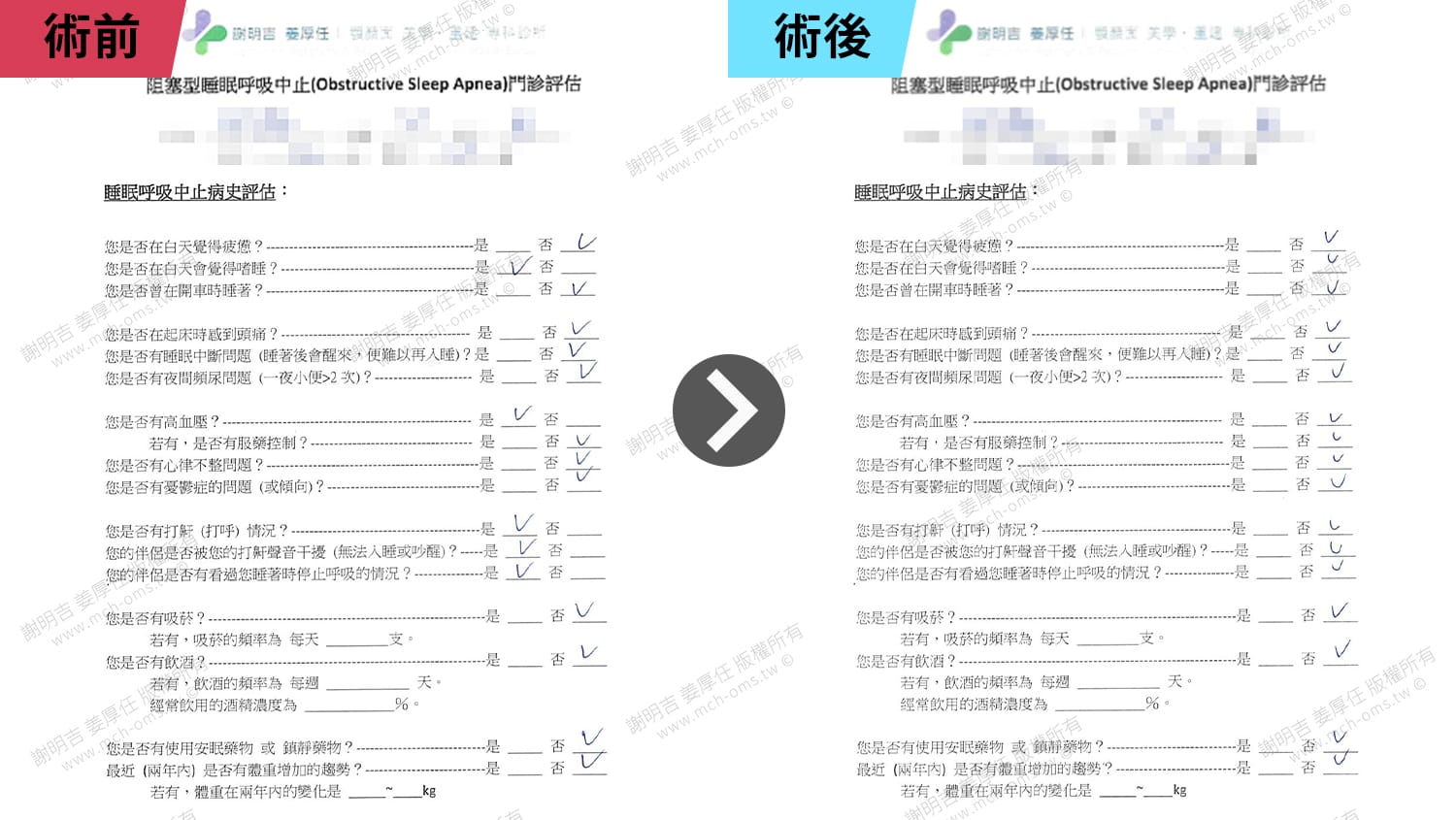
最重要的,術後的睡眠報告顯示,AHI已降低到4.3,已達到與正常人無異的標準,最低血氧也升高到83%,主觀感受上,除了大大降低打呼之外,他感覺到白天有精神許多而不會嗜睡。
This is a patient suffering from severe hypersomnia(excessive sleepiness), with an Epworth Sleepiness Scale score of 17.
A score exceeding 10 indicates a level of hypersomnia requiring medical intervention.
The sleep report brought by the patient shows an AHI (Apnea-Hypopnea Index) of 64.5 (AHI > 30 is considered severe obstructive sleep apnea), and the lowest blood oxygen level reached 60%.
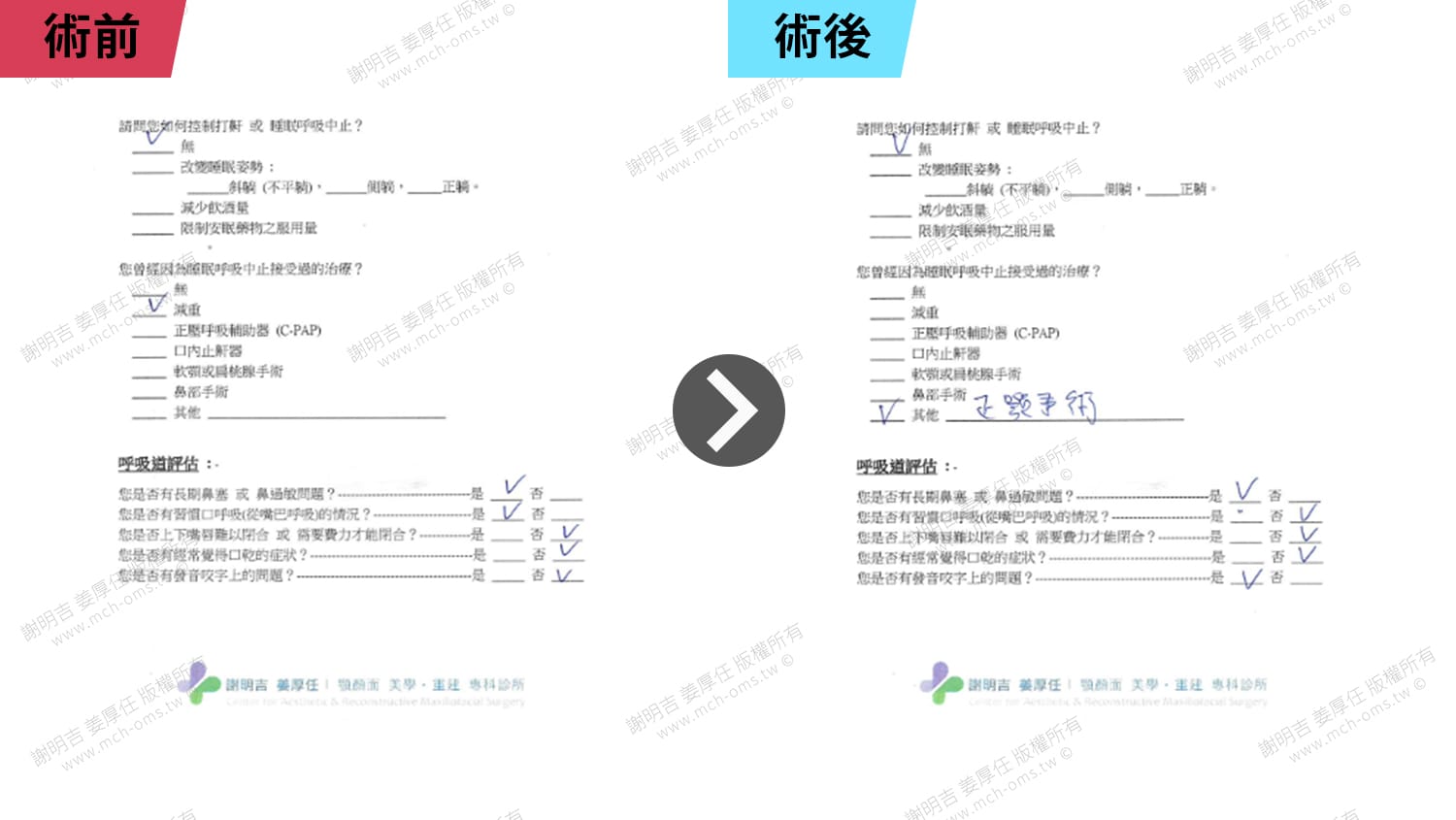
For patients with mandibular retrusion and severe obstructive sleep apnea, Maxillo-Mandibular Advancement (MMA) surgery should be prioritized as a treatment option, especially since this patient is completely unable to accept long-term use of CPAP (Continuous Positive Airway Pressure).
Post-operative CT scans reveal that through the reconstruction of the maxilla and mandible, the narrowed and obstructed airway has been effectively widened and supported.
Additionally, the patient’s facial contour, jawline, tooth angle, and occlusion have also benefited from MMA surgery.
Most importantly, the post-operative sleep report indicates that the AHI has decreased to 4.3, meeting the standard of normal individuals, and the lowest blood oxygen level has increased to 83%.
Subjectively, the patient feels significant improvement, with reduced snoring and greater energy during the day.
更多睡眠呼吸中止資訊:https://www.mch-osa.com/
–
手術前後對比照
手術前後指數變化
手術前後評估量表