Outpatient Clinic Announcement | Fenghua United Clinic 2025 Spring Festival Closing Date
release date :
Update date: 2025-01-15
Author: Fenghua United Clinic
Fenghua United Clinic during the Spring FestivalClosed from 1/27 (Monday) to 2/2 (Sunday). Fenghua United Clinic wishes you auspicious snakes leaping, snakes coming and running, and spiritual snakes offering auspiciousness in 2025!
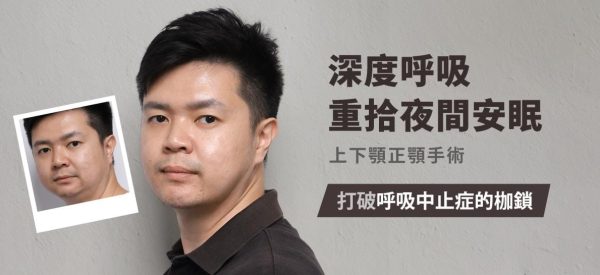
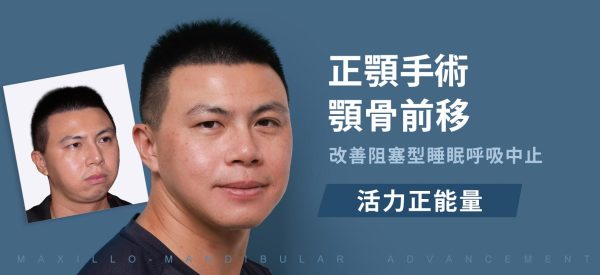
A patient with severe sleep apnea (AHI=69.8) decided to seek treatment because of severe snoring that affected his family's quality of life, especially after the birth of his child, and daytime sleepiness. After trying non-surgical methods such as side sleeping, positive pressure respirators, and anti-snoring braces with limited results, I finally chose to undergo MMA orthognathic surgery. After the operation, the AHI dropped from 69.8 to 13, and the minimum blood oxygen concentration during sleep increased from 53% to 83%. This not only improved the mental and physical strength, but also made the family no longer need to wear earplugs to sleep.
Let me share the case of a 39-year-old male patient. Due to insufficient development of the upper and lower jaw bones, they were compressed backwards, resulting in airway stenosis, sleep apnea (AHI 22.5), and daytime sleepiness. The patient's airway space was successfully improved through orthognathic surgery on both jaws, nasal septum correction and lower nose clip plasty surgery. Three months after the operation, the AHI dropped to 5.1, the lowest blood oxygen concentration increased to 93%, and the patient's mental state and quality of life were significantly improved.
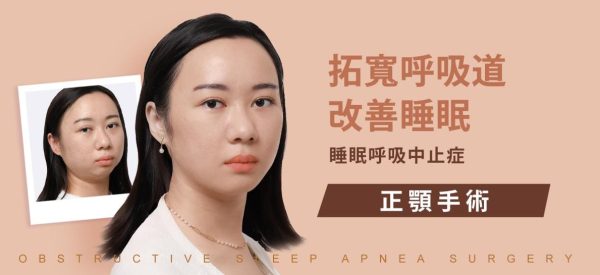
This patient had undergone orthodontic treatment with tooth extraction before, but later she found that the problems and concerns she had far exceeded whether her teeth were straight. This time she was referred to our center by a sleep specialist dentist, mainly to solve her severe daytime sleepiness and snoring problems during sleep. After a sleep test, she was diagnosed with moderate sleep apnea (AHI=19.4). CT also showed that her airway stenosis was caused by severe retraction of the mandible, which compressed the posterior airway space. Taking into account her obvious symptoms of sleep apnea (sleepiness, snoring), the cause (narrow bones, lack of space), and her expectations for appearance and occlusion, we designed an orthognathic surgery (MMA: maxillo-mandibular advancement) for her, which would widen her airway and improve her appearance and occlusion. Postoperative orthodontic treatment was performed by the referring physician using Invisilign. The sleep test result six months after the operation was AHI=1.4, which has returned to normal. The symptoms of snoring and sleepiness have disappeared, and she also likes the way she looks after the operation more.
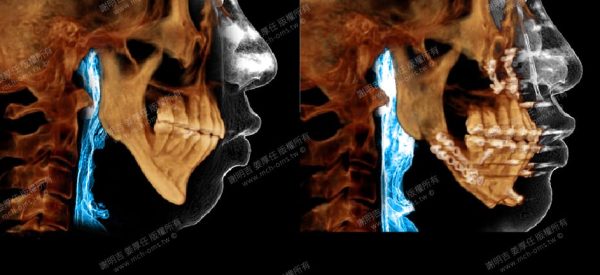
This patient, suffering from severe sleep apnea and persistent snoring and daytime sleepiness, was found to have a receding jaw and airway narrowing upon examination. This article documents the changes in his CT scans, airway space, and sleep monitoring before and after orthognathic surgery…
Orthognathic surgery was originally designed to improve the bite and appearance of the patient. However, in the field of treating obstructive sleep apnea, orthognathic surgery (maxillo-mandibular advancement/MMA) has become a means to tighten the collapsed (relaxed) muscles rather than an end. Improvement in appearance and bite has become an added value of maxillo-mandibular advancement.
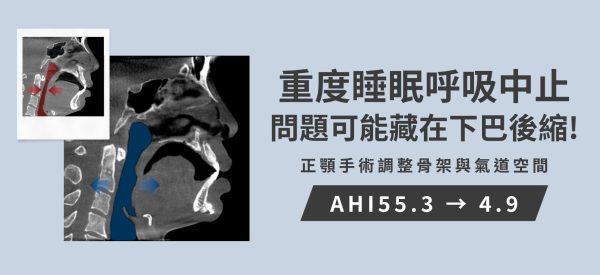
A young man was troubled by severe obstructive sleep apnea (OSA), with an AHI index as high as 55.8, and symptoms such as loud snoring, daytime sleepiness, headaches, and difficulty concentrating. Because he was unwilling to use a positive-pressure respirator, he underwent mandibular advancement surgery (MMA) combined with chin advancement surgery to successfully expand the airway space. The AHI dropped to 3.9 6 months after the operation, and his symptoms were significantly improved. This case demonstrates the therapeutic effect of MMA surgery on patients with severe OSA, providing patients with a treatment option that does not require respirators.