


If you often feel tired when you wake up in the morning, have difficulty concentrating during the day, or even your family members report that you snore loudly or have occasional breathing interruptions, these seemingly insignificant phenomena may actually be "sleep apnea" quietly affecting your health.
These symptoms are often ignored, but if left untreated for a long time, they may lead to high blood pressure, cardiovascular disease, and even stroke. Studies have gradually shown that "sleep apnea exercise" can help mild to moderate symptoms, and it is a relatively simple auxiliary method that can be performed at home.
Fenghua United ClinicWe will introduce various training methods related to sleep apnea, their applicable subjects, effects and limitations, to help you have a more comprehensive understanding of this disease and find a way to improve it that suits you.
What are some exercises for sleep apnea?
Sleep apnea is not just about snoring; it is related to insufficient muscle tone in the respiratory tract.
To address this mechanism, experts have developed several "sleep apnea exercises" for the mouth, tongue, throat and other parts of the body, aiming to strengthen the muscles in these areas and improve the collapse of the airway during sleep.
These exercises are part of muscle function therapy, the following are common types of exercise:
- Tongue muscle training: Helps the tongue not to collapse backwards during sleep and block the airway.
- Throat and soft palate training: Improve the opening of the upper respiratory tract and reduce airflow resistance.
- Cheek and orbicularis oris muscle exercises: Increase the support around the mouth and reduce the chance of mouth breathing.
- Nasal breathing training: Improve nasal ventilation function and correct breathing pattern.
Do Exercises for Sleep Apnea Really Work?
More and more studies have shown thatPatients with mild to moderate apnea, through muscle training in the oral and throat areas,Can effectively reduce snoring and breathing arrest.
A systematic literature review showed that after three months of regular exercise, the apnea index (AHI) of some subjects could be reduced by 50%.
However, the effectiveness is limited by the individual's facial and jaw structure and the regularity of the procedure, and is not suitable for all patients.
What exercises can improve sleep apnea and snoring?
For patients who want to practice on their own in their daily lives, the followingSpecific Exercise Methods for Sleep ApneaGive it a try. It is simple and safe to perform at home and helps stabilize respiratory muscle function.
Tongue Exercises
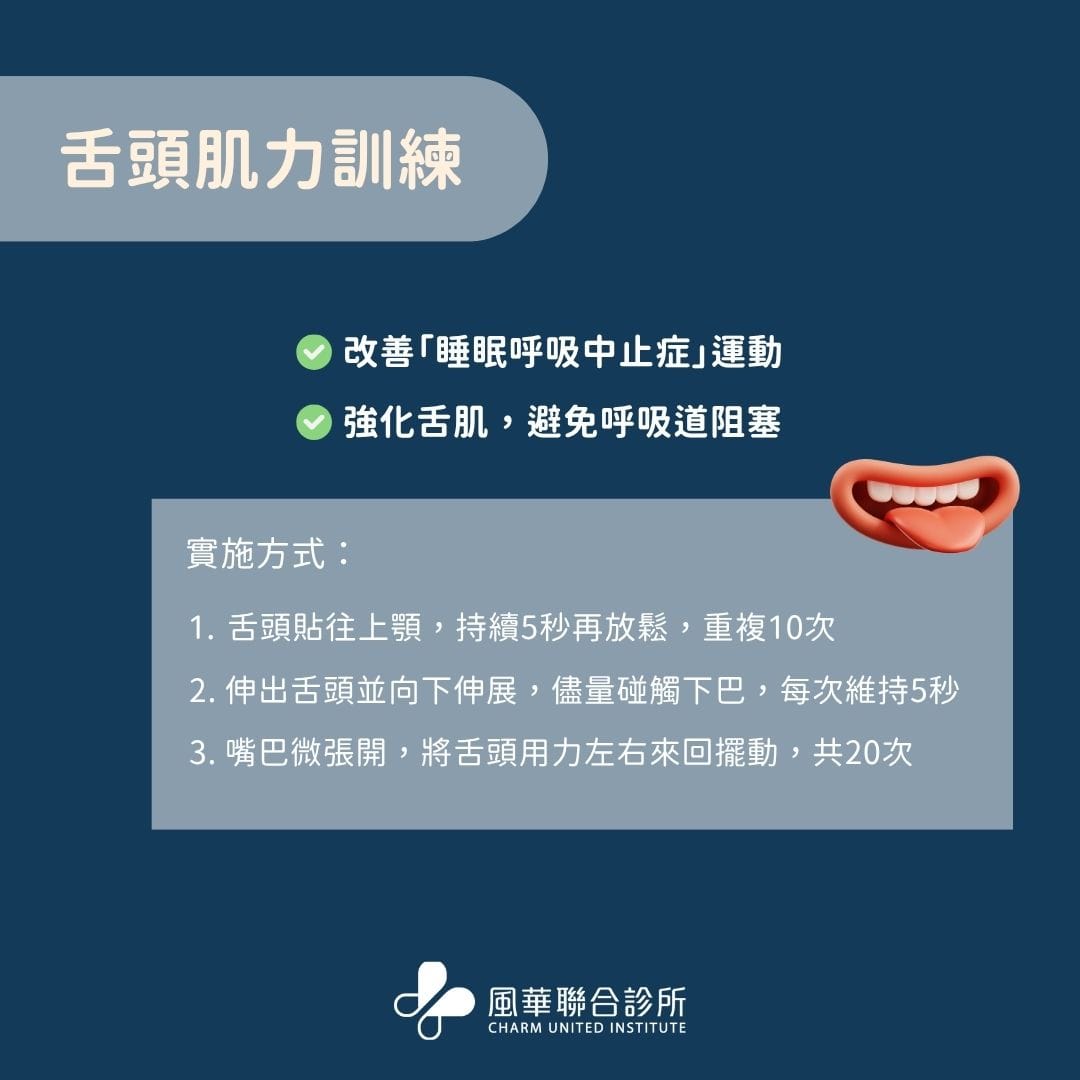
If the tongue falls back during sleep, it can easily cause airway obstruction.Strengthen tongue muscles, which can reduce this:
- Tongue up against the roof of your mouth, hold for 5 seconds, then relax, and repeat 10 times.
- Stick out your tongue and stretch it down, try to touch your chin, hold for 5 seconds each time.
- Open your mouth slightly and move your tongue vigorously to the left and right, back and forth 10 times.
These movements can increase tongue stability and are one of the common and practical methods of "apnea exercises".
Nasal breathing training
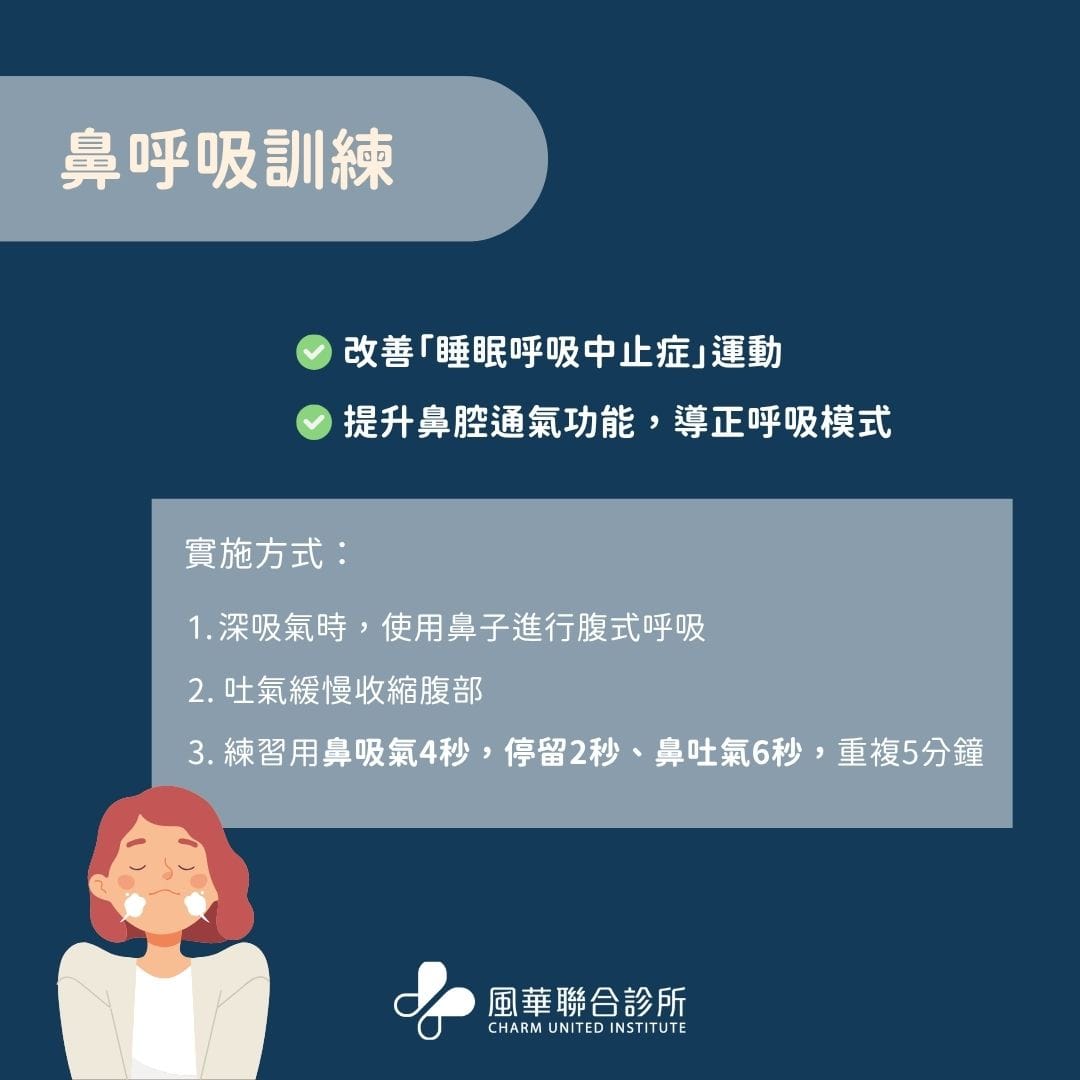
Long-term mouth breathing can easily worsen apnea, so it is very important to correct nasal breathing:
- Use your nose to breathe deeply while performing abdominal breathing, slowly contract your abdomen as you exhale.
- practiseBreathe in through your nose for 4 seconds, hold your breath for 2 seconds, and breathe out through your nose for 6 seconds, repeat for 5 minutes.
Nasal breathing training helps improve breathing rhythm and increase oxygen exchange efficiency during sleep.
Apnea exercises have limited effect in improving snoring!
Although these training methods have certain effects, it is still necessary to understand theirThe effectiveness is limited and conditional, cannot be regarded as a panacea.
Under what circumstances is exercise effective?
Sleep apnea exercises can be particularly helpful for the following groups:
- Patients with mild to moderate obstructive sleep apnea
- No obvious structural abnormalities (such as retruded jaw, enlarged tonsils)
- Those who are willing to execute for a long time and have high regularity in training
These patients can improve muscle tone through exercise, thereby reducing the chance of airway collapse..
When should I seek professional help?
If you meet the following conditions, even if you are diligent in exercise training, it is still recommendedConsult a professional doctor as soon as possible:
- Those with AHI higher than 15 and accompanied by mandibular retraction and chin retraction
- Have a history of chronic diseases such as hypertension, diabetes, heart disease, etc.
- Symptoms include daytime sleepiness, difficulty concentrating, and significant memory loss
At this time, further sleep testing and medical treatment should be performed.Sports only play a supporting role.
Snoring is more effective when combined with aerobic exercise
In addition to local training,Systemic exercise is also an important part of the management of apneaIn particular, losing weight through aerobic exercise can help improve airway pressure.
- swim: Strengthen lung capacity and increase breathing regulation ability.
- Brisk walking or jogging: Helps burn fat and reduce fat accumulation in the neck.
- Cycling: Improve cardiopulmonary function and improve sleep quality.
According to general research, aerobic exercise combined with local muscle training for "exercise to improve snoring" canCan significantly improve overall symptom improvement.
How do oral surgeons view apnea movements?
From the perspective of oral surgery, for patients with "structural problems", exercise alone may have limited effect, but it still has auxiliary value.
Structural problems still require medical intervention
Even daily practice of apnea exercises may only provide limited improvement if you have any of the following problems:
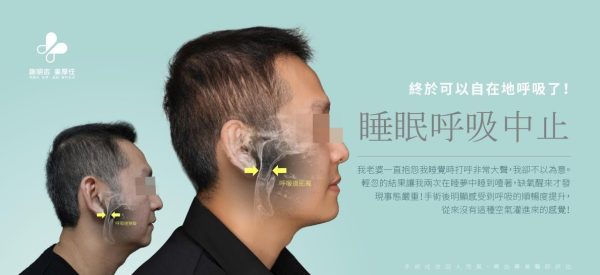
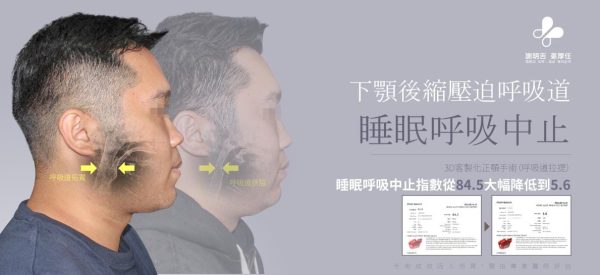
- Retracted jaw narrows the airway
- The tongue is too large, causing pharyngeal obstruction
- Structural stenosis such as nasal septum deviation
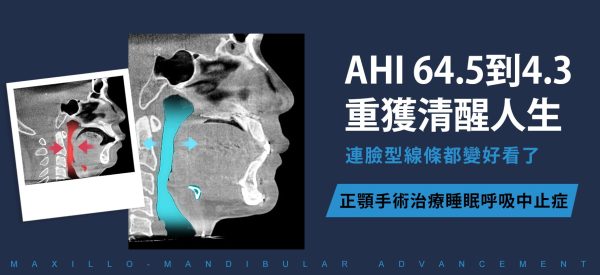
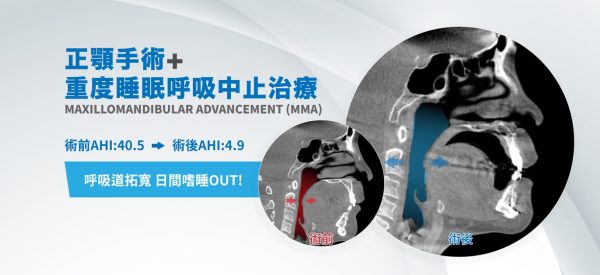
These patients often needOrthognathic surgeryFor fundamental improvement, it is recommended to seek evaluation by a specialist.
Combining exercise can enhance the effectiveness of treatment
Even after surgery,Sleep apnea exercise should still be combined with postoperative, the following are common combination strategies:
- Continued tongue and laryngeal training after surgery, which can reduce the chance of recurrence
- Combine aerobic exerciseWeight control,Keep your airways open
Physicians often encourage patients to takeIntegrative treatment model, from lifestyle habits, local training to necessary medical intervention, comprehensively improve sleep quality.
Strategies to improve snoring in daily life

In addition to therapy and exercise,There are also some simple behavioral adjustments that can be implemented in daily life, which is very helpful to reduce snoring and improve sleep quality:
Sleeping position adjustment
- Side SleepingPrevents the tongue from falling and blocking the airway
- Avoid sleeping on your back. If necessary, use a side sleeping pillow to assist
Quitting smoking and avoiding alcohol
- nicotineAlcohol relaxes the respiratory muscles
- This causes the airway to collapse and vibrate more easily, causing snoring
Establish a regular routine and sleeping environment
- Maintain regular bedtimes and wake-up times
- Avoid using electronic products before going to bed.Create a quiet, dim, and cool sleeping environment
Exercise combined with orthognathic surgery can improve apnea permanently
In summary,Exercise for sleep apnea is an effective adjunct to treatment for mild to moderate cases, can improve local muscle tension and reduce the chance of snoring and airway collapse.
The treatment effect can be further optimized if combined with aerobic exercise and weight control.
For patients with moderate or above disease accompanied by abnormal bone structure, they should seek medical intervention as soon as possible, including orthognathic surgery or sleep braces, followed by subsequent muscle training to prevent recurrence.
The most important thing is to establish daily healthy habits, detect abnormal symptoms early and deal with them actively, so as to effectively control the progression of the disease and maintain a good quality of life. Make an appointment for a professional evaluation at Fenghua Joint Clinic now and regain healthy sleep!
Further reading:
- Is exercise effective for sleep apnea? Is it possible to improve snoring through exercise? Experts explain how to improve snoring through exercise
- What happens if the blood oxygen level is low in sleep apnea? How apnea can be a health concern for you
- Am I a candidate for orthognathic surgery? Understand the principles, advantages and processes of orthognathic surgery at once