

Will surgery cure sleep apnea? Understanding the "blockage point" is crucial for choosing the right surgery.
Surgery for apneaThe core goal is to remove the "obstruction" that causes snoring and airway collapse. Surgery for sleep apnea is a major decision for patients; after all, surgery is no small matter.Fenghua United ClinicWe will take you through the three surgical methods for apnea surgery. Then come and watch with us~
Recommended clinic for sleep apnea in Taipei - Feng Hua United Clinic
Is surgery necessary for apnea?
DiscussingapneaDuring treatment, we can use the therapyThey are divided into two main categories: conservatives and activists..
conservativeIt is generally recommended to first try non-surgical methods, such as lifestyle modifications, weight loss, and the use of positive pressure ventilation (CPAP), to improve the patient's symptoms. The advantages of these methods are...Lower risk and does not require hospitalization, but has the disadvantage that it may have limited effectiveness in some severe cases.
In comparison,ActivistsThey believe that surgery can directly improve the structure of the airway, thereby significantly reducing the frequency and severity of sleep apnea. Although surgery may carry higher risks and longer recovery times,For some patients who cannot receive CPAP or are diagnosed with moderate to severe disease, surgery may be the only effective solution..
conservative therapy
- advantage: Low risk, no need for hospitalization
- shortcoming: Limited effect on moderate to severe cases
positive therapy
- advantage: Can directly improve the structure
- shortcoming: High cost and long recovery time
What should I do if conservative treatment fails?Orthognathic surgery is a lifesaver for patients with moderate to severe apnea!
Fenghua United Clinic provides professional treatment to help you get rid of respiratory crisis!
Is surgery good for apnea?
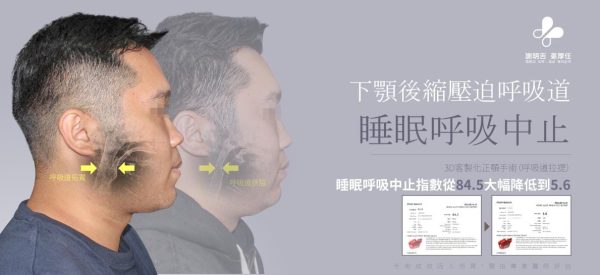
Based on clinical experience, for patients with moderate to severe sleep apnea...After undergoing orthognathic surgery, their symptoms all improved significantly..
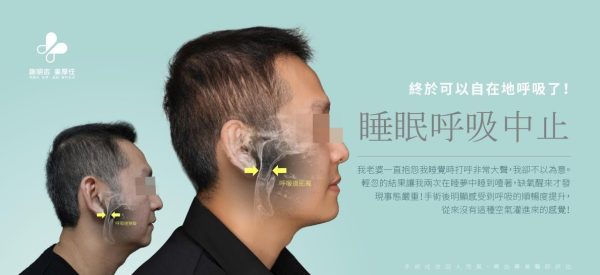
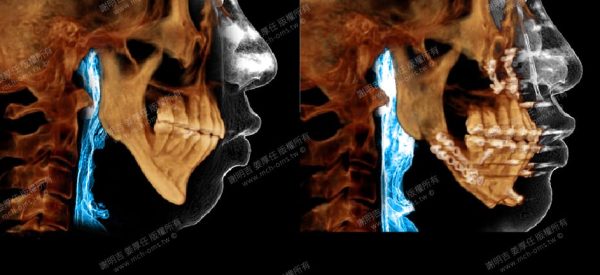
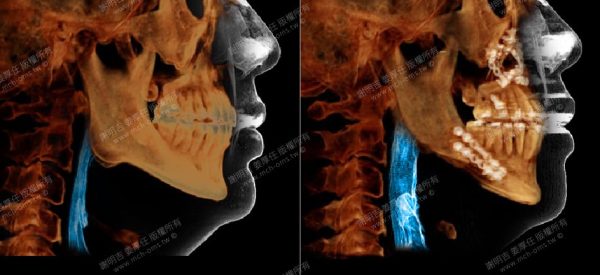
Orthognathic surgeryIt can expand the upper respiratory tract and reduce airway obstruction, thereby reducing the frequency of nighttime apnea and allowing patients to no longer suffer from respiratory treatment.
In addition, the recovery process after orthognathic surgery is also very important. Patients need to follow the doctor’s instructions for post-operative care, including regular follow-up visits and paying attention to diet.Promote wound healing and reduce risk of complications.
What are the surgical options for sleep apnea?
Suspuropalatopharyngoplasty
Uvulopalatopharyngoplasty (UPPP) isRemoval of the vasculature and tonsils, and shortening part of the soft palate, making the oral space appear larger, but clinical data shows that itsLess than 50% success rate in improving sleep apnea.
Undergo sevopharyngoplastyGeneral anesthesia is required and the recovery period is relatively long. After surgery, the wound is very painful and bleeds easily..
In addition, since the overhang completely disappears after being cut off! When swallowing or drinking, the risk of choking will also increase, so patients should be mentally prepared.

Subsequently, in order to reduce the problem of postoperative choking in patients, the medical community proposed another "restorable Uvulo-Palatal Flap (UPF)". The method used was not to remove the uvula, but to yesLift the overhang upwards to free up some usable space.
At the same time, it can also improve the looseness of the drape by tightening it without damaging the drape, thereby reducing postoperative pain and shortening the recovery period.
But becauseThe space removed by lifting up is smaller than the space after removing the overhang. It only improves the problem of loose overhang, but the success rate will naturally decrease..

tongue base anterior placement
When we fall asleep, our head will naturally tilt back. At this time, the bottom of the tongue will touch the posterior pharyngeal wall, thus blocking the airway space.
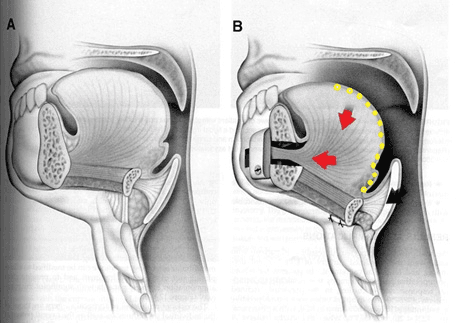
TONGUE BASE REPOSITIONING is to solve the problem of tongue base falling backward.Tighten the tongue muscles forward, so that when the patient falls asleep, the bottom of the tongue will not fall back, causing the respiratory tract to be blocked, which is more severe.Suitable for patients with mild sleep apnea.
Tongue base prepositioning surgery is not a way to widen the airway space, but can only improve the obstruction problem of the tongue base falling backward.
Orthognathic surgery
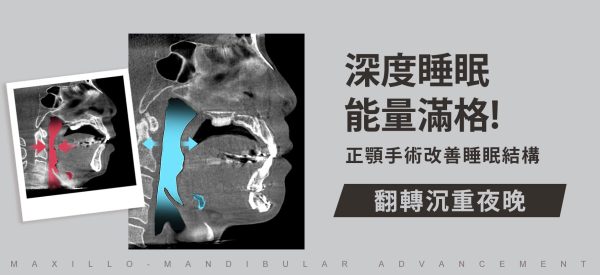
Orthognathic airway widening surgery (Maxillo Mandibular Advancement, MMA) is the only treatment method that involves enlarging the cage.Currently the only treatment method that can simultaneously improve the obstruction of the respiratory tract caused by uvula laxity and tongue base recession..
Orthognathic surgery can consider multiple choke points at the same time (multilevel surgery, multi-level surgery) and improve them. It can even reshape facial bones and improve your face shape.
For patients with sleep apnea, the success rate of orthognathic surgery can reach more than 95%; for example: According to "Clinical Sleep Disorders" written by Dr. Paul R. Carney and others (Clinical Sleep Disorders) mentioned in the book,Among 175 cases of sleep apnea, 166 were cured after orthognathic surgery (MMA), with a success rate of 95%.
In fact, improving sleep apnea through orthognathic surgery to reshape and adjust facial bones has become a future trend in the global medical community. Abroad,As long as the sleep apnea index is judged to be moderate to high (moderate to severe) after evaluation, the patient will be directly recommended to undergo orthognathic surgery..
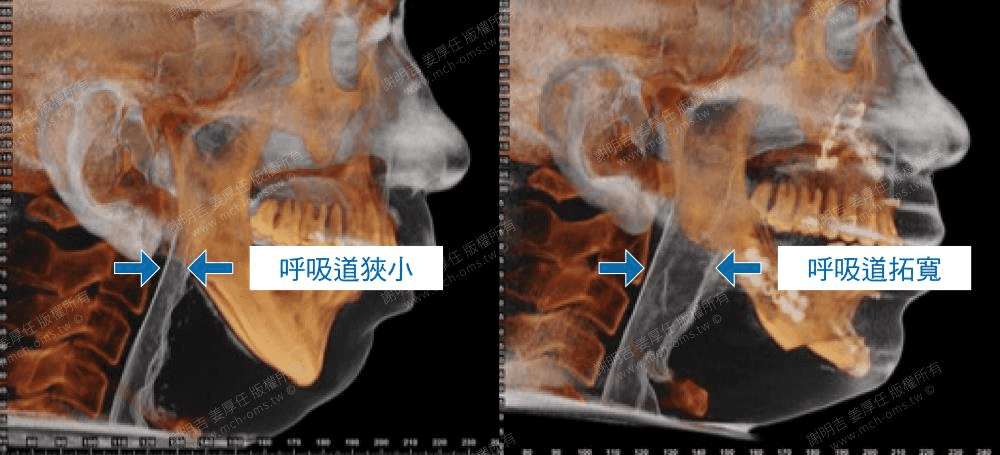
Orthognathic surgery is the treatment of choice for moderate to severe sleep apnea!
Fenghua United Clinic has helped many patients with its successful cases and professional techniques to help you embrace a new healthy life!
List of surgical methods for apnea
| Surgery name | Treatment principle | Applicable situations | Treatment effectiveness |
|---|---|---|---|
| Suspuropalatopharyngoplasty | Removal of excess soft tissue | Excess soft tissue causing obstruction | Common, with side effects |
| tongue base anterior placement | Move tongue base forward | Tongue base hypertrophy | ordinary |
| Orthognathic surgery | Adjust the structure of the upper and lower jaw bones | Abnormal jawbone or severe blockage | optimal |
Who is suitable for surgery to treat apnea?
Most patients who come to Fung Wah United Clinic for sleep apnea treatment have tried various methods in the past, but the treatment results were not as good as expected, so they decided to use orthognathic surgery to completely treat the problem.
Basically, any apnea syndrome can be significantly improved through surgery. People with the following problems should have orthognathic surgery to completely treat the disease.
- Those who fail conservative treatment: Those who cannot improve after non-surgical treatment such as CPAP.
- severe cases: If you have severe sleep apnea or daytime sleepiness.
- Those with abnormal anatomy: For example, those with abnormal upper and lower jaw bones causing airway obstruction.
What are the risks of surgery for apnea (orthognathic surgery)?
Surgery has risks. Common risks include:
- bleeding: Risk of bleeding during surgery.
- Infect: Any surgical procedure carries the risk of infection.
- Headache: Some patients said they would have headaches 3-5 days after surgery, but had no obvious symptoms afterwards.
- difficulty swallowing: Some patients may have difficulty swallowing within 1-2 weeks of surgery.
- sound changes: Such as hoarseness, etc.
Most surgical risks are caused by "human" factors, so you can get the best protection by looking for a professional doctor. Make an appointment at Fenghua United Clinic immediately and let us help you get back your lost sleep!
Sleep apnea surgery FAQ: Common questions
Q1: Is surgery always necessary for sleep apnea?
Not necessarily. Treatment is broadly divided into..."Conservative therapy"andSurgical treatmentIf throughLifestyle Adjustment,lose weight,CPAPIf symptoms can be controlled by methods such as [list of methods], conservative methods can usually be used first; however, if [the symptoms are]...Moderate to severe,orUnacceptable CPAP,orConservative treatment has limited effectivenessOnly then will a further assessment be conducted to determine if surgery is necessary.
Q2: Will surgery cure sleep apnea? How is the outcome assessed?
The goal of surgery is to improve the condition caused by...airway collapse的"Block point",makeNumber of nighttime breathing apneasandSeverity decreasedWhether it "will get better" depends on...Blockage location,Severity,Anatomical structureandSurgical options.
Q3: What are the surgical options for sleep apnea? What are the differences between the three surgical procedures mentioned in the article?
Commonly included: ① Umpraporopharyngoplasty (UPPP):resectionPart of soft tissue;② tongue base anterior placement:WillTighten the muscles at the base of the tongue.,improveTongue base posterior displacement;③ Orthognathic surgery (MMA):AdjustmentUpper and lower jawbone structures以Widening the respiratory tract,CanSimultaneously handle multiple blockage points.
Q4: Why is orthognathic surgery (MMA) considered an important option for patients with moderate to severe jaw problems?
Orthognathic surgery canExpanding the upper respiratory tract,Reduce airway obstructionAnd canSimultaneously improveuvula relaxationandTongue base posterior displacementThe resulting congestion problem belongs toMultilevel surgeryThe treatment method, therefore forModerate to severePatients often experience significant improvement.
Q5: Who are the best candidates for surgery to treat sleep apnea?
Commonly includes: ① Those who fail conservative treatment: If usedCPAPEven after these measures, the situation remains unresolved; ② severe casesIfSevere sleep apneaordaytime sleepiness;③ Those with abnormal anatomy:likeAbnormalities in the structure of the upper and lower jaw boneslead toAirway obstructionThe person.
Q6: What are the potential risks of surgery (orthognathic surgery) for sleep apnea?
Common risks includebleeding,Infect,Headache(Some patients after surgery)3–5 days(more obvious)difficulty swallowing(Some patients may)1–2 weeks(appearing inside), andsound changes(likehoarse voicewait).
Q7: If I don't want to wear CPAP, is surgery necessarily a better option?
Not necessarily. The article mentions that conservatives will take the first step.Lifestyle Adjustments,lose weight,CPAP等non-surgical methodsBut forUnacceptable CPAPOr diagnosed asModerate to severeFor patients, surgery may beOne of the effective treatment optionsIt still needs to be done byPhysician assessmentThe decision was made later.