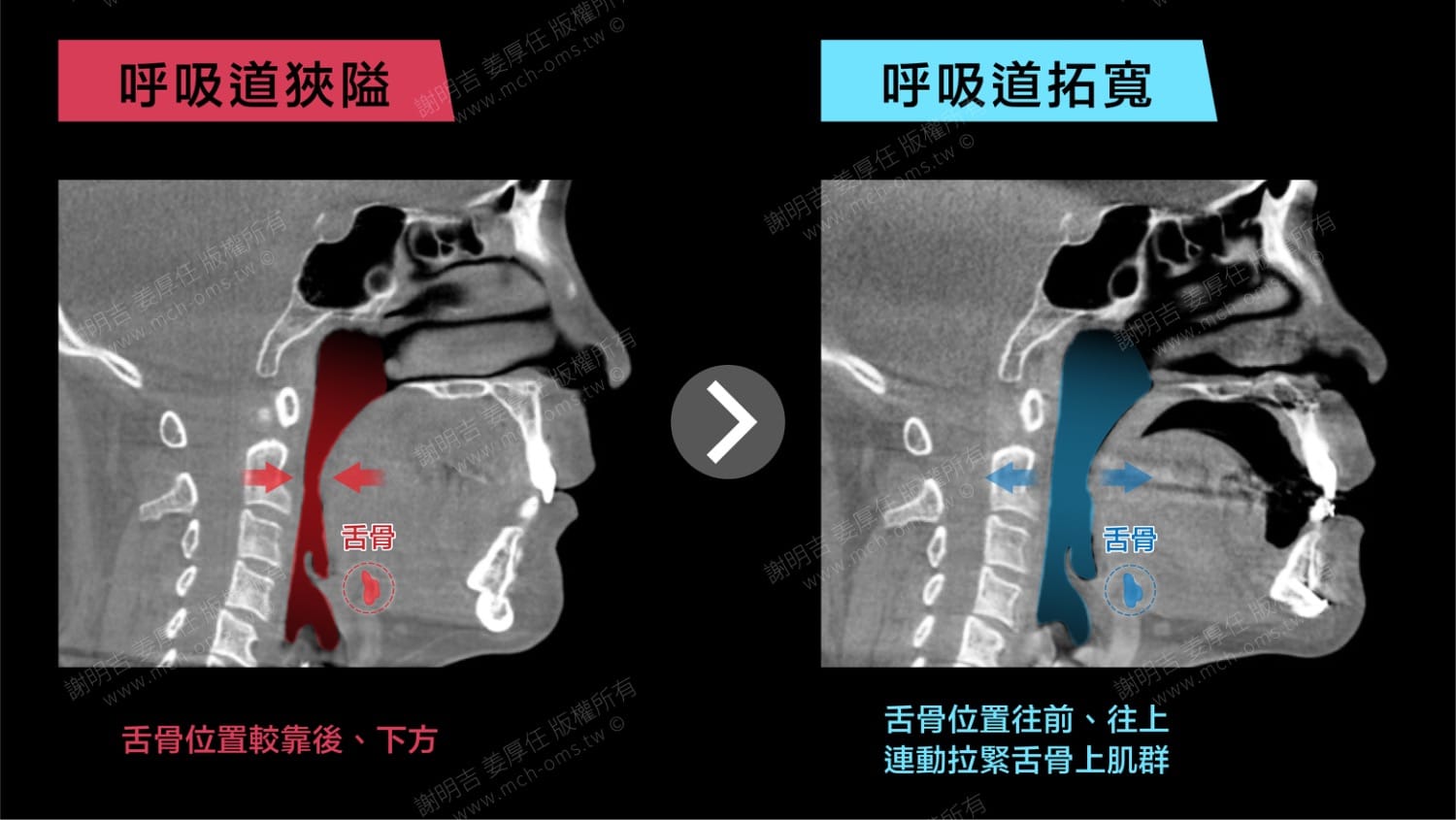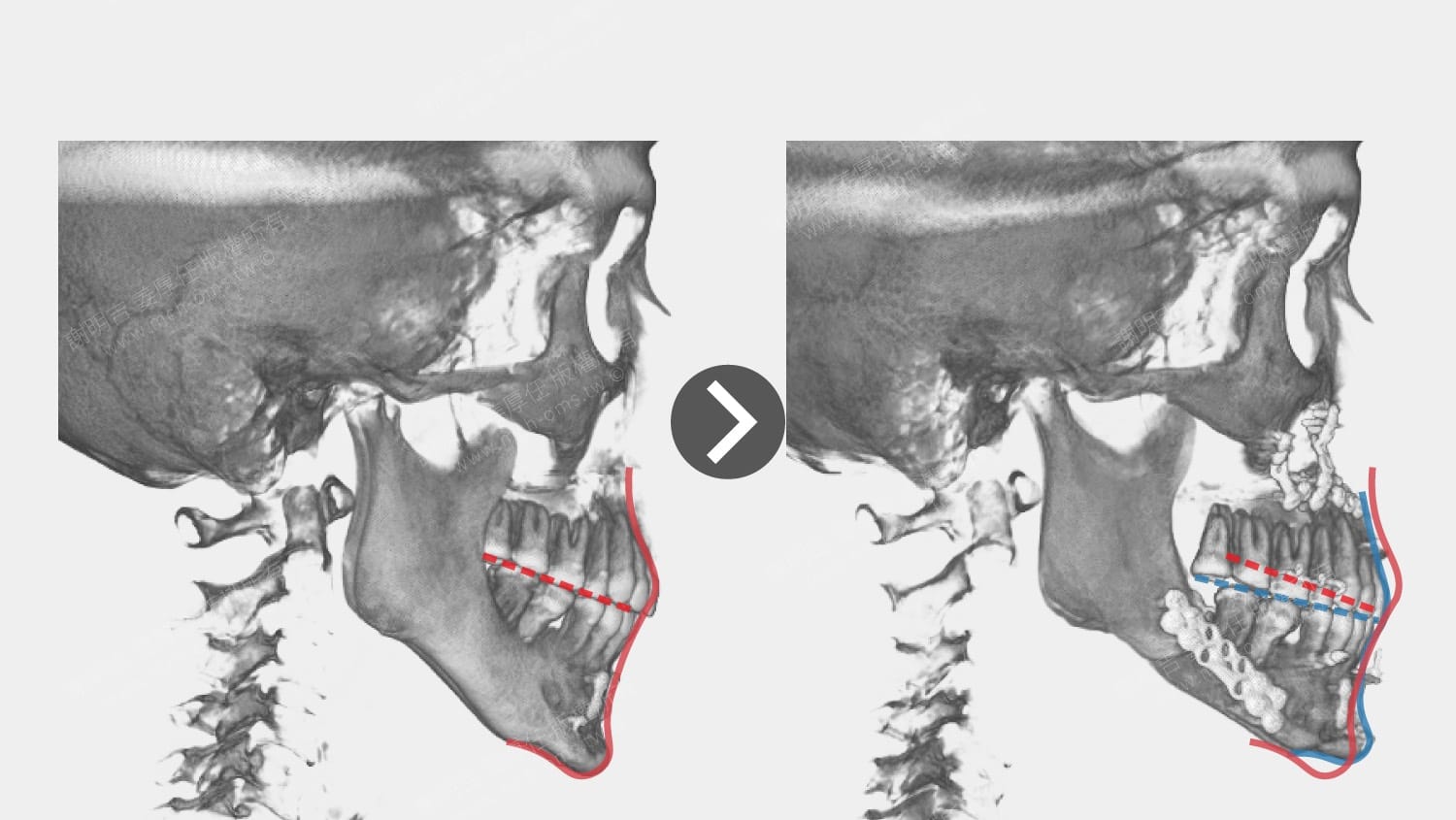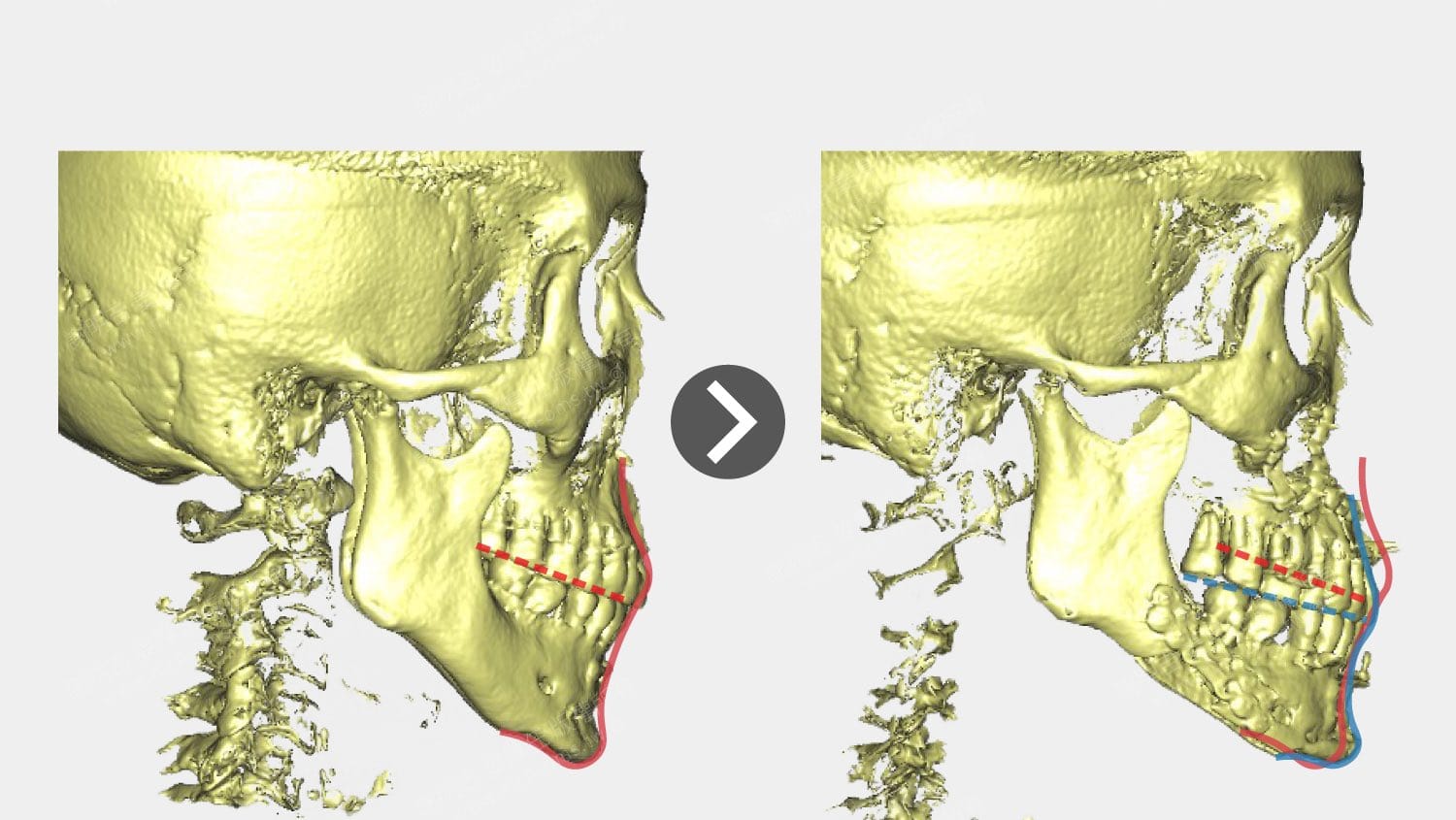



| Preoperative symptoms | surgical plan |
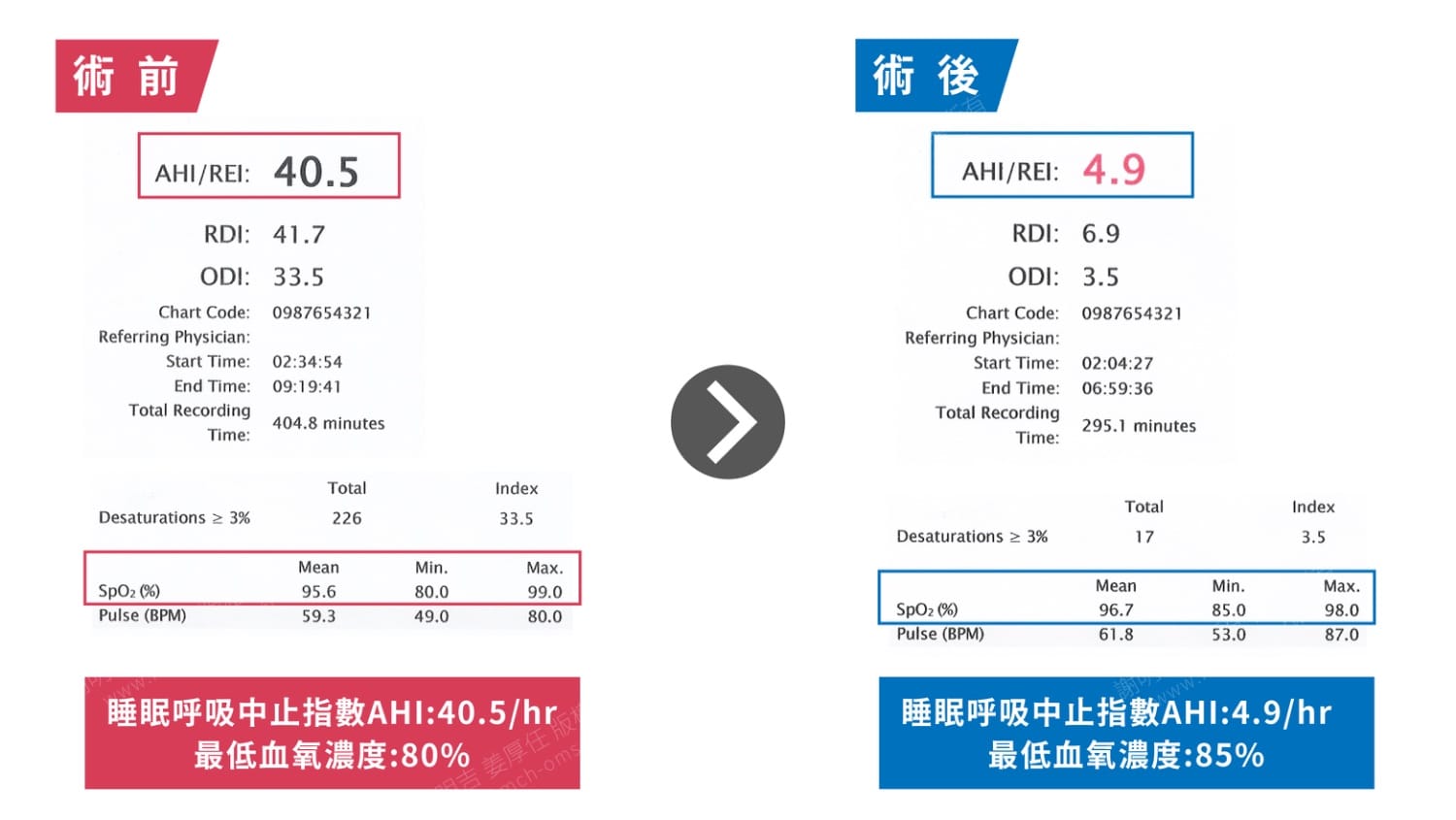
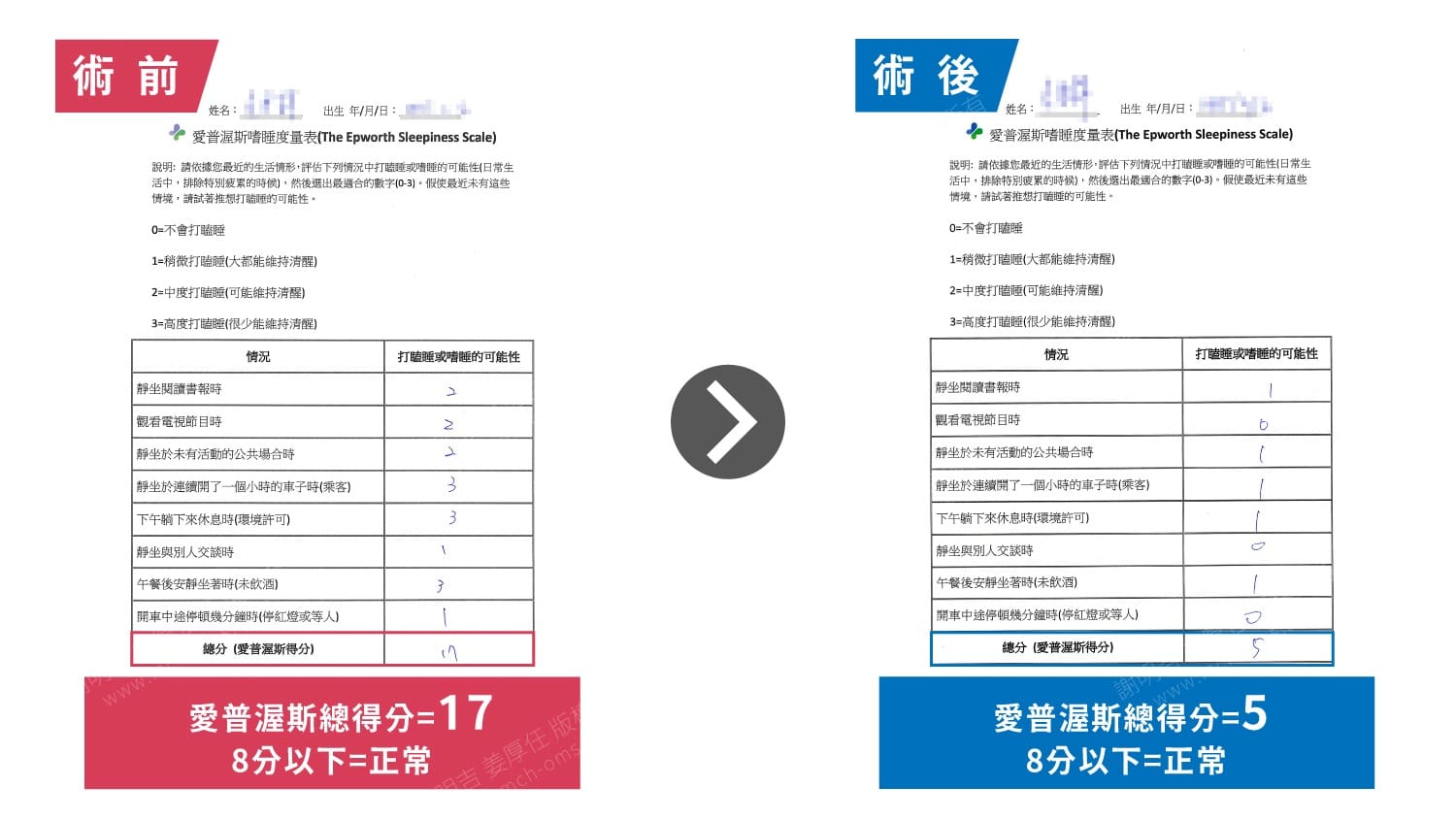
| Severe sleep apnea (AHI=40.5), severe daytime sleepiness (ESS=17), and obvious snoring | Perform a counterclockwise rotational jaw advancement surgery to widen the airway, tighten the respiratory muscles, and improve facial support. |
Diagnosis and treatment plan and postoperative changes
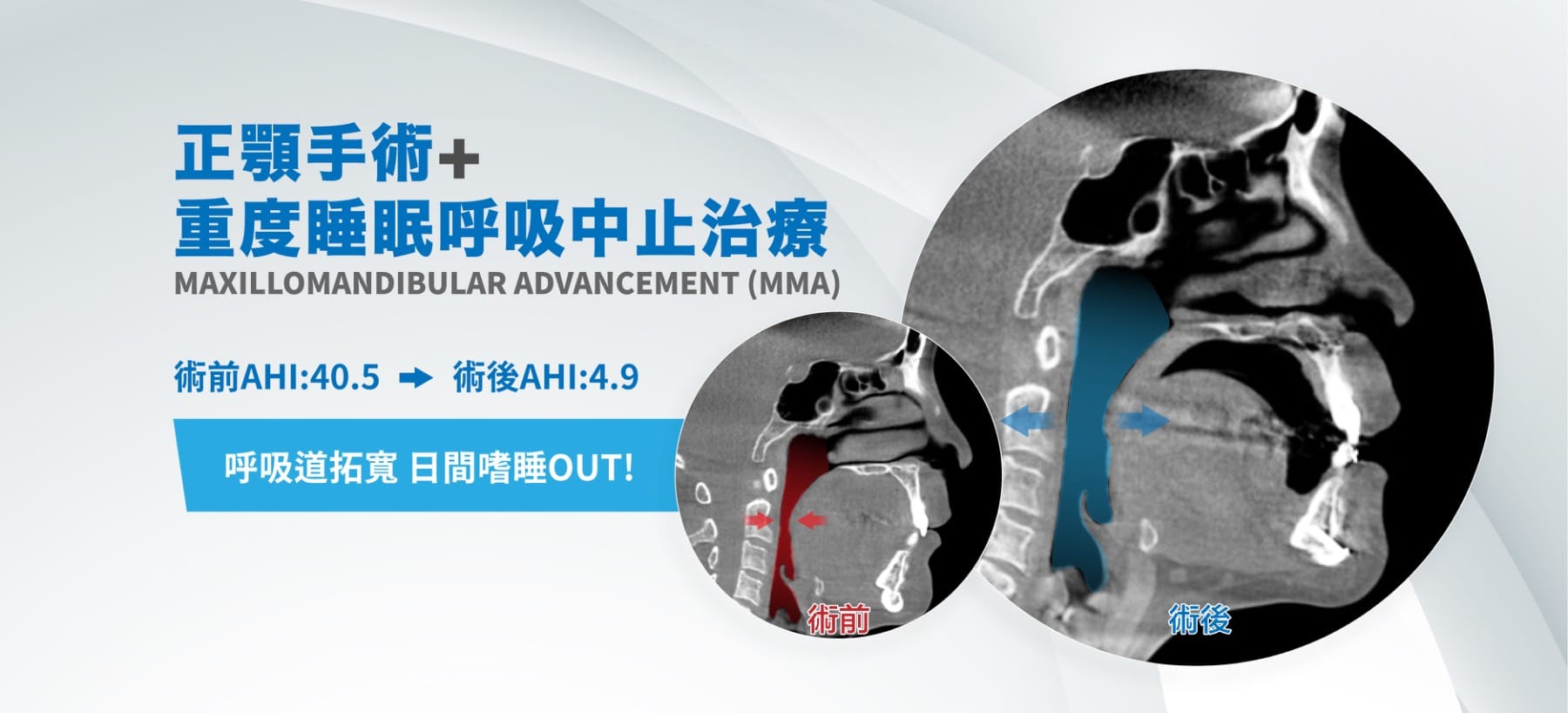
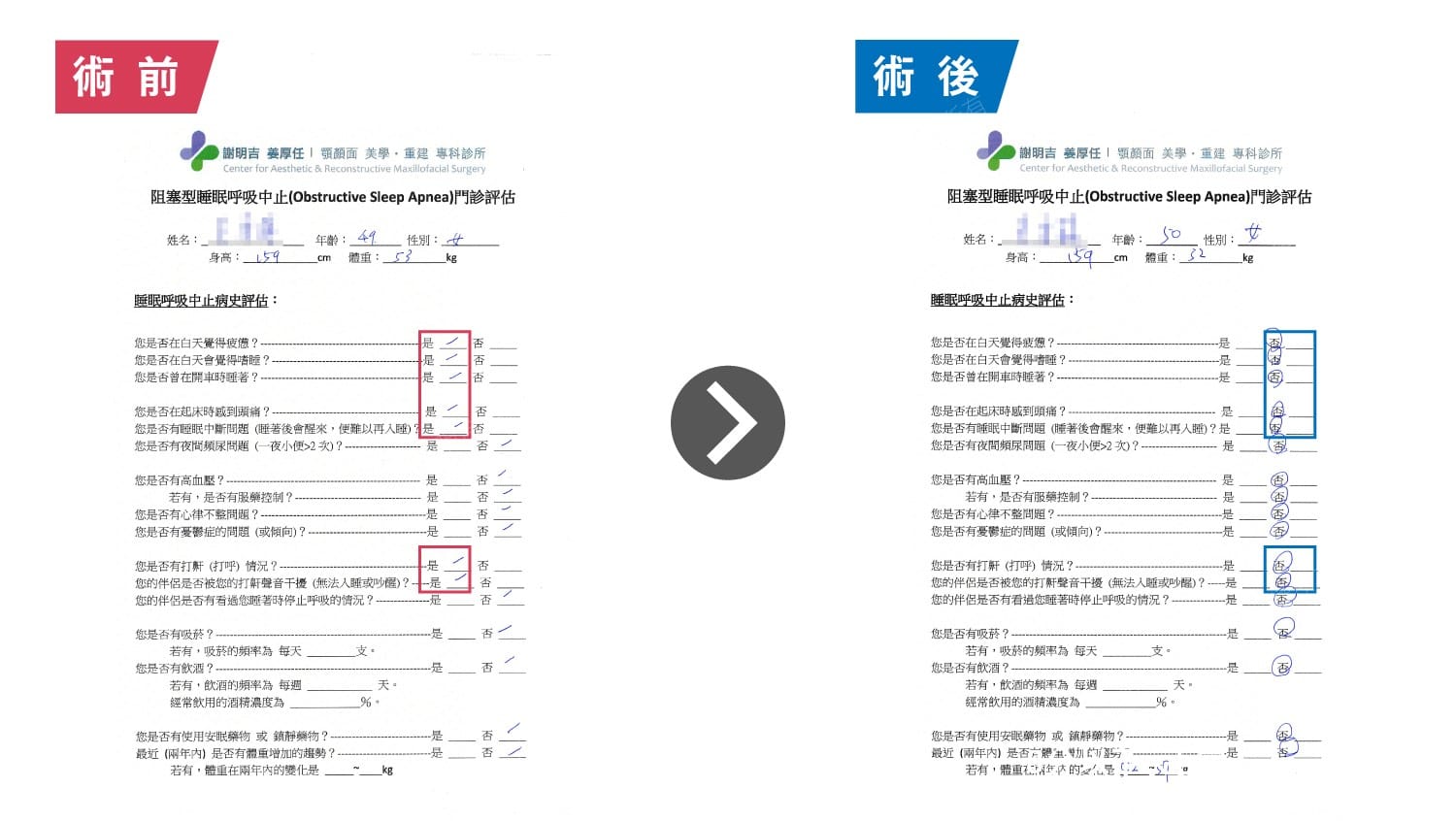
This 50-year-old woman suffered from severe sleep apnea (AHI=40.5), with symptoms including severe daytime sleepiness (Excessive Sleepiness Scale=17) and annoying snoring.
This 50-year-old woman was diagnosed with severe obstructive sleep apnea (AHI = 40.5), presenting with symptoms including pronounced daytime sleepiness (Epworth Sleepiness Scale, ESS = 17) and disruptive snoring.
What is more special is that the CT scan showed that in addition to the expected narrow airway, it can be seen that she had undergone the Wassmund and Kole Procedure when she was young. This is a surgery that removes one premolar on each side of the upper and lower jaws, and then moves the upper and lower jaws backwards through bone cutting to solve the protruding mouth.
Notably, her CT scan revealed not only the expected airway narrowing but also evidence of having undergone the Wassmund and Kole procedures in her youth. These procedures involve extracting one premolar from each quadrant of the upper and lower jaws, followed by osteotomies to reposition the maxilla and mandible posteriorly—typically performed to correct bimaxillary protrusion.
While there's no direct evidence that the Wassmund and Kole procedure causes sleep apnea, research does support the idea that shifting the upper and lower jaws backward reduces posterior airway space, indirectly increasing the risk of sleep apnea. Dr. Xie designed a counterclockwise rotational jaw surgery (CCWR-MMA) for her. This procedure successfully separated her compressed upper and lower jaws, widened her airway, and tightened her respiratory muscles (preventing collapse). It also improved her neck-chin line and supported the concavity of her midface and lip area.
Although there is no direct evidence proving that the Wassmund and Kole procedures cause obstructive sleep apnea, existing research does support that posterior repositioning of the jaws can reduce the posterior airway space, thereby indirectly increasing the risk of developing sleep apnea.
Dr. Hsieh designed a counter-clockwise rotational maxillomandibular advancement (CCWR-MMA) surgery for her, which successfully expanded her compressed jaw structures, widened the airway, and tightened the pharyngeal musculature to prevent collapse. The procedure also improved her cervicomental contour and provided structural support to the midface and perioral region.
The postoperative sleep report showed that the AHI dropped to 4.9 (<5 represents cure), the sleepiness scale ESS also dropped to 5 (representing normal without daytime sleepiness), and her snoring problem was also solved.
Postoperative sleep studies showed a reduction in AHI to 4.9 (an AHI <5 indicates resolution), and her ESS score dropped to 5 (within normal range, indicating no daytime sleepiness). Her snoring was also effectively resolved.
Sleepiness scale and assessment before and after surgery
Comparison of tomography before and after surgery