

Sleep apnea treatment: airway lift and jaw lift

The operating room at Feng Hua Joint Clinic is equipped with surgical lights and anesthesia machines.
Case of a sleep apnea patient who is easily fatigued during the day undergoing airway lift or orthognathic surgery
Preoperative symptomssurgical plan
Retrusion of the mandible compresses the airway causing sleep apneaAirway lift surgery 3D customized orthognathic surgery Chin plastic surgery

I just want to have a good sleep...

Diagnosis and treatment plan and postoperative changes

Positive pressure respirators are often used as the first line of treatment for sleep apnea. However, many patients say that using a positive pressure respirator makes their mouth dry when they wake up, which greatly affects the sleep quality of the person next to them.

The case shared this time knew that he had a sleep apnea problem and was actively seeking ways to improve it. After learning about the principle of a positive pressure respirator, he flatly refused because he did not want to rely on machine oxygen delivery for the rest of his life.

After undergoing septoplasty, although his sleep apnea improved somewhat, it recurred soon after. This is a problem that is easily encountered in soft tissue surgery. Therefore, he approached Dr. Xie, hoping to achieve long-term and effective treatment through hard tissue adjustments during orthognathic surgery.

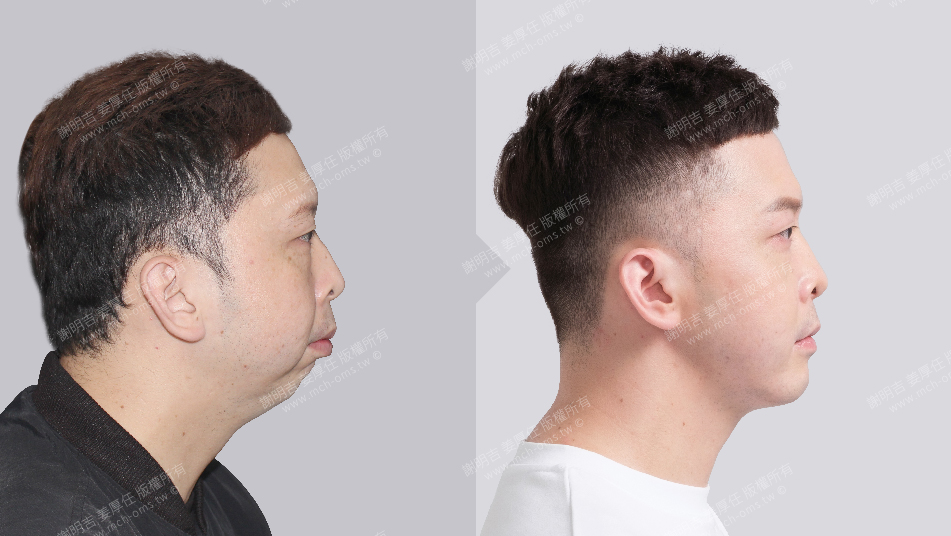
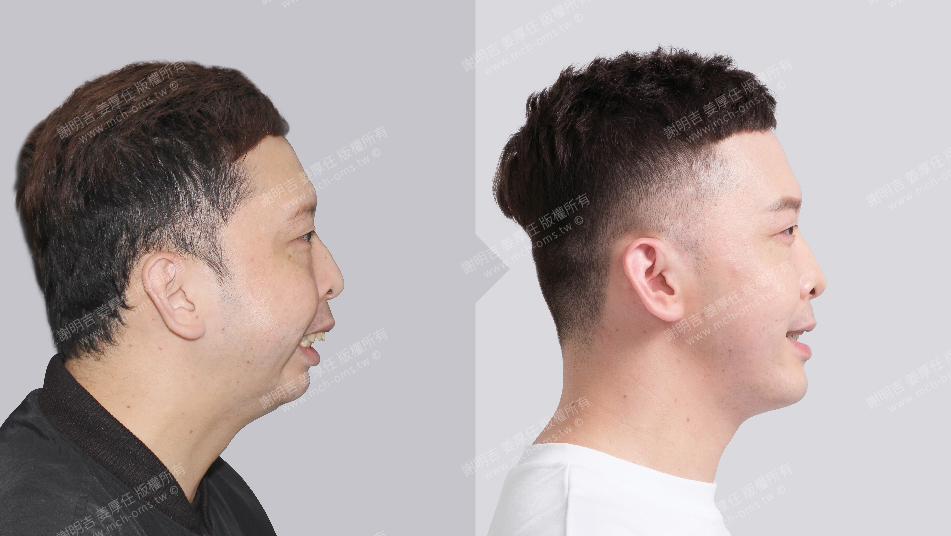
The orthognathic surgery we designed for him involves counterclockwise rotation of the upper and lower jaws, and forward rotation through the mandible, which supports and pulls apart the muscles that compress the respiratory tract from the lower jaw. Combined with chin osteotomy, it not only improves the compression of the respiratory tract, but also balances the profile of the face. line.

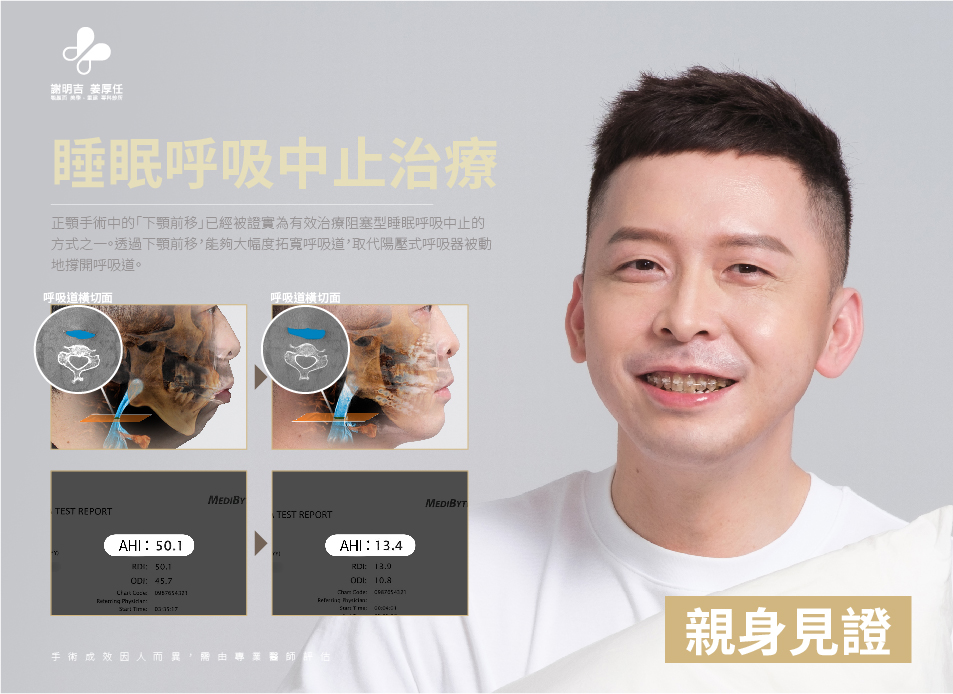
Sleep breathing tests before and after surgery showed that his snoring improved significantly from AHI50.1 to AHI13.4 three months after surgery.
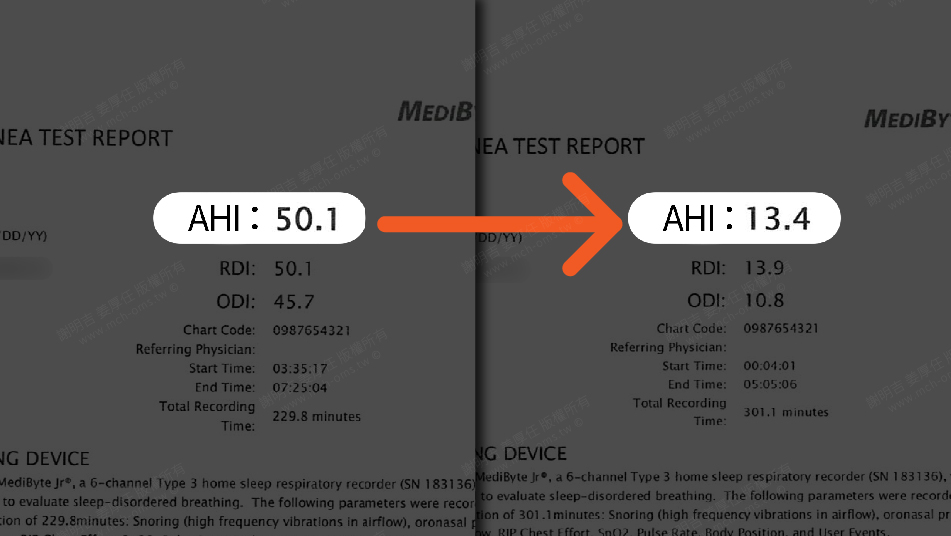
Sleep monitoring reports comparing before and after the procedure showed that the AHI (Awake Hypoesitivity Index) decreased from 50.1 to 13.4.

Appearance changes

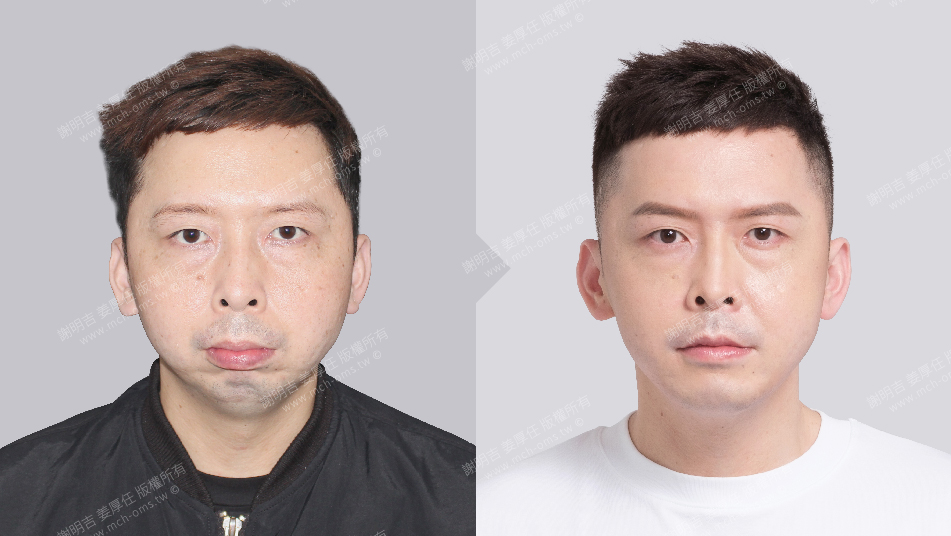
Before and after orthognathic surgery, frontal closed-lip appearance comparison
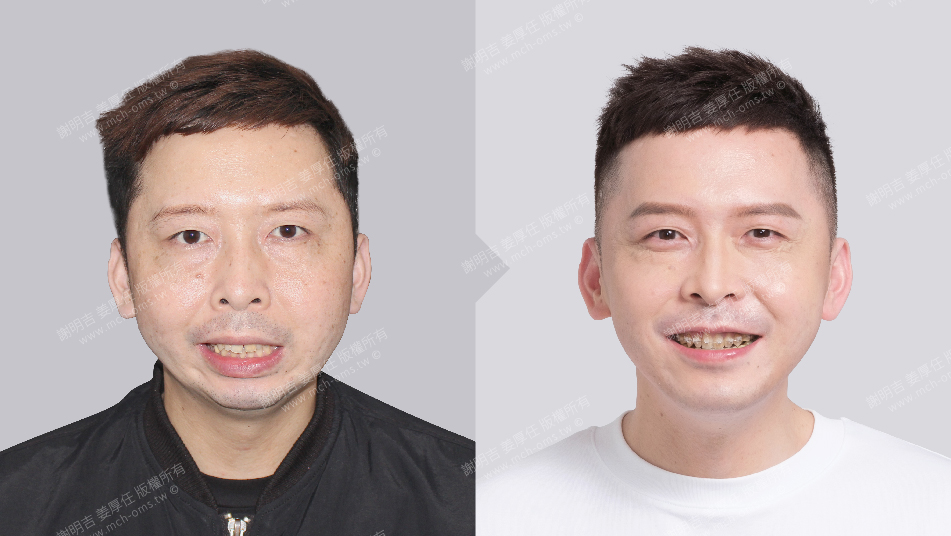
Comparison of frontal smile and dental appearance before and after orthognathic surgery
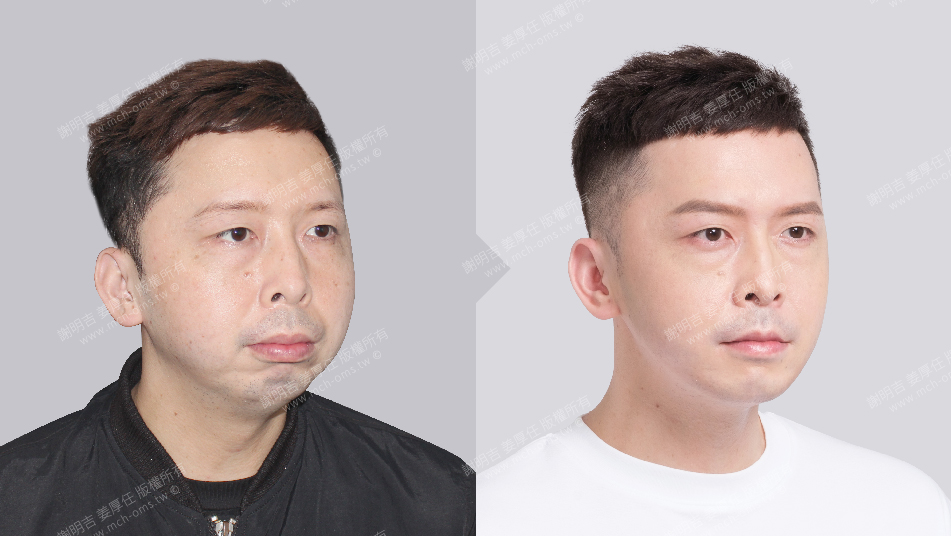
Comparison of 45-degree beveled closed lips before and after orthognathic surgery
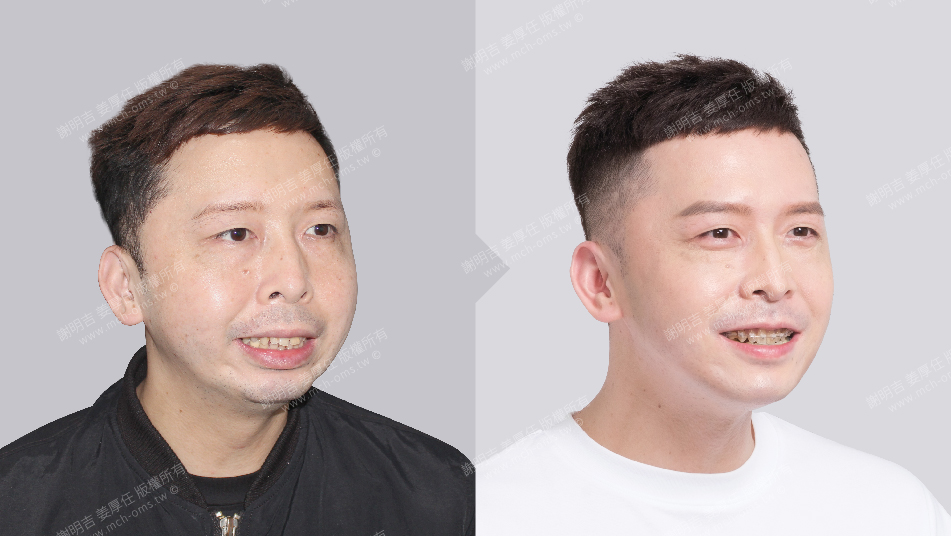
Comparison of 45-degree angled smile appearance before and after orthognathic surgery
Comparison of lateral lip contour before and after orthognathic surgery
Comparison of facial smile contours before and after orthognathic surgery
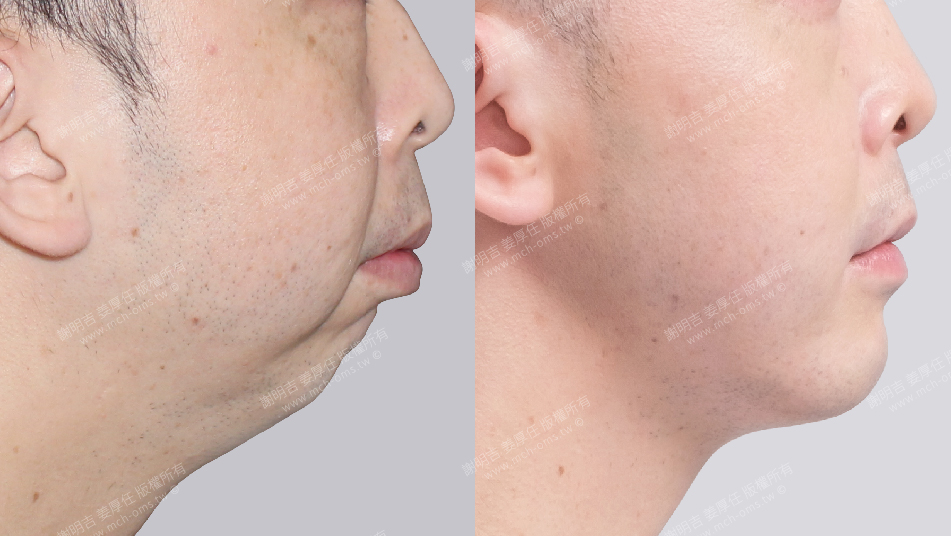
Close-up comparison of chin and neck lines before and after orthognathic surgery

Comparison of tomography before and after surgery
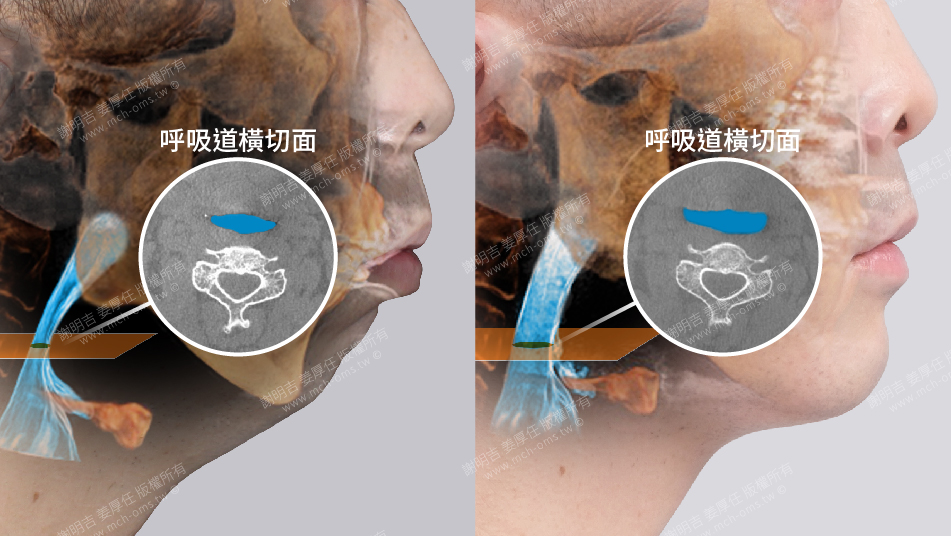
Comparison of transverse CT scans of the airway before and after orthognathic surgery
Charts showing sleep apnea treatment cases, including airway cross-sections and an AHI (Area Height Index) decreasing from 50.1 to 13.4.

Bite comparison before and after surgery
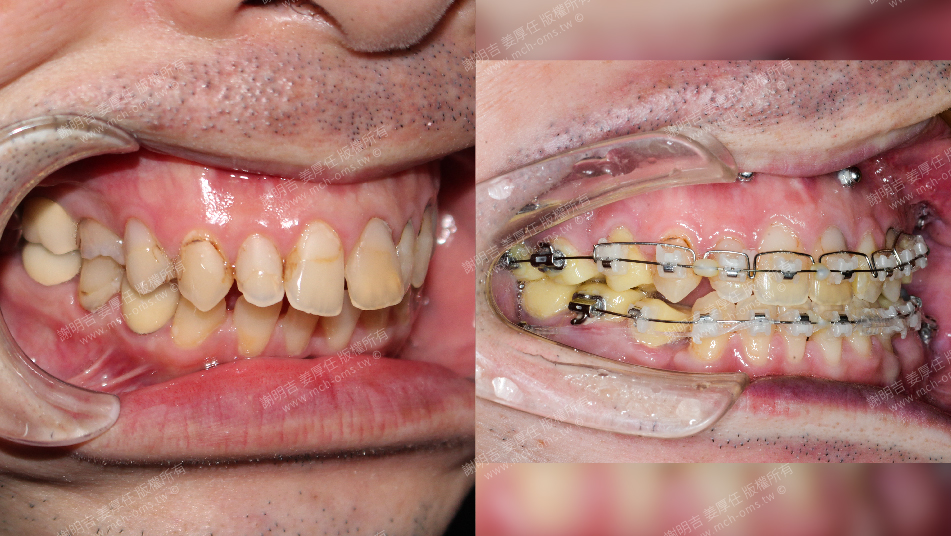
Comparison of intraoral occlusion and dentition before and after orthognathic surgery

Warm reminder

  1. Please follow the instructions of the doctor and nursing staff, take medicine regularly, pay attention to dietary taboos and keep the wound clean.
  2. There may be complications such as bleeding, infection, inflammation, etc. after surgery. The degree will vary according to individual physical differences, so careful care is required. If the above situations occur, please contact us as soon as possible.
  3. It is normal for 3 to 6 months after surgery to experience temporary slow sensation and unnatural expressions at the surgical site. Through independent massage and facial expression exercises, most patients will gradually improve within 6 to 12 months after surgery.
  4. Anesthesia has certain risks, which are related to the patient's own physical condition. Patients must honestly and clearly report their health status and treatment history to the treating physician and anesthesiologist, and do not hide anything.
  5. It is recommended to communicate with the doctor before surgery and clearly express treatment needs. However, the aesthetic appearance after surgery is subjective and should not be used as a basis for judgment of surgical results.
  6. The results of surgery vary from person to person and need to be evaluated by a professional physician. Case pictures are publicly used with the authorization of the parties involved as auxiliary explanations of diagnosis and treatment, health education and medical knowledge sharing, and are for reference only.