


| 术前症状 | 手术计画 |
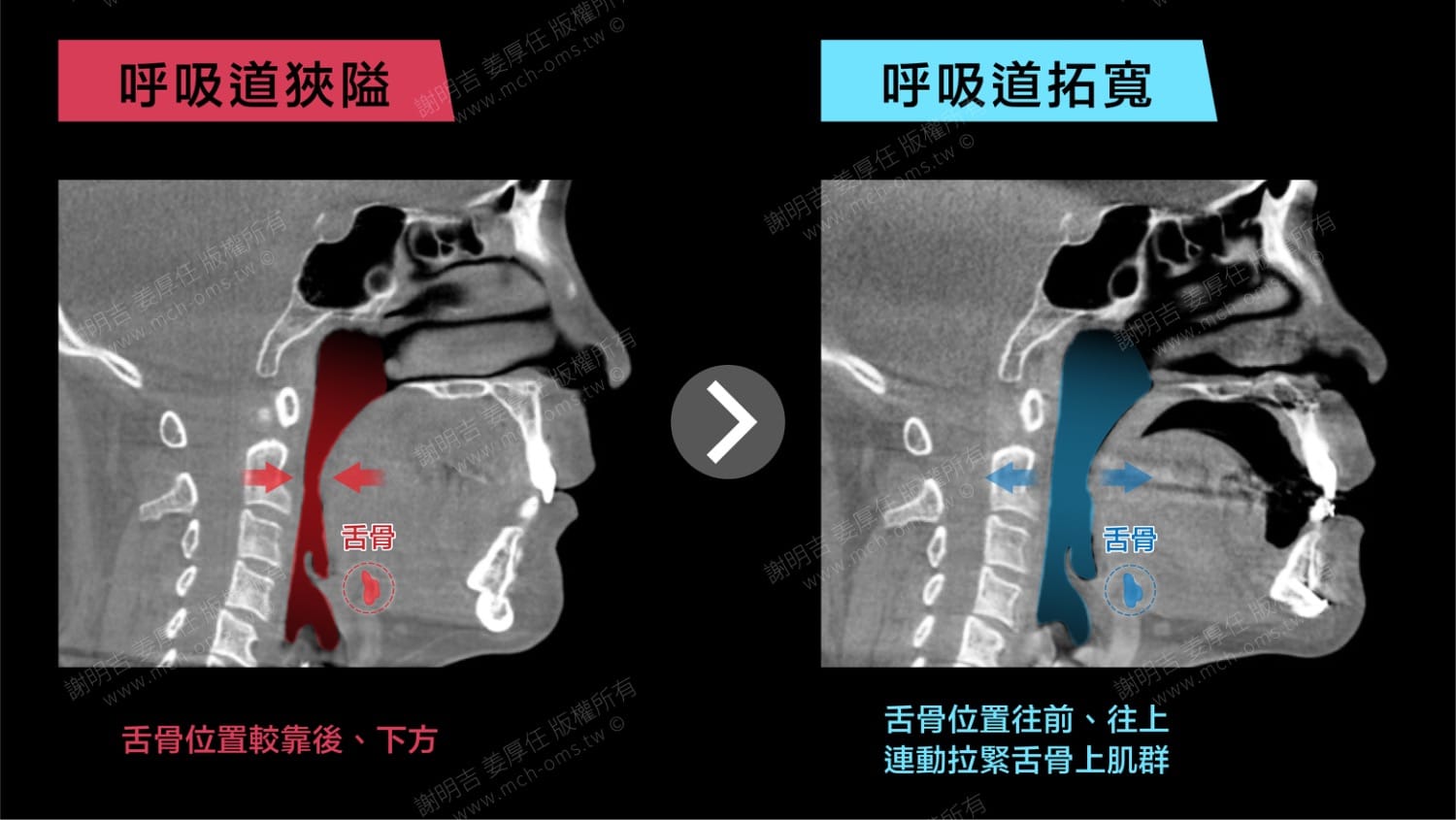
| 重度睡眠呼吸中止(AHI=40.5)、严重日间嗜睡(ESS=17)与明显鼾声 | 进行逆时针旋转型双颚前移手术,拓宽呼吸道、拉紧呼吸肌群并改善脸型支撑 |
诊疗计画及术后改变
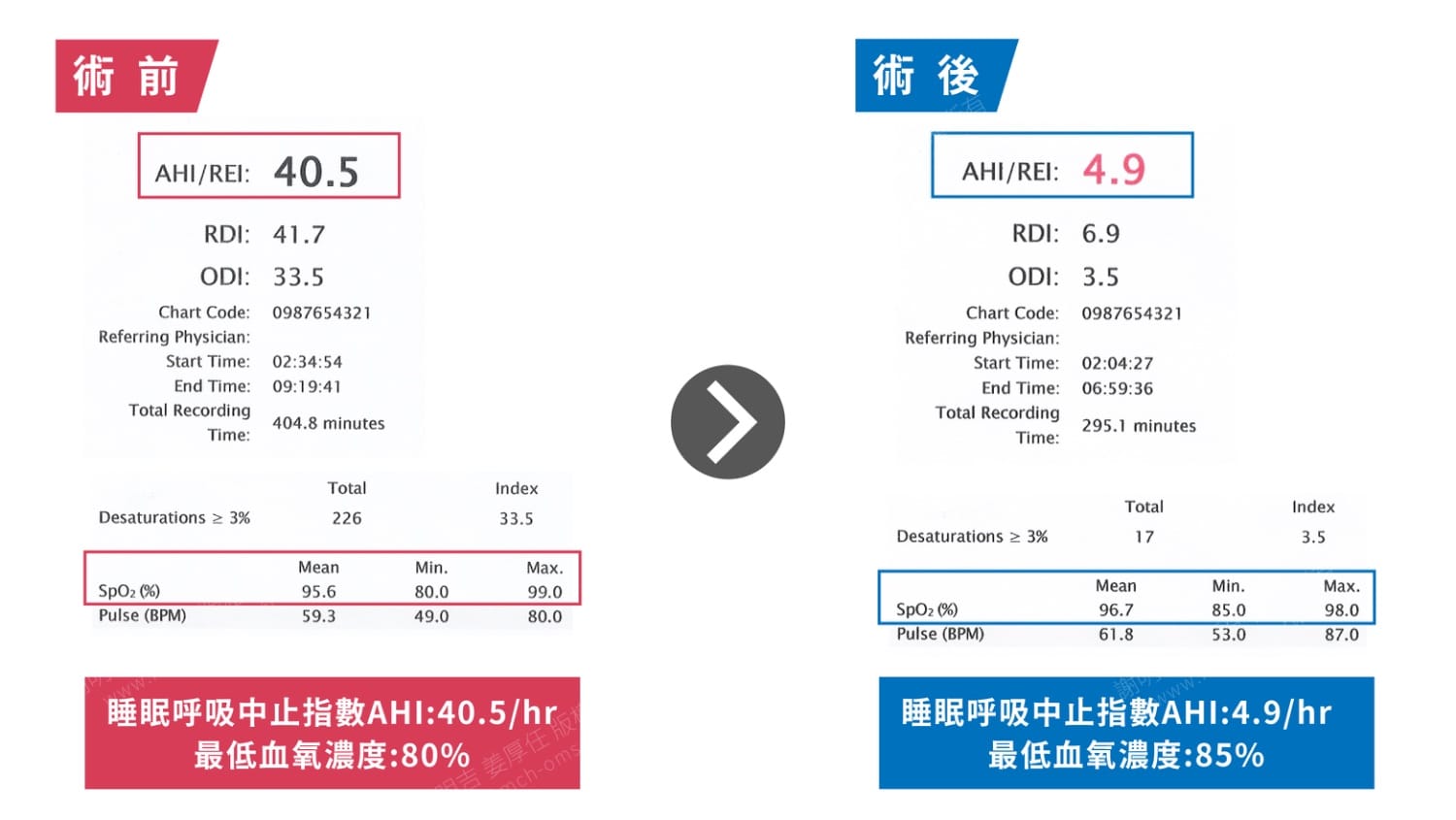
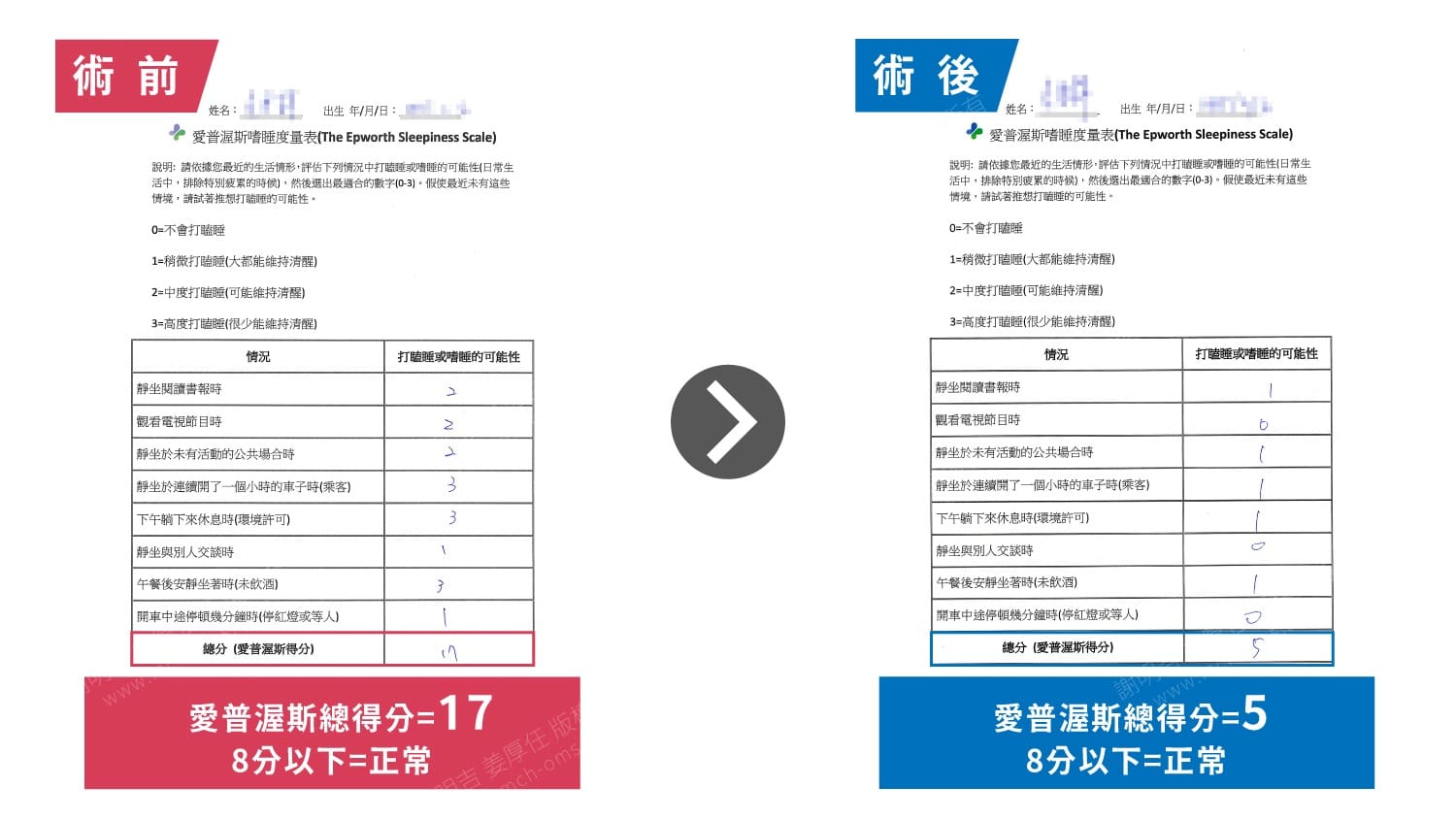
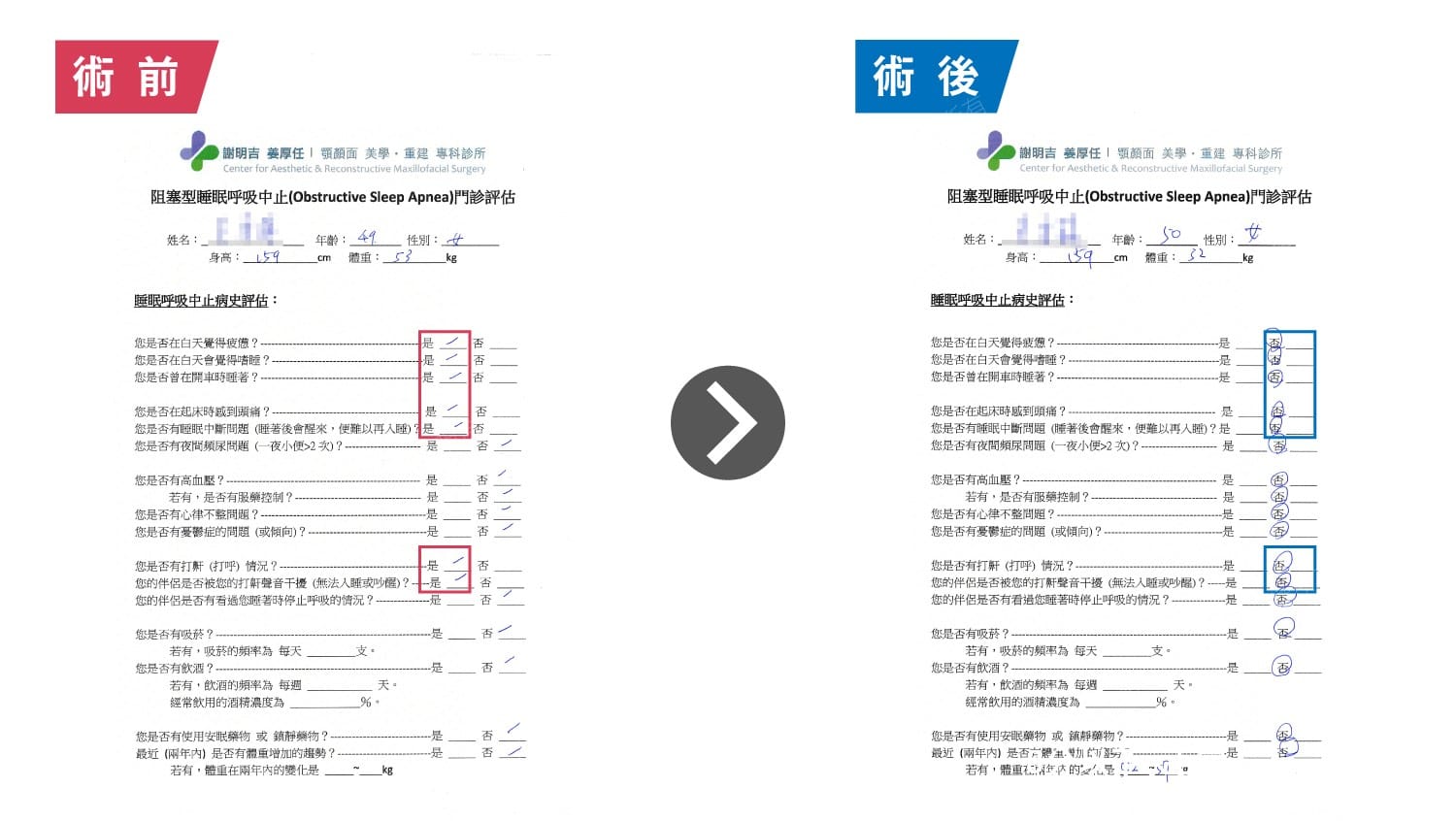
这位50岁的女士,罹患重度睡眠呼吸中止(AHI=40.5),症状包括严重的日间嗜睡(嗜睡度量表ESS=17),以及恼人的鼾声。
This 50-year-old woman was diagnosed with severe obstructive sleep apnea (AHI = 40.5), presenting with symptoms including pronounced daytime sleepiness (Epworth Sleepiness Scale, ESS = 17) and disruptive snoring.
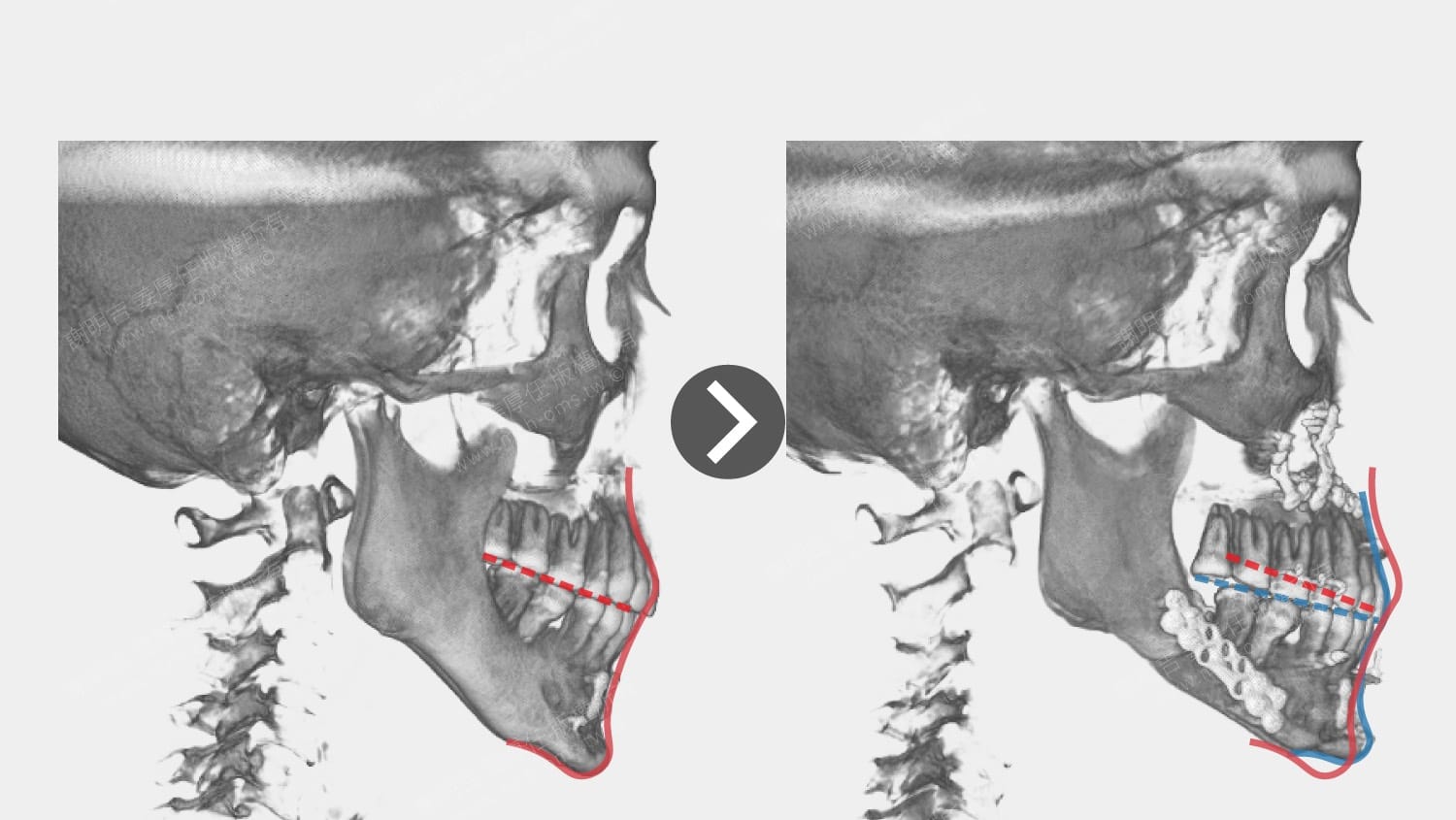
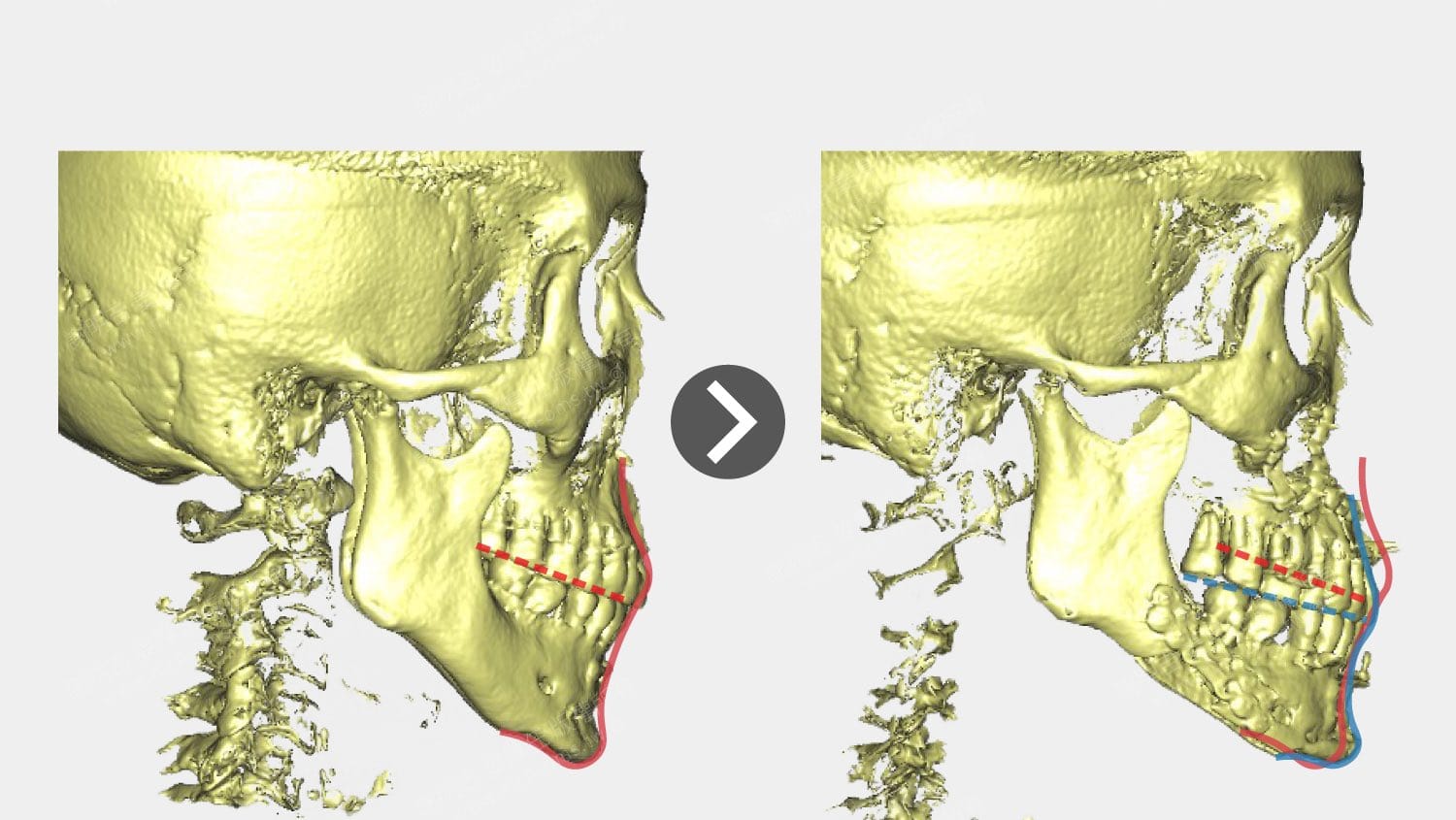
比较特别的是,电脑断层检查显示,除了可预期的狭窄呼吸道之外,可以看出她在年轻时,曾经做过Wassmund and Kole Procedure,这是一种将上下颚左右两边各拔掉一颗小臼齿后,再透过骨切割,将上下颚骨往后方移动的手术,目的在解决凸嘴型。
Notably, her CT scan revealed not only the expected airway narrowing but also evidence of having undergone the Wassmund and Kole procedures in her youth. These procedures involve extracting one premolar from each quadrant of the upper and lower jaws, followed by osteotomies to reposition the maxilla and mandible posteriorly—typically performed to correct bimaxillary protrusion.
虽然没有直接证据可以说,Wassmund and Kole procedure会导致睡眠呼吸中止症,但确实有相关研究,支持将上下颚骨往后方移动,会减少后呼吸道的空间,间接增加罹患睡眠呼吸中止的风险。谢医师帮她设计一个逆时针旋转型正颚手术(CCWR-MMA),顺利的拉开她受到挤压的上下颚骨、拓宽呼吸道空间、拉紧呼吸肌群(避免塌陷),也同时改善了颈部-下巴线条及支撑了中脸-唇周的凹陷感。
Although there is no direct evidence proving that the Wassmund and Kole procedures cause obstructive sleep apnea, existing research does support that posterior repositioning of the jaws can reduce the posterior airway space, thereby indirectly increasing the risk of developing sleep apnea.
Dr. Hsieh designed a counter-clockwise rotational maxillomandibular advancement (CCWR-MMA) surgery for her, which successfully expanded her compressed jaw structures, widened the airway, and tightened the pharyngeal musculature to prevent collapse. The procedure also improved her cervicomental contour and provided structural support to the midface and perioral region.
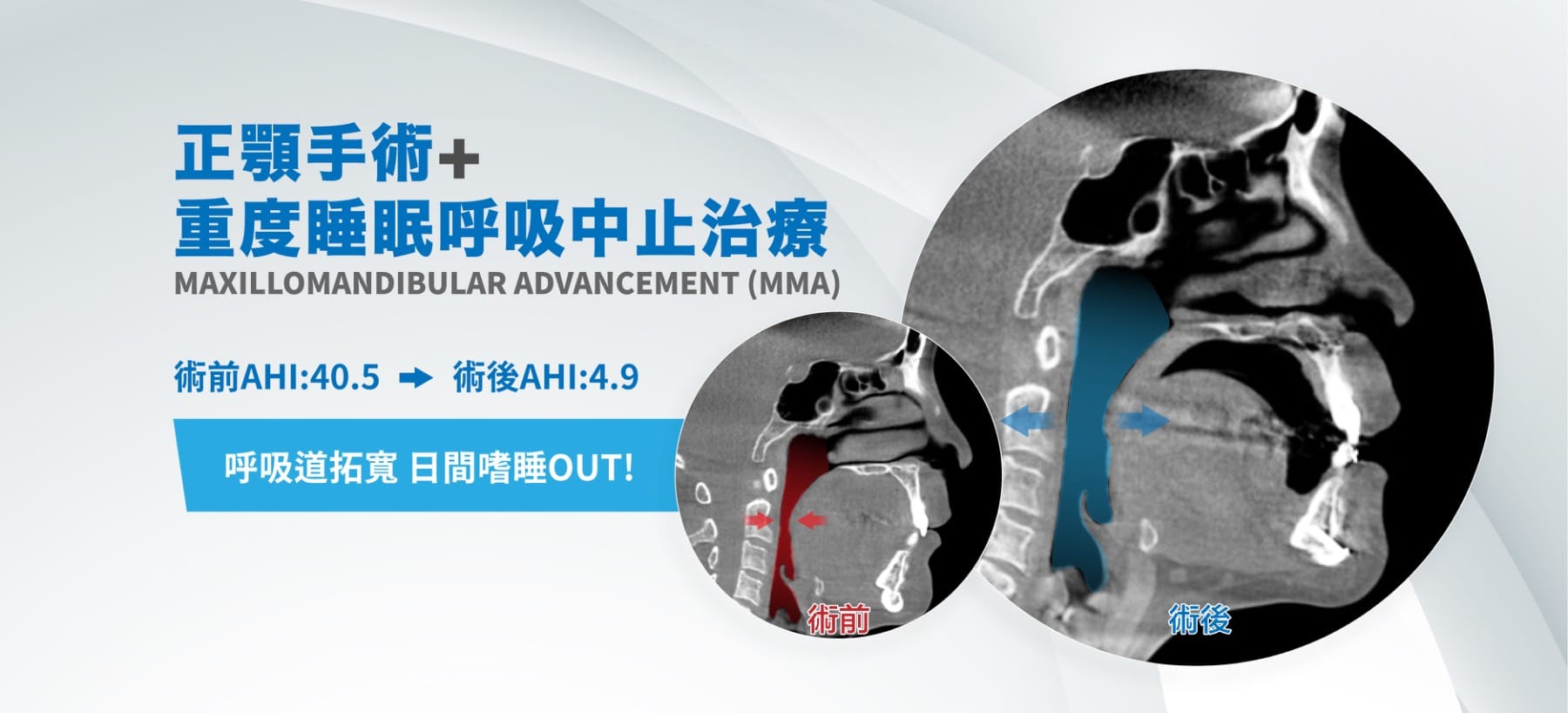
术后的睡眠报告显示,AHI降至4.9(<5代表治愈),嗜睡度量表ESS也降至5(代表正常无日间嗜睡),也解决了她打鼾的问题。
Postoperative sleep studies showed a reduction in AHI to 4.9 (an AHI <5 indicates resolution), and her ESS score dropped to 5 (within normal range, indicating no daytime sleepiness). Her snoring was also effectively resolved.
手术前后嗜睡度量表、评估
手术前后断层扫描对比