


| 术前症状 | 手术计画 |
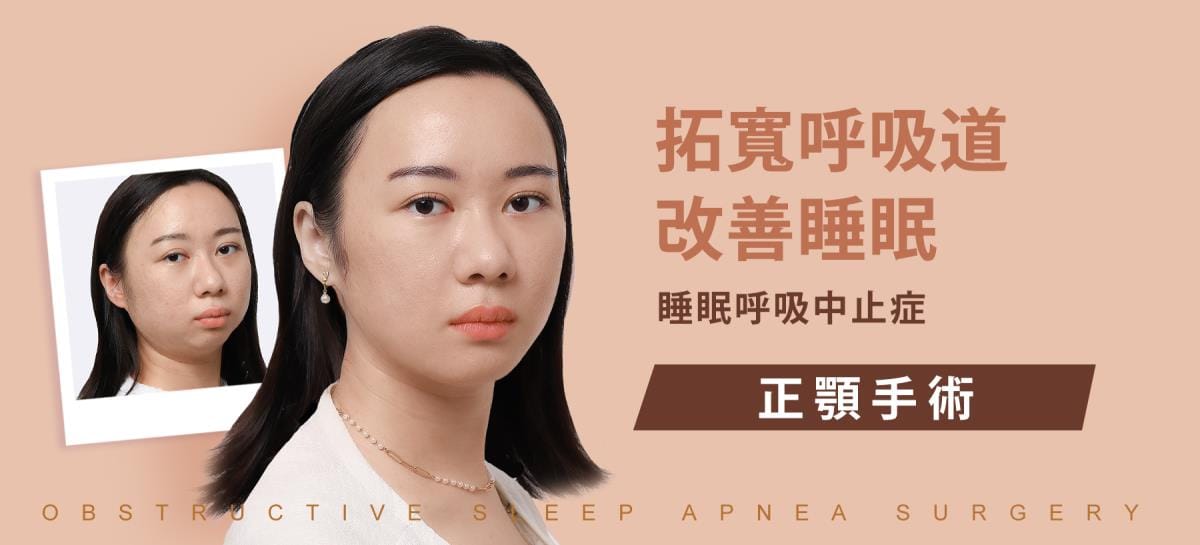
| 中度睡眠呼吸中止症、下巴及下颚后缩 | 3D客制化正颚手术、下巴前移手术、多层次呼吸道拓宽 |
这位患者之前就做过一次拔牙矫正,但后来她发现她有的问题及困扰,远超过牙齿是否整齐。
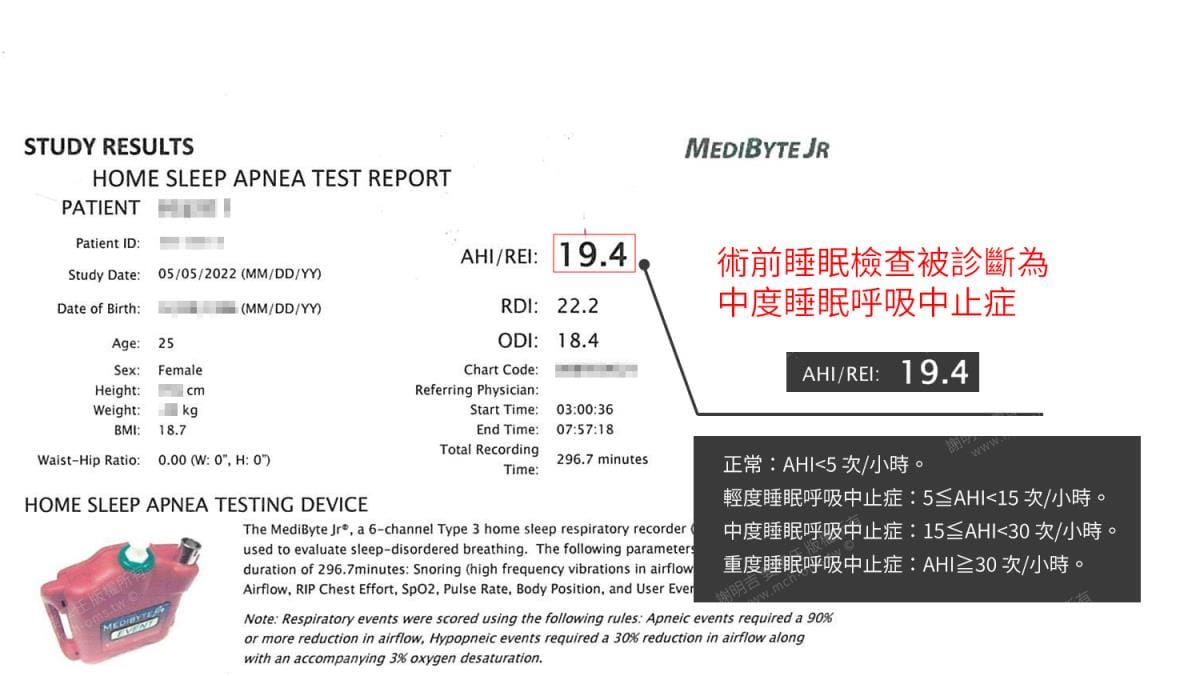
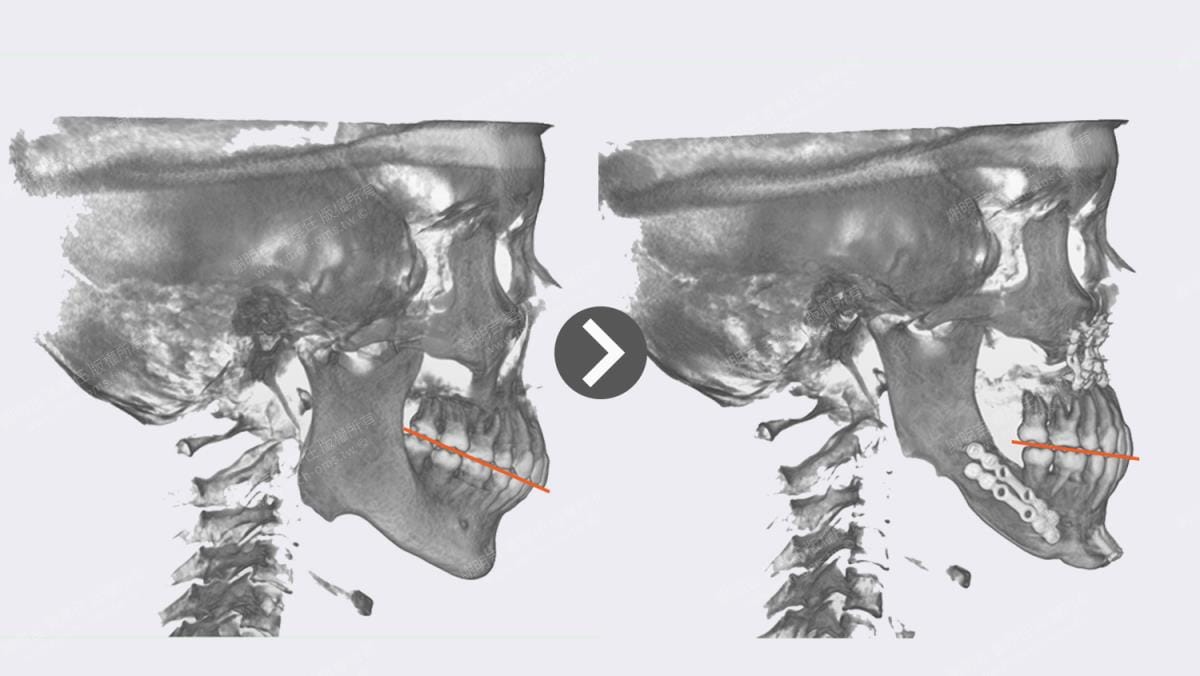
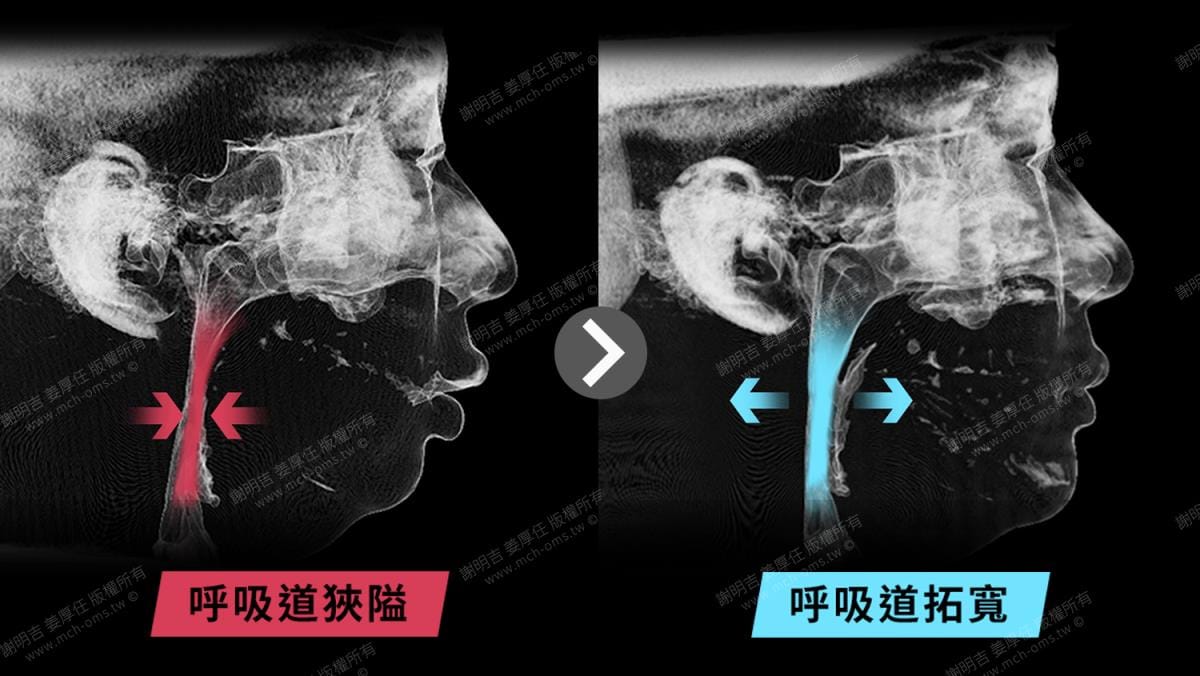
这一次她是由睡眠专科牙医师转诊到本中心,主要是想解决她严重的白天嗜睡及睡觉时的打呼问题,经过睡眠检查,诊断出有中度的睡眠呼吸中止(AHI=19.4),电脑断层也显示,她的呼吸道狭窄,是来至于下颚骨的严重后缩而压迫后咽壁(posterior airway space)。
在整体考量到她的睡眠呼吸中止的明显症状(嗜睡、打呼)、病因(骨骼狭窄、空间不足)、她对外观及咬合关系的期待,我们为她设计上下颚骨逆旋前移的正颚手术(MMA: maxillo-mandibular advancement),同时拓宽呼吸道及改善外观、咬合。
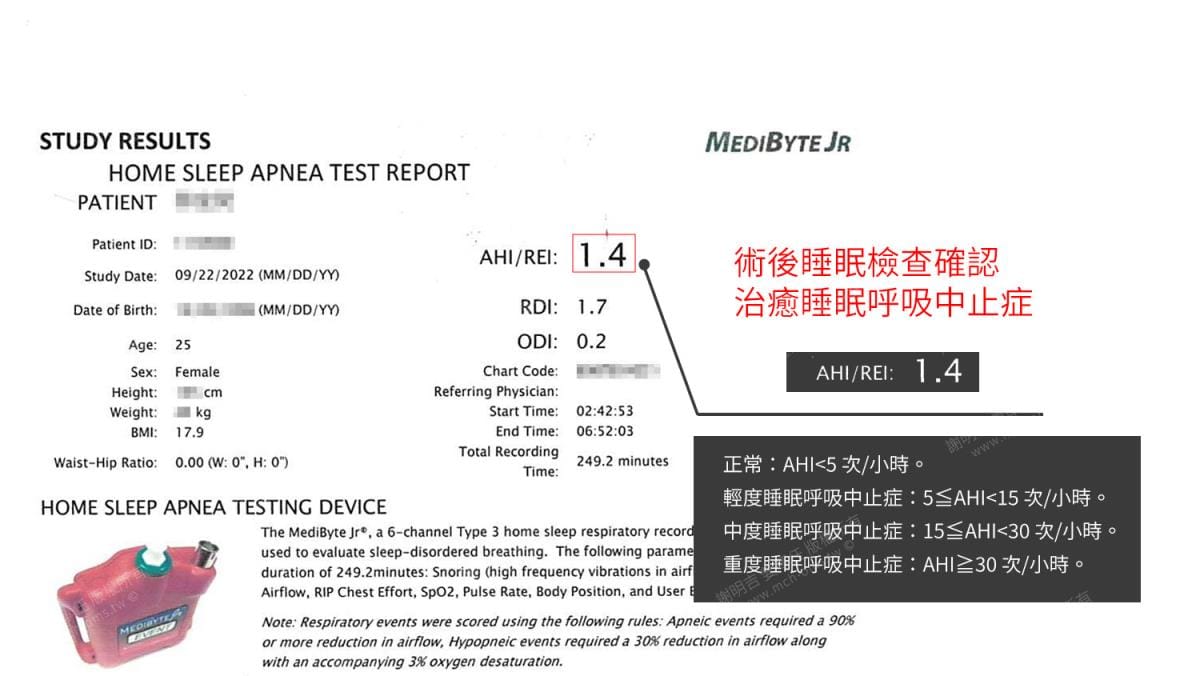
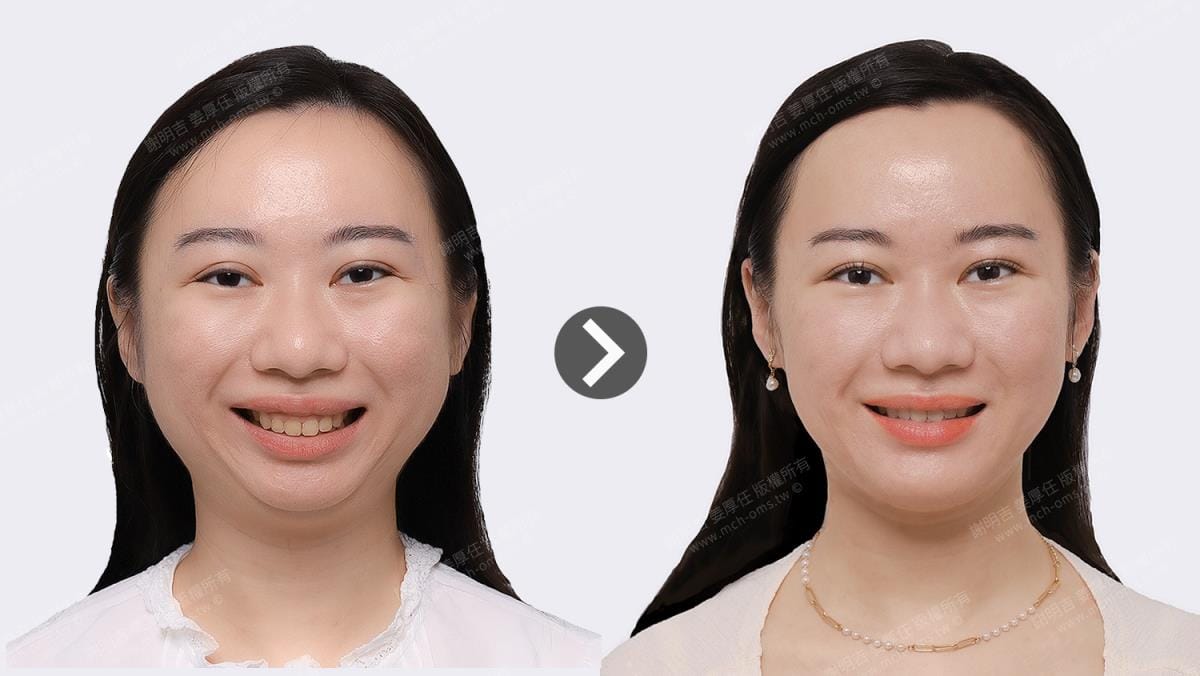
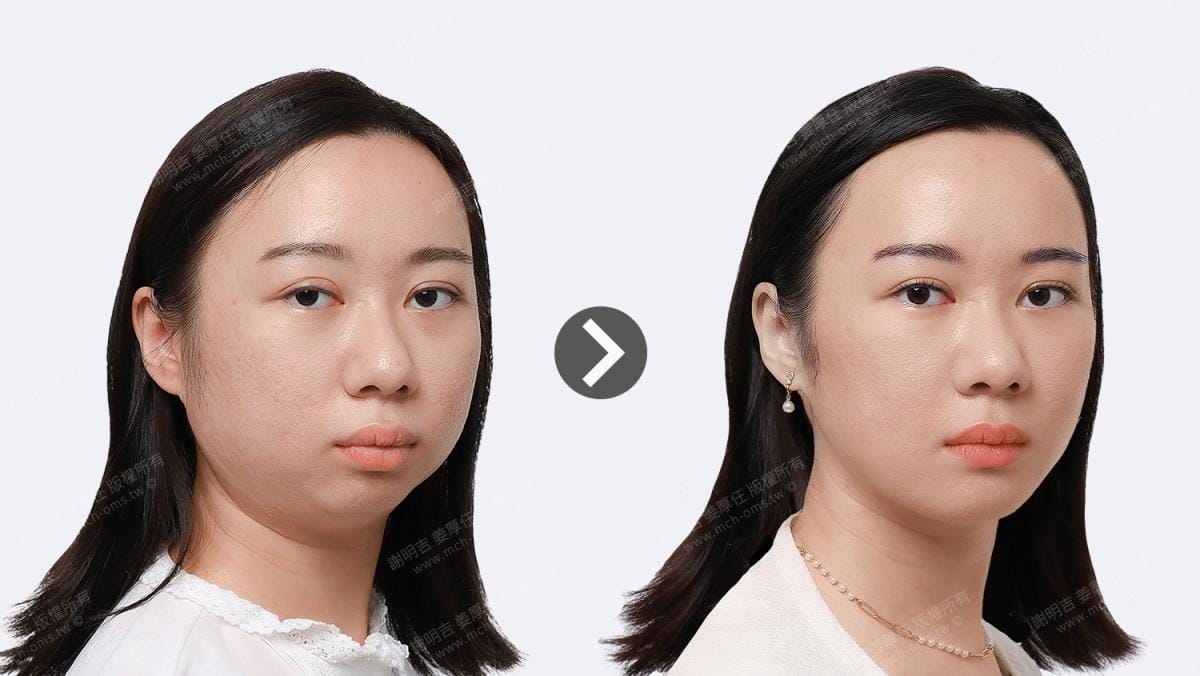
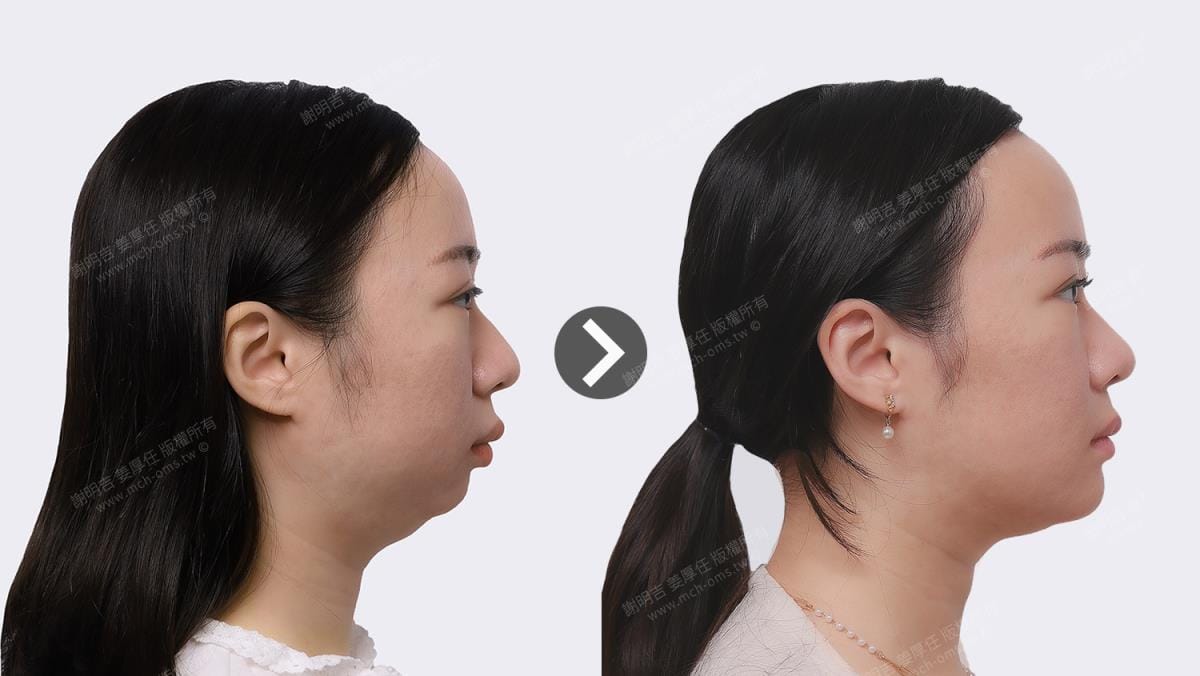
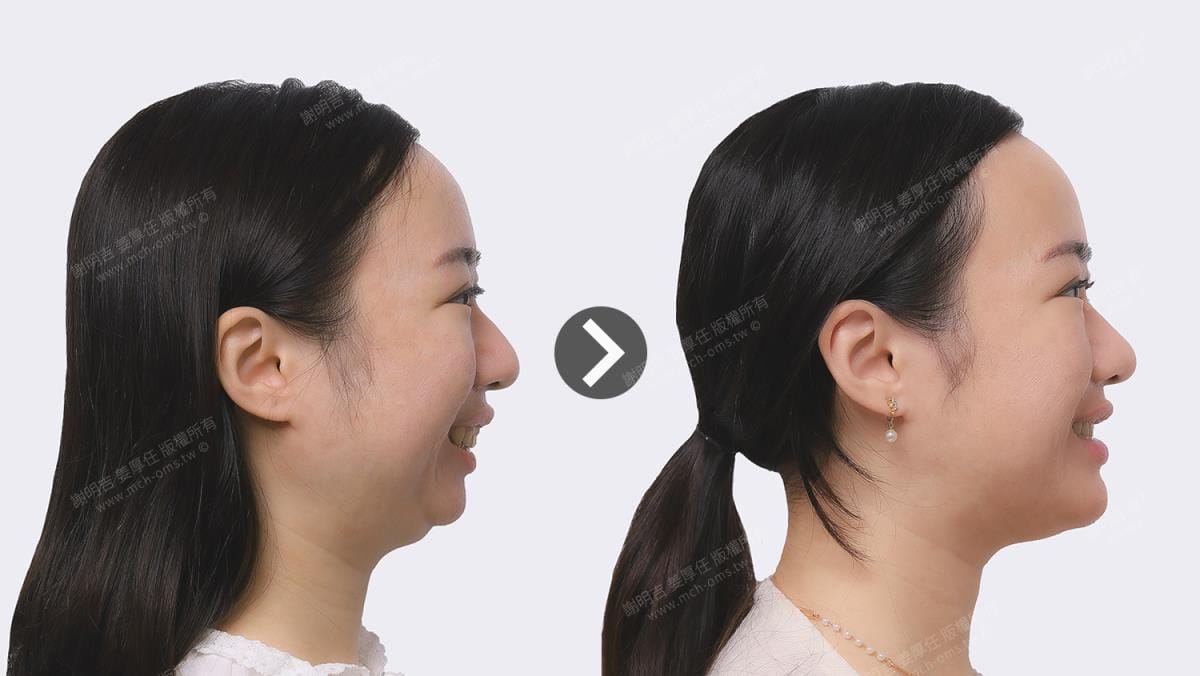
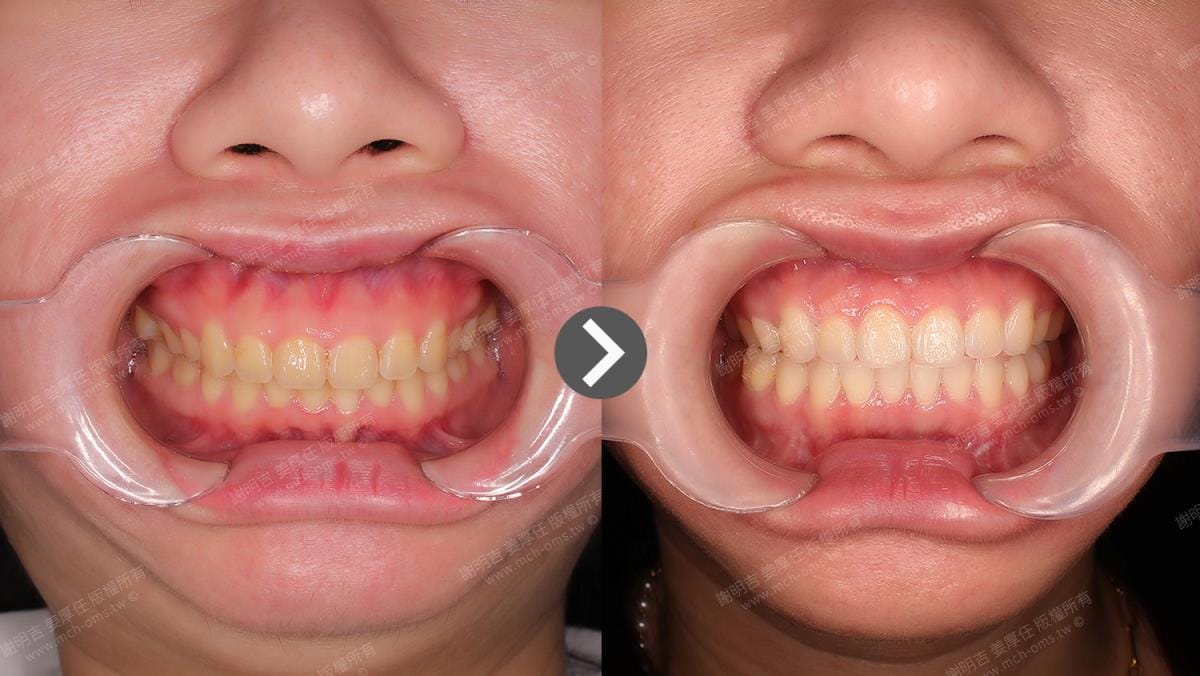
术后的牙齿矫正由转诊医师用隐适美(Invisilign)治疗。术后半年睡眠检查结果AHI=1.4,已降低到正常状态,打呼及嗜睡的症状消失,她也更喜欢术后自己的样子。
This patient had previously undergone four teeth extraction and orthodontic treatment, but later discovered that her issues and discomfort extended far beyond the alignment of her teeth. This time, she was referred to our center by a sleep specialist dentist, primarily to address her severe daytime sleepiness and severe snoring problems. After a sleep study, she was diagnosed with moderate sleep apnea (AHI=19.4). A CT scan also showed that her airway was narrowed due to severe mandibular retrusion, which compressed the posterior airway space. Considering her significant symptoms of obstructive sleep apnea (sleepiness, snoring), the underlying facial skeleton abnormality, and her expectations regarding facial appearance and occlusion, we designed a maxillo-mandibular advancement (MMA) surgery for her. This procedure simultaneously opens up the airway and improves appearance and occlusion. Postoperative orthodontic treatment was carried out by the referring doctor using Invisalign. Six months after the surgery, sleep study showed an AHI of 1.4, which is within the normal range. Her snoring and sleepiness symptoms disappeared, and she is quite satisfied with her appearance after the surgery.
手术前后对比照


断层扫描
睡眠呼吸中止指数