


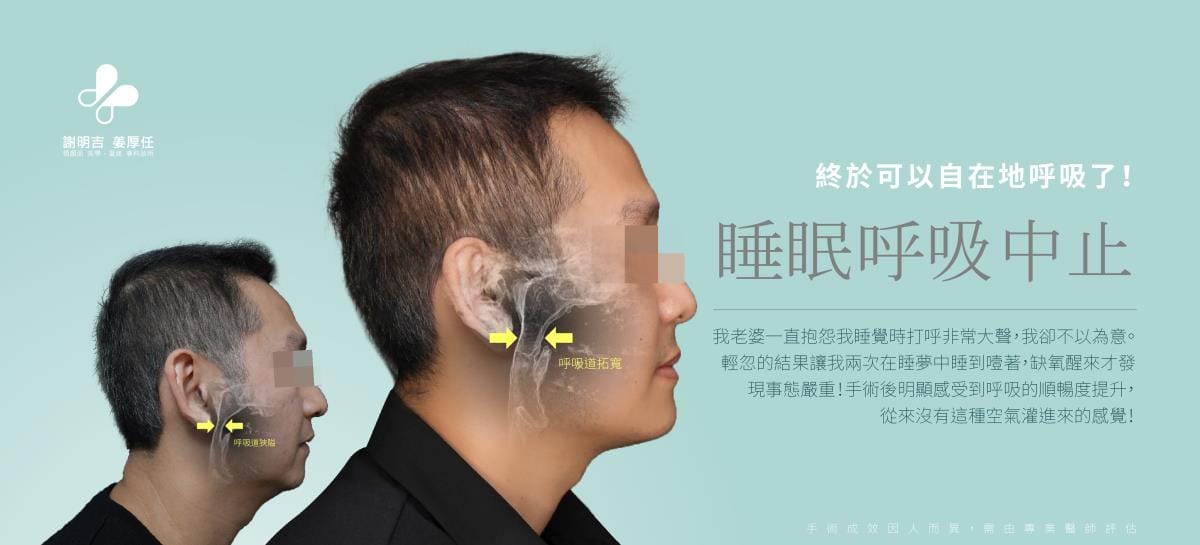
| Preoperative symptoms | surgical plan |
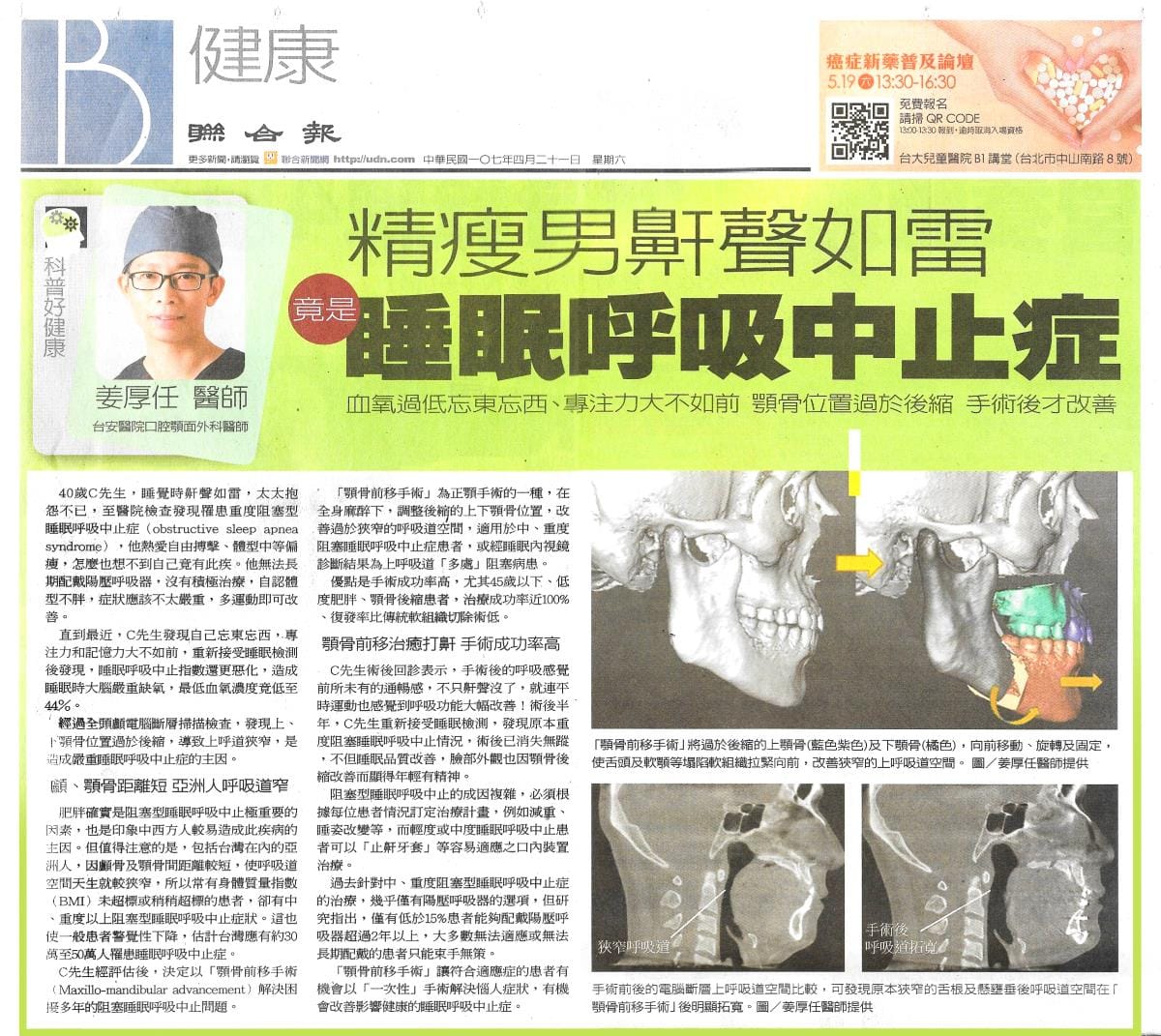
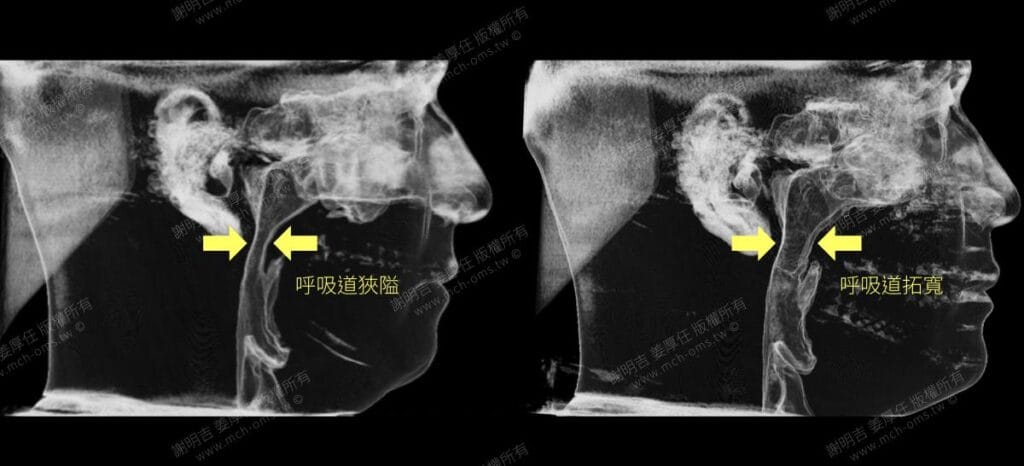
| The face is crooked and the mandible is retracted, resulting in narrow airway and sleep apnea. | The upper and lower jaw bones are moved through 3D customized orthognathic surgery. During the process, we should not only consider improving the appearance of facial distortion and functional bite problems, but also further provide the maximum expansion space for the airway and actively treat the patient's sleep apnea symptoms. . |
Why do you want to have this surgery?
I have gone to many hospitals for sleep apnea tests before, and the results of the sleep apnea tests were "patients with moderate to severe sleep apnea", but I have always ignored it; even my wife complained that I snore very loudly while sleeping, which seriously affected her. sleep quality.
The doctors I visited before recommended that I wear a positive-pressure respirator, but the discomfort of the respirator was unacceptable to me. There was also the possibility of recurrence after laser uvula surgery, so I had to give up the idea in the end.
It wasn't until late one night when I was half asleep at home that I couldn't breathe at all and woke up due to lack of oxygen. I realized the seriousness of the situation. I actively searched for information on the Internet. Inadvertently, I found the website of Fenghua United Clinic, which contained many The detailed case presentation on orthognathic surgery for sleep apnea made me eager to try it.
During the consultation, Dr. Jiang carefully explained through surgical simulation diagrams how orthognathic surgery will solve the problem of sleep apnea based on the results of my 3D whole-cranial tomography scan, and can also improve the problems I have suffered from fighting injuries since childhood. The face is crooked.
Dr. Jiang Houyan of Fenghua United Clinic performs orthognathic surgery to achieve a perfect balance between sleep apnea treatment and cosmetic improvement. In addition, Fenghua United Clinic not only has an outpatient clinic for maxillofacial surgery, but also an orthodontic department for follow-up treatment, so there is no need for referrals everywhere, which is very convenient.
Postoperative changes
There has been a very obvious improvement after the operation. My wife no longer complains about being woken up by my snoring; my own sleep quality has also become better, and I am not as tired and sleepy during the day as before.
I can breathe smoothly and get enough oxygen during exercise. I have never felt the feeling of air being poured in! It’s so refreshing! Thank you Dr. Jiang for the surgery.
Appearance changes
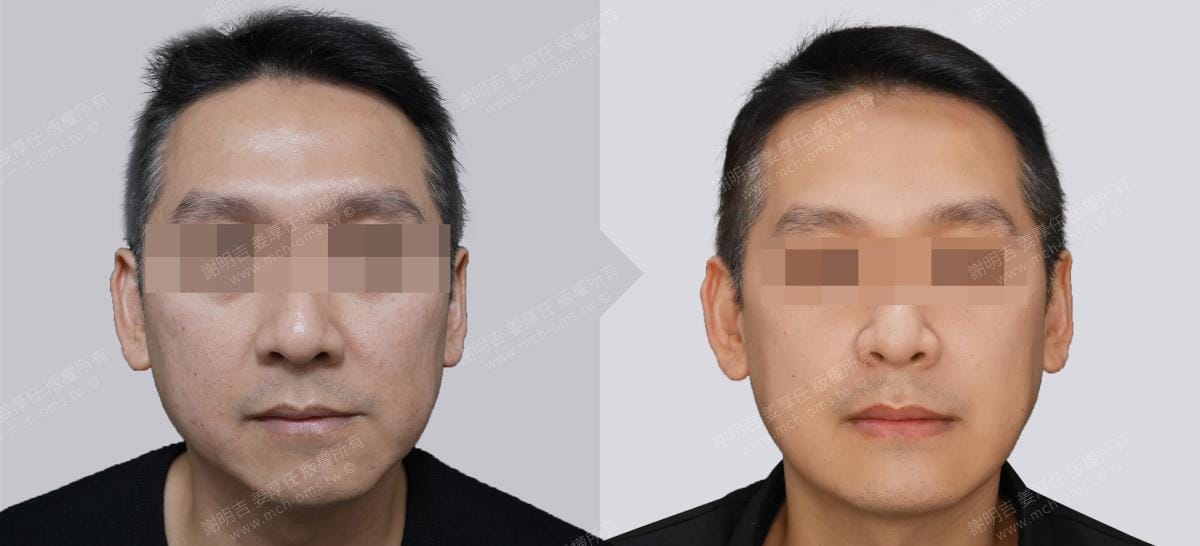
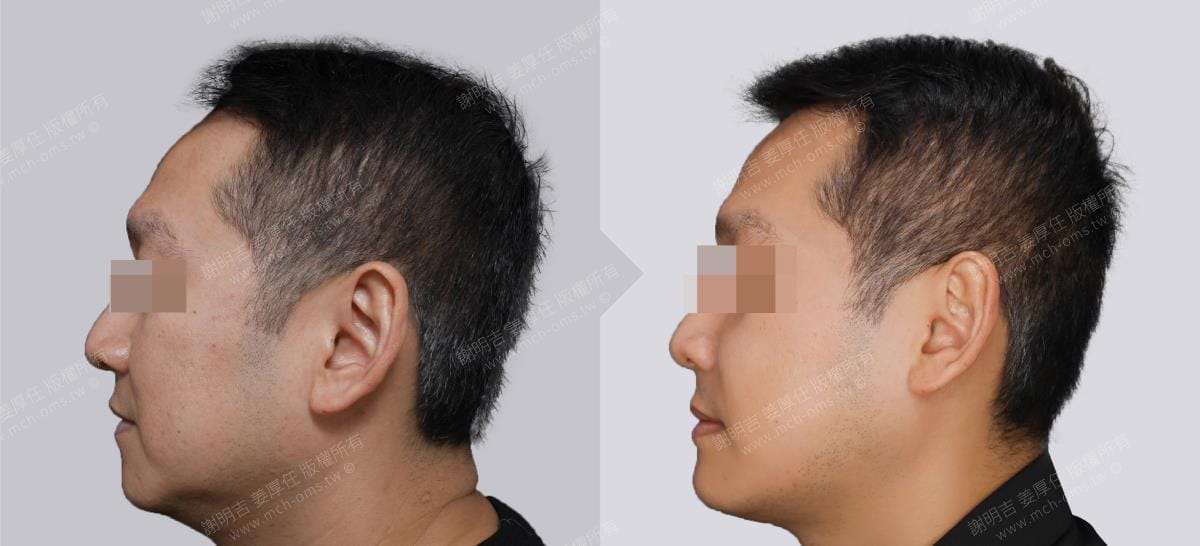
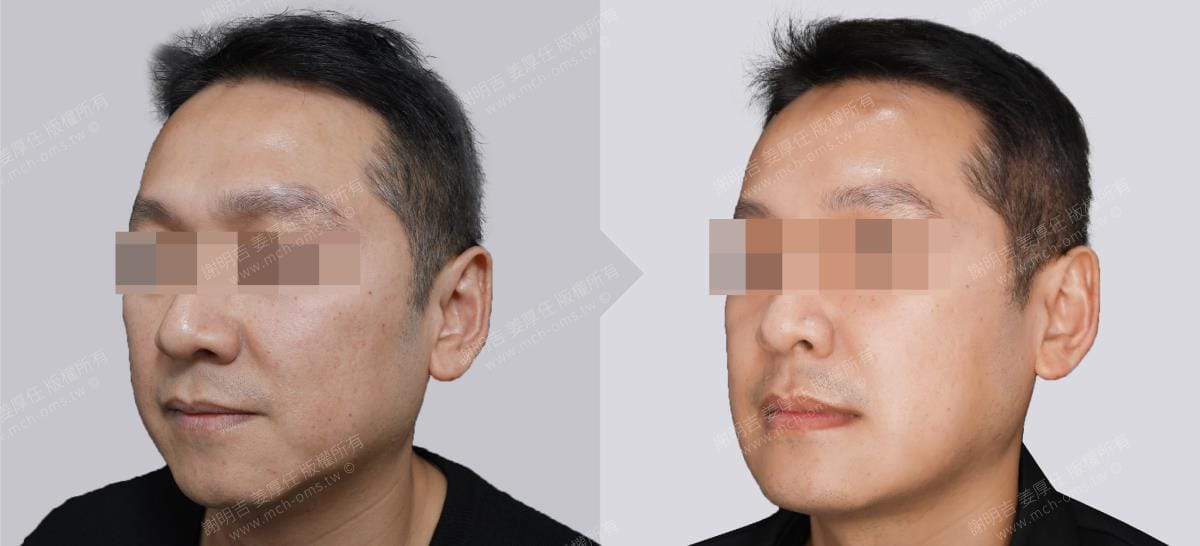
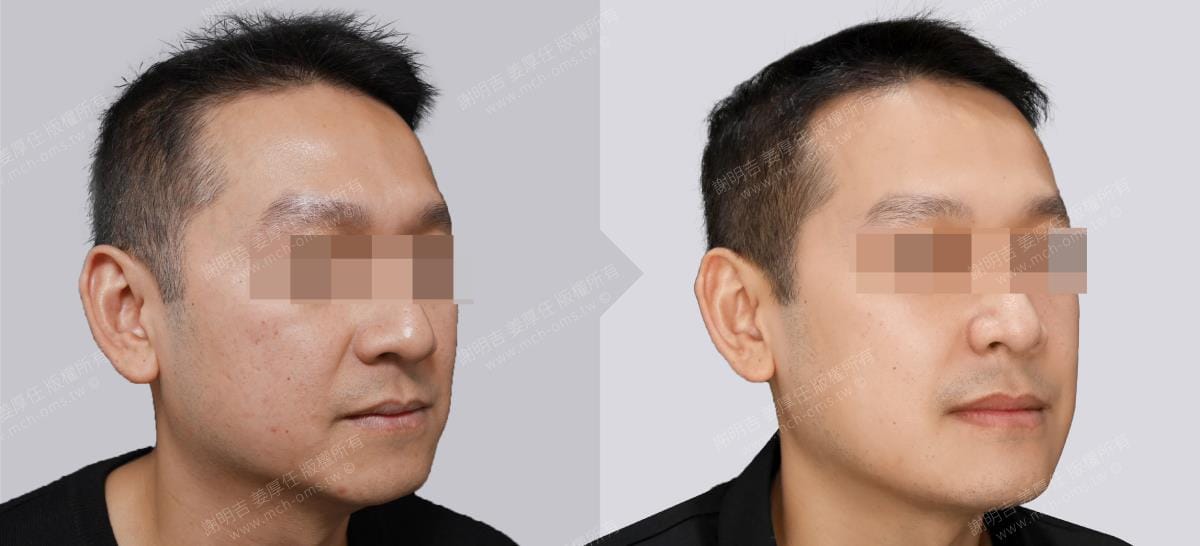
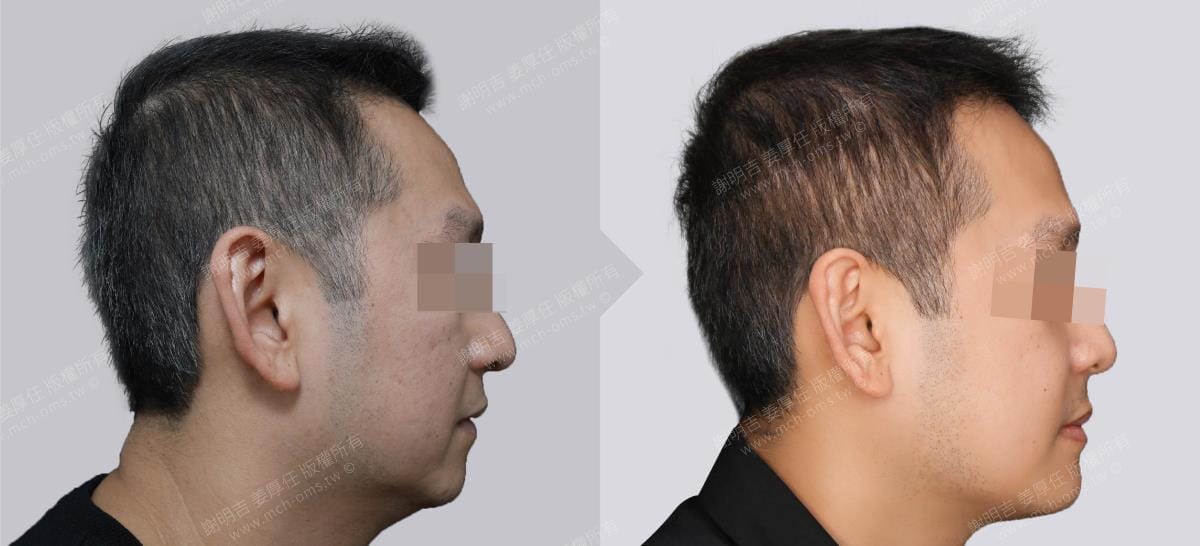
Comparison of tomography before and after surgery
Recovery progress
Follow-up visit 1 week after surgery
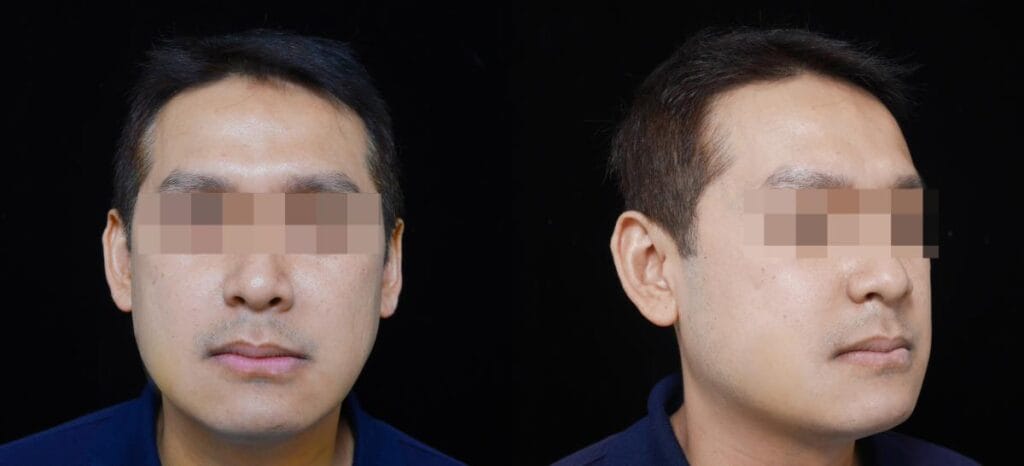
Follow-up visit 2 weeks after surgery
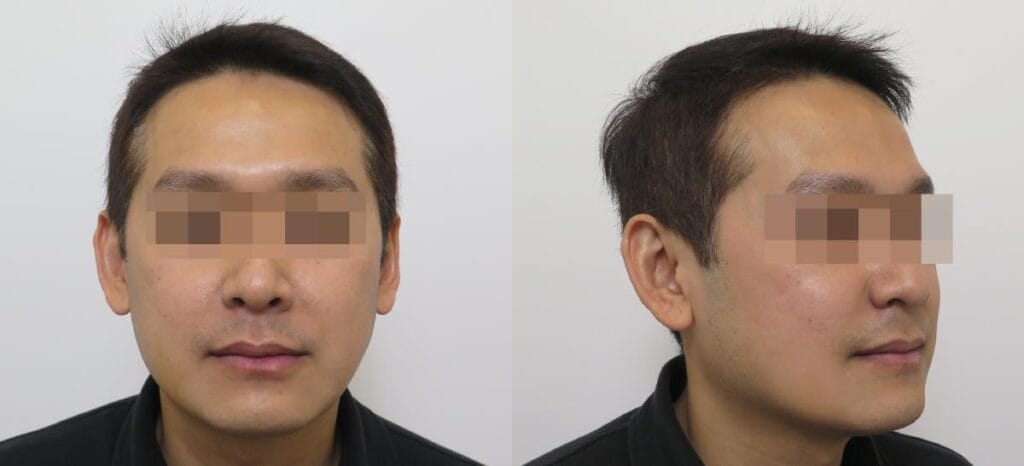
Follow-up visit 1 month after surgery
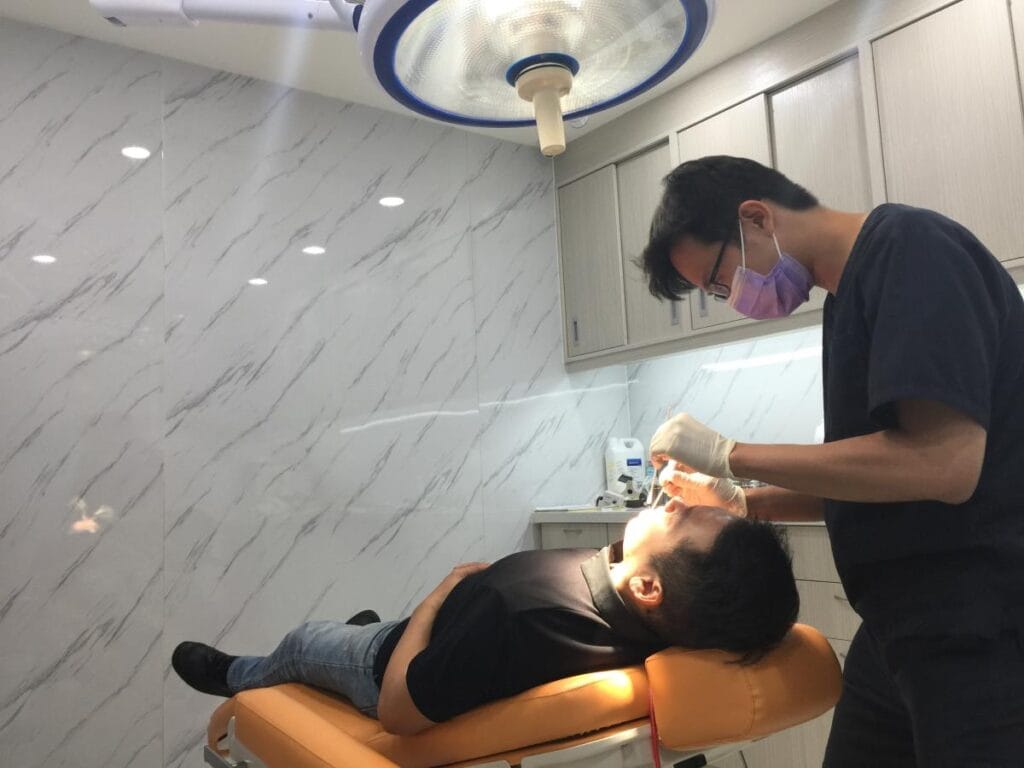
Doctor explains treatment plan
The patient is a patient with moderate to severe sleep apnea, with a sleep respiratory disorder index (RDI) above 30, and the lowest blood oxygen concentration during sleep is only 44% (about 95~98% for healthy adults)! Such severe sleep apnea symptoms will not only cause poor sleep quality and mental depression, but may also cause serious metabolic abnormalities in the body over time.
It is worth noting that the patient's BMI (body mass index) is not high, but he still suffers from severe sleep apnea symptoms, which is different from our traditional impression of obese snoring patients with thick necks.
In fact, compared with Westerners, a higher proportion of Easterners have obstructive sleep apnea due to the narrow space created by the retraction of the maxillofacial bones (Respirology (2012) 17, 213–222)! So please don’t think that thin people don’t care about snoring or ignore possible hidden sleep apnea symptoms.
Consideration of oropharyngeal soft tissue surgery for the treatment of moderate and severe sleep apnea has a low success rate (<50%), and has a high recurrence rate in the long term! Patients are also afraid of wearing positive-pressure respirators for a long time (in fact, many statistics show that the compliance rate of patients wearing positive-pressure respirators for a long time is very low, and the proportion of patients who still use them regularly after one year of wearing them is only 10~30%) , and the patient had obvious retrusion of the upper and lower jaws and even facial distortion. After detailed sleep testing and cranial and jaw computed tomography examination, it was decided to perform maxillary and mandibular forward surgery (a type of orthognathic surgery) to completely improve the patient's problem.
The surgical plan is to move the maxilla forward by 6 mm and the mandible by 12 mm to improve the narrow cranial palate and upper respiratory tract space. With the help of 3D computer simulation navigation surgery and the surgical team, the operation time is shortened and the possibility of complications is reduced. The patient is hospitalized for one day after the operation and is discharged home to recuperate.
The patient's recovery after the operation was very smooth, and he immediately felt that the widening of the airway after the operation had significantly improved his sleep quality and physical condition. I am very happy to help patients regain their health and get rid of long-term problems.
Related reports